Archives
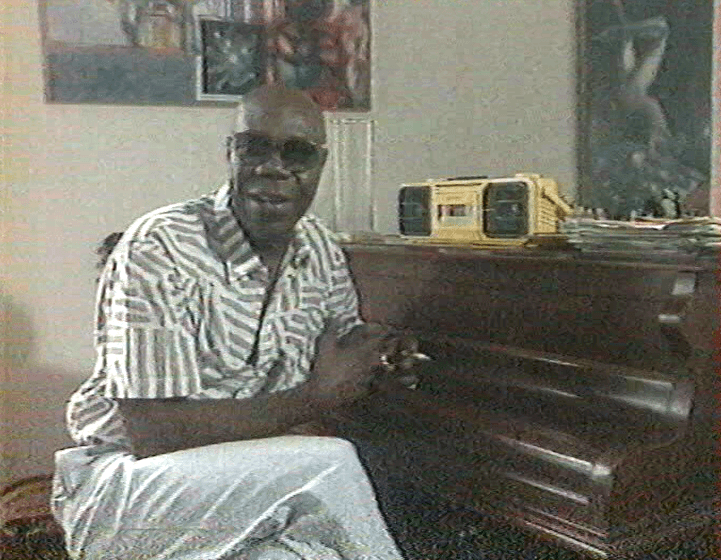
PAM gets you to discover a first excerpt from the documentary film series Paris c’est l’Afrique (“Paris is Africa”) that French journalist Philippe Conrath directed in... 1989! Here, Manu relates his professional debut in Paris. Tomorrow, you can see him in the company of the band Les Têtes Brûlées. The full series will soon be available on PAM for you to discover.
In 1989, Manu Dibango was already – and had been for a while – the key figure of Afrocentric music in France. Quite naturally he is featured in this series of four documentary films untitled Paris c’est l’Afrique (4 x 26 min), dedicated to the early stages of Africentric music in France. Philippe Conrath, then journalist for Libération, was about to leave the daily newspaper when a producer asked him to make a film about African music. This project would turn out to be the culmination of the research he had been doing since he first set foot in Africa ten years earlier, before starting to write about Black music (from Africa and America) for the newspaper.
The film series tells how Afrocentric music had settled in the French soundscape, a phenomenon to which Philippe Conrath and a few others (including Radio Nova’s Hélene Lee, J.F. Bizot and Rémy Kolpa Kopoul, but also J.J. Dufayet) contributed to, each in their way. The series, soon to be fully broadcast on PAM, features all those who have since become pillars of Afrocentric music: Youssou N’Dour, Salif Keita (and his father in the village), Kante Manfila, Fela and his son Femi, Les Têtes Brûlées, Touré Kunda, Zao… And of course their common father, Manu Dibango. He then related his Parisian debut, almost twenty-five years earlier.
With no pretenses, but with good reason, the “doyen” explains how the success of the song “Soul Makossa” opened many doors: not only for him, but for all the others who arrived in his wake. Here is an excerpt from the episode “The Pioneers”.