A new path
We’re back in Praia, the bustling capital, a city where anything is possible. It’s noon at the Sucupira Market, and the atmosphere is more than lively.
Nicknamed “the African market,” this maze of narrow alleys is a whirlwind of scents, multicolored wax prints, and knockoffs whose imitation is elusive… A true treasure trove can be found here: a handful of stalls selling the latest music trends. Everything is available on USB drives, a format that has supplanted the CD over the past decade. For the equivalent of about ten euros, you walk away with a selection of files, the vast majority of which are directly ripped from YouTube music videos, in varying quality.
No one here worries about the legality of the trade—especially not the seller, nor even the artists, for that matter, who see it as a valuable distribution channel with a direct connection to the public. That’s because the main customers at these tolerated stalls are the drivers of shared taxis—the “Hiaces,” named after this Toyota utility model—which are essentially sound systems on four wheels, sometimes decked out with two subwoofer enclosures and 5.1 surround sound systems. While some drivers opt for the radio, many insert a USB drive freshly updated at the Sucupira market—a joyful mix of Afrobeats, kizomba, zouk, funaná, and, of course, cotxi-pó…
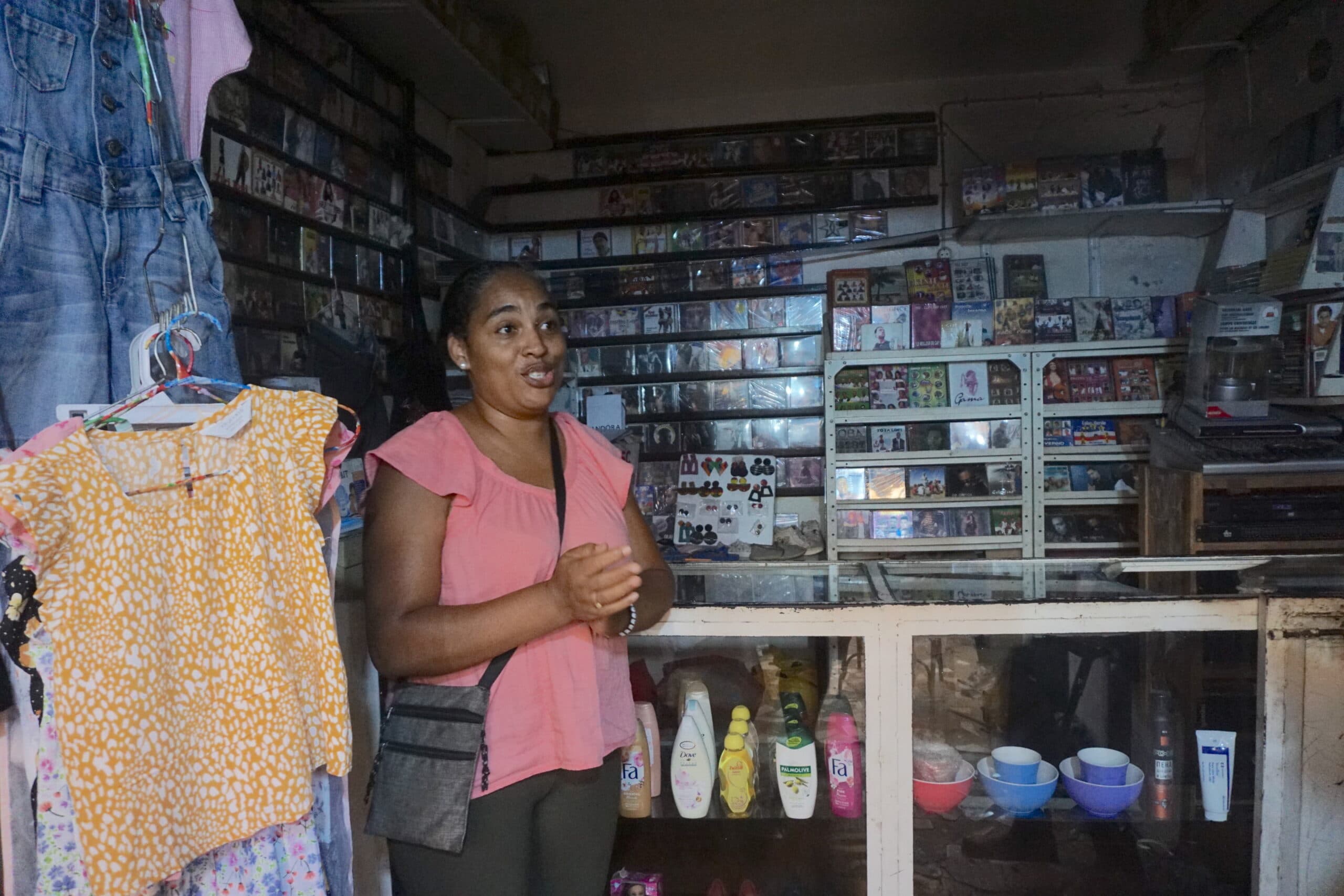
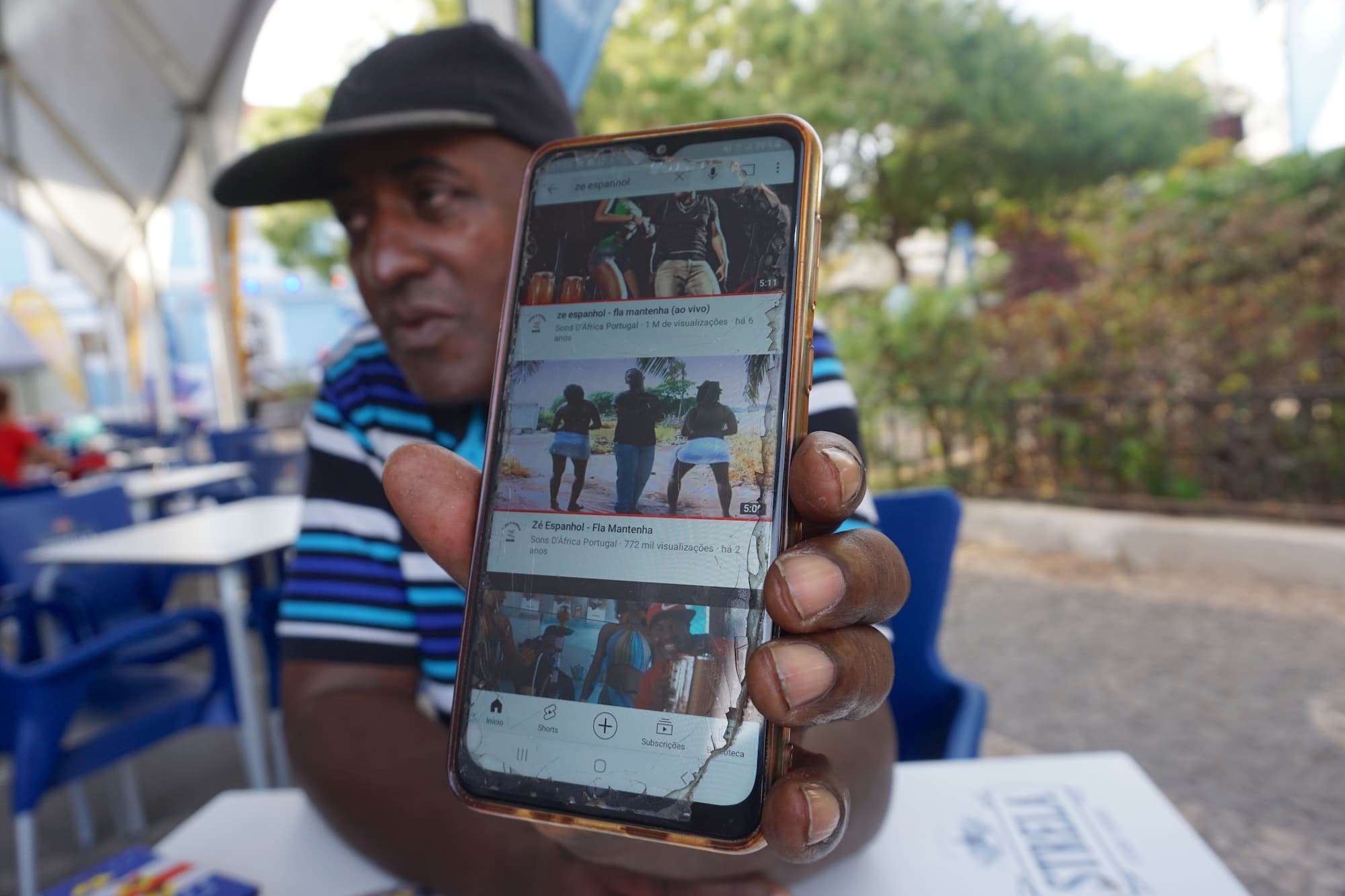
The selection is made on demand, and the market vendor’s role is somewhat ambiguous, falling somewhere between curator, DJ, or simple merchant.
The Hiace driver, for his part, is seen as the guide, which is why many of them invest a great deal of time and money in decorating and equipping the interior of their vehicles.
This entire underground music distribution system is not merely an informal practice:
it is an essential component of the Cape Verdean music scene, greatly amplified by obvious gaps in copyright law.
Copyright law did not see its first legislative provisions until 2009. As for the country’s sole collective rights management organization, the Sociedade Cabo-verdiana de Música (SCM), it had only been in existence for a mere decade in 2024—the year when, for the first time in the country’s democratic history, political parties were required to pay royalties for the use of music during the election campaign.
Funaná and its many variations continue to evolve in a deregulated environment, in which some unscrupulous producers have profited at the expense of the true creators. During the production of this report, whenever the conversation turned to the concept of intellectual property, most of the interviewees responded with an awkward or irritated silence—often both.
the main victims of this informal or dysfunctional system—depending on how you look at it—are the artists.
Artists are forced to perform more and more concerts just to make ends meet, whether across the archipelago under often precarious conditions in all kinds of cafés and bars, or—for the luckiest among them—abroad, where the fees and working conditions are incomparably better. As for the others—especially in the funaná scene—their main source of income comes from jobs in construction or agriculture, just like their fathers, grandfathers, and great-grandfathers. While a popular singer like Dino D’Santiago struggles to push the idea that “funaná is the new [baile] funk”—with his slogan printed on T-shirts, sweatshirts, and even socks—the reality is that funaná has remained the music of the working class from the very beginning. Funaná is played by the people and for the people, and this music remains, first and foremost, a community-based art form.
The evolution of funaná—and its younger offshoot, cotxi-pó—follows a unique trajectory, one that is ultimately quite typical of peoples who endured centuries of colonial oppression before breaking free from it: it is pendular. Like a pendulum, funaná and cotxi-pó have evolved in a closed loop of back-and-forth movement between the island of Santiago and the territories where the bulk of the Cape Verdean diaspora is concentrated. In Portugal, France, the Netherlands, Switzerland, Luxembourg, and England—driven by opportunities for concerts, professional studio sessions, and record label contracts—funaná flourished, taking root in new environments and drawing on elements that were scarce or even absent in Cape Verde until the early 2000s.
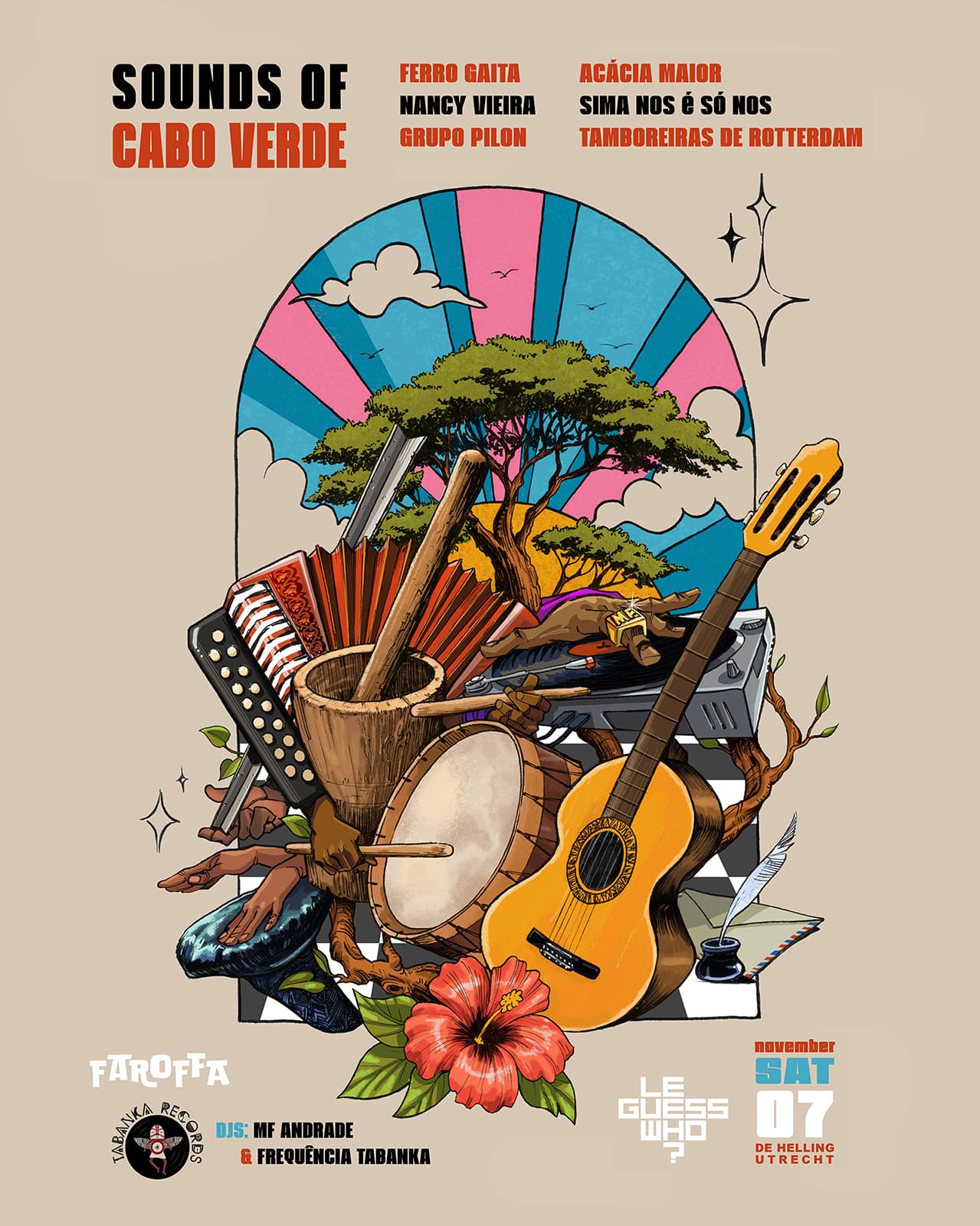
You only have to look at the artists invited this year to Le Guess Who Festival? for the special “Sounds of Cabo Verde” lineup. All are, of course, Cape Verdeans, but they all live in one of the diaspora’s communities: Rotterdam for MF Andrade, Sima nos é só nos, and the aptly named Tamboreiras de Rotterdam; Luxembourg for Grupo Pilon; and Lisbon and its metropolitan area for Nancy Vieira, Acácia Maior, and the two founding members of the Tabanka Records label.
Augusto “Gugas” Veiga, Cape Verde’s current Minister of Culture and Creative Industries—but above all the longtime manager of Ferro Gaita, one of the leading bands of the funaná revival beginning in the 1990s—recently expressed his disappointment regarding the genre’s attempts to break into European markets. And particularly in France: “Even when we managed to land a ‘summer hit’ on French radio with Finaçon’s ‘Si Manera,’ the people who were just discovering funaná at the time disparaged it by renaming it ‘fous-la-moi’...” This brings to mind the early days of zouk in France and the disparagement by the general public—as well as by cultural elites—of a music deemed too indecent, vulgar, and simplistic. It is the same brutal criticism that Portuguese colonizers leveled at the traditional music and rhythms of the peoples they kept under their yoke.
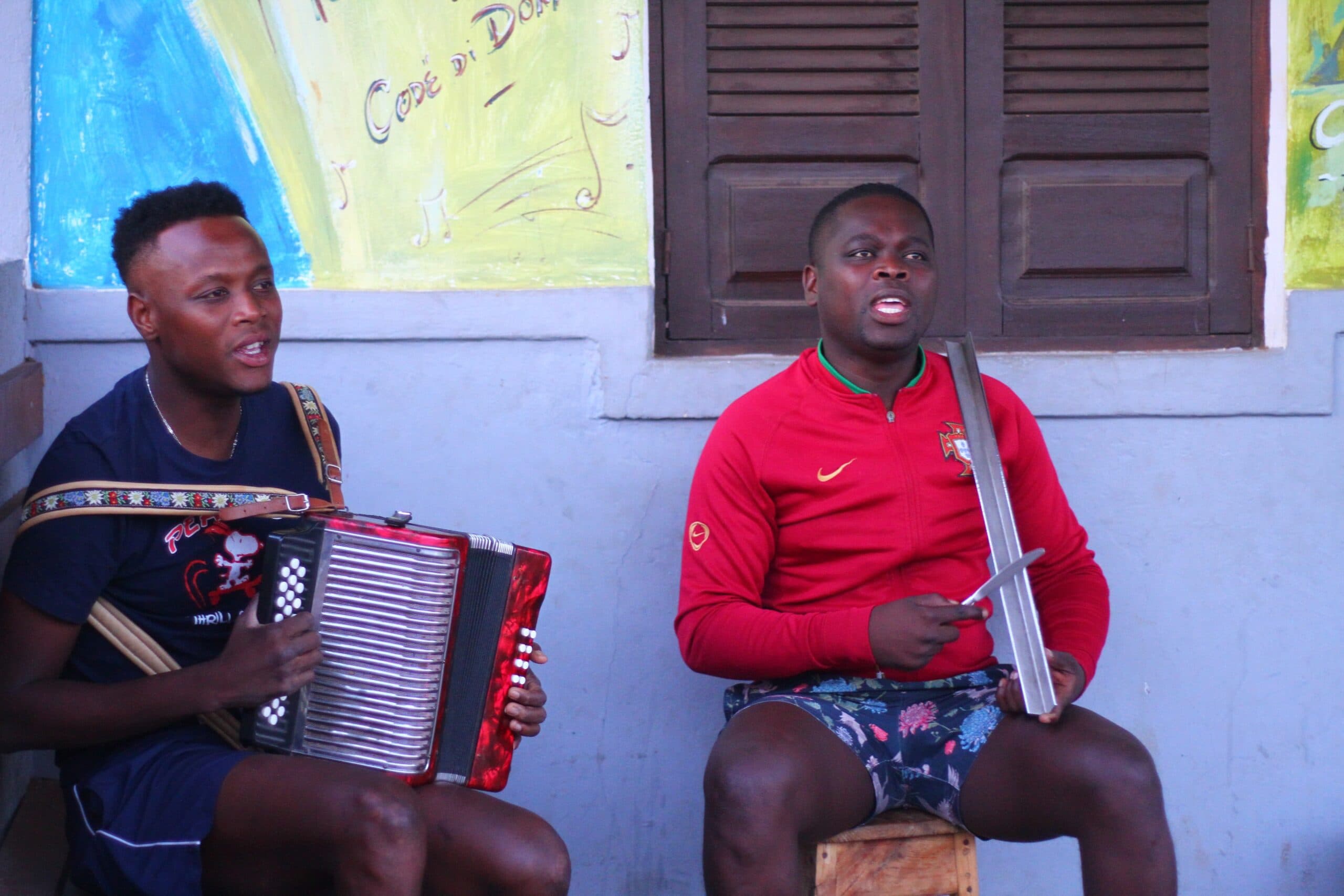
Other constraints and obstacles weigh on the genre. These are endemic and persistent: as you’ve come to understand by now, from its rural origins in the late nineteenth century through to its most recent developments, funaná has essentially maintained its instrumentation centered on the gaita, the ferrinho, and the famous voz di cabeça. In fact, it is only in its more orchestrated versions that it has allowed itself a few subtle borrowings from other musical traditions: a hint of Caribbean zouk on the bass here, a pinch of Jamaican reggae on the percussion there, a whiff of British psychedelia in the electric guitars and synthesizers… Of course, we can also mention the recent, unapologetic, and enthusiastic “copy-and-paste” of soukous bass lines within the cotxi-pó. But all these forays remain very tentative, as the genre rarely ventures beyond its own musical territory.
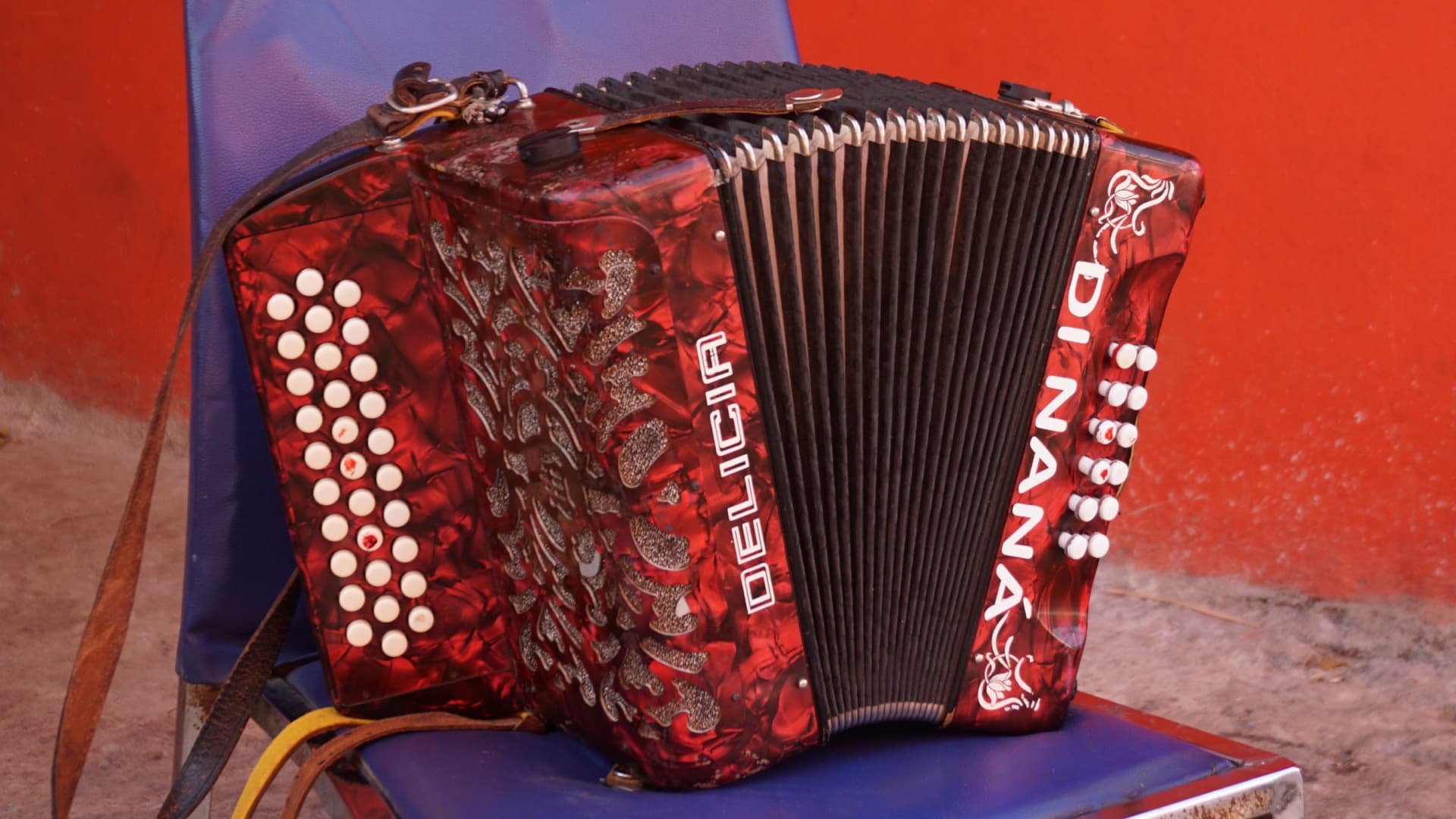
Not much changes, and whenever funaná evolves into funasamba, funazouk, funarock, or caboswing, the scene’s conservatism quickly brings the daring back to basics: the name of the band Ferro Gaita is a perfect example of this, since this name serves as a reminder—like a manifesto to the scene—of the two instruments that founded the genre: “Any music played on a diatonic accordion is considered authentic funaná, as long as the other instruments are played live, without a drum machine,” declare Iduíno and Bino Branco in unison, drawing on their thirty-year career with the Ferro Gaita combo. This revival trend convinced certain labels to release recordings by Codé di Dona, Sema Lopi, Bitori Nha Bibinha, Rabenta, and other artists who had never stopped playing the ferrinho and the gaita—sometimes for more than thirty years—but had been overshadowed by the trend toward musical modernization.
Today, funaná and cotxi-pó continue to thrive to the metallic sounds of the gaita and the ferrinho, and remain the driving force behind a society whose customs and traditions remain unchanged, regardless of where it is rooted. Meanwhile, another idolized veteran of funaná—the “quente” style—a gaita player, teacher, and singer once thought to be tireless, has surprised everyone with his recent transformation.
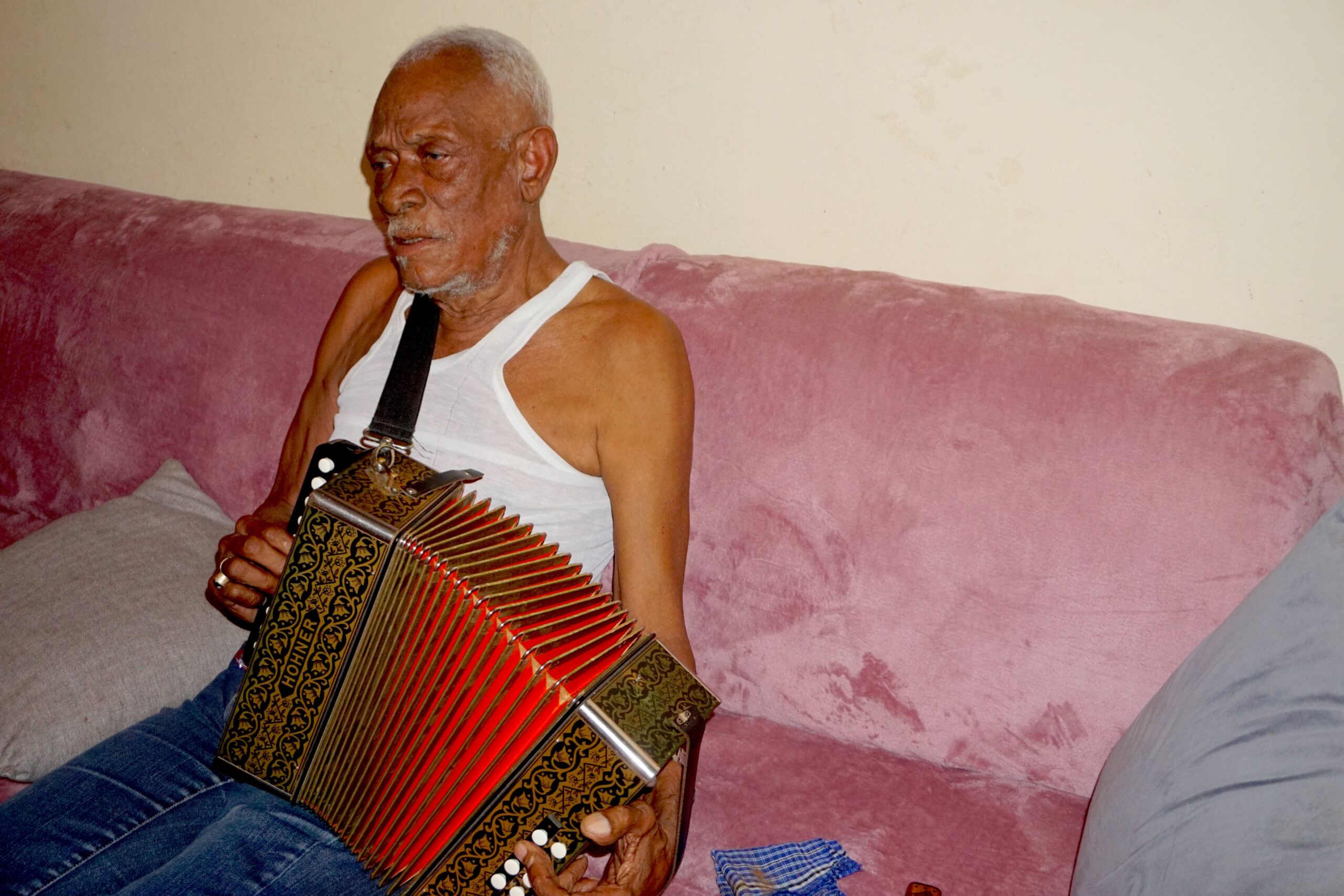
Bitori Nha Bibinha toiled like a virtual slave from the age of seventeen on the plantations of São Tomé and Príncipe, a hellish place from which he would return four years later, in 1959, with just enough money to buy his first gaita. Opening the doors of his humble home in a working-class neighborhood of Praia, in response to our obvious request that he play and sing a few of his unstoppable, lightning-fast compositions, he replied laconically: “I’m tired of playing funaná. Before I die, I want to record an album of mornas.” And with that, he performed for us a series of poignant mornas, including, one of the most beautiful ballads from the island of São Nicolau, made famous by the voice of Cesária Évora: “Sodade.” This is followed by a singular interpretation of a traditional holiday song in Sant’Antão, also sung by the national diva in “Recordai”. The emotion is overwhelming, and we realize that no matter the instrument, the tempo, or the place, Cape Verdean music is rooted in raw emotion. Just as we were about to leave a tired but talkative Bitori, he asked us to bring him his jar of snuff. Once he’s snorted his dose deep into one nostril, he picks up the gaita again and treats us to one of his now-legendary funanás. This alone—if any further justification were needed—demonstrates the urgency of inscribing this music on UNESCO’s List of Intangible Cultural Heritage of Humanity—just like the morna.
And let’s be clear: as long as accordions are being made and there are luthiers who know how to tune them, there will be funaná.