Amid political unrest and fading freedoms, Georgia’s ambient scene quietly thrives; a dark, hypnotic soundtrack to a country ploughed into autocracy, where beats stretch longer, silence speaks louder, and music becomes a mirror to society itself.
PHOTOS BY THOMAS GUICHARDADDITIONAL PHOTOS THANKS TO MUTANT RADIO
Nika Gogiashvili isn’t grabbing a coffee in Tbilisi today. He’s heading to a ten-day silent retreat, a bold move for a musician whose life used to be measured in beats. Once a dance-floor regular, producing standard 4/4 tracks in Georgia’s capital he used to describe as “the new Berlin” to shift toward the quietly erupting ambient scene. These days, his music stretches, drones, and lingers, reflecting not just artistic evolution but also the political shadows enveloping his country. “I needed to center myself. With this environment, with everything happening here. We all need more meditation,” he says. Hard to disagree — his work feels sprawling, like standing on a ridgeline. Then he left and was yet again unreachable.
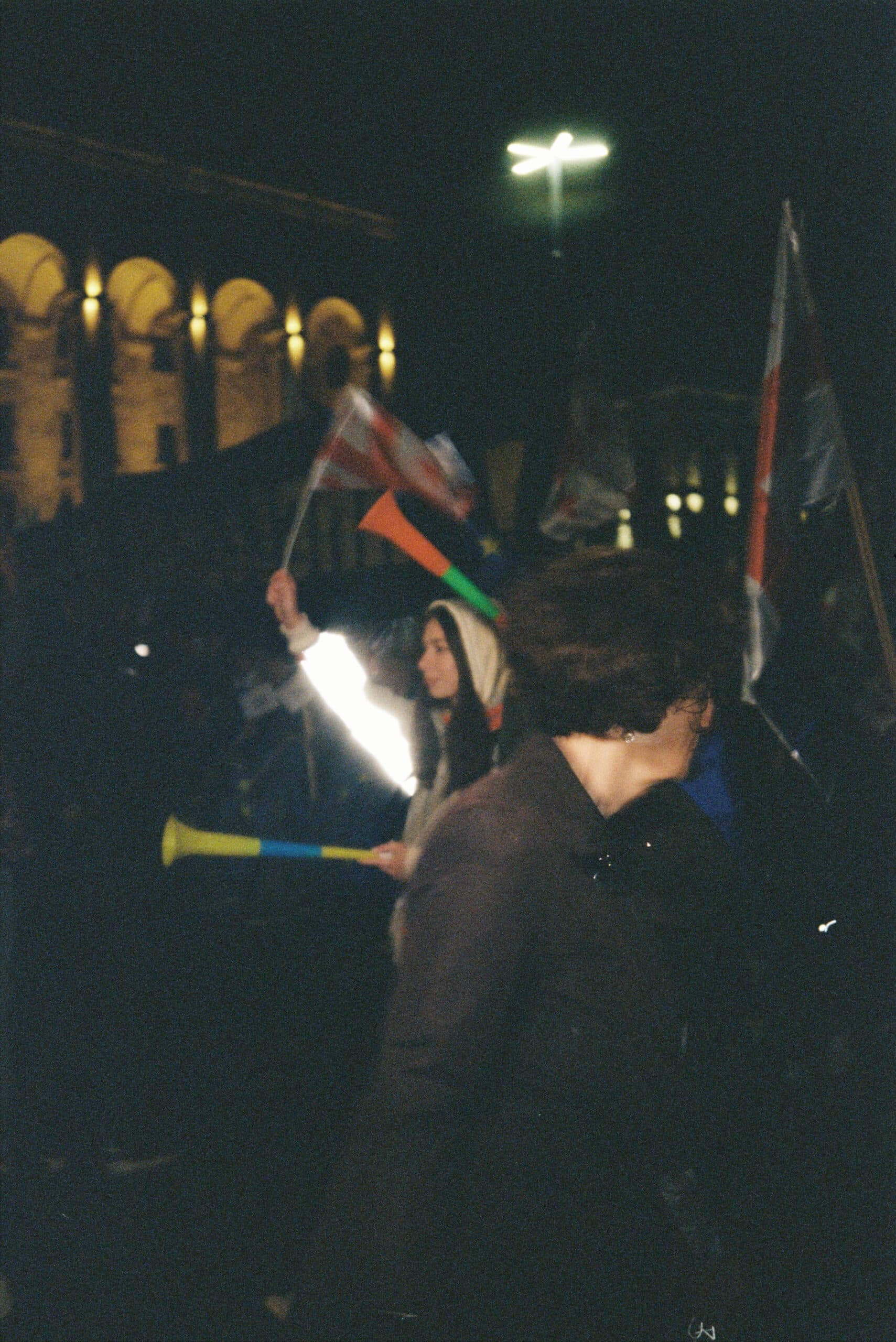
In brief: over the past two years, Georgia’s democratic institutions have been dismantled, leaving a single party, called Georgian Dream, widely seen as a Kremlin stooge, with near-total control. A tiny post-Soviet nation with fewer than four million people is now sliding toward a Putin-like model — ironic, given Russia’s historical enmity. For musicians like Gogiashvili, the question is stark: can Tbilisi remain a party hub while basic freedoms are stripped away, as pro-European Georgians (two-thirds of total population according to reliable polls) are protesting daily for over a year?
Don’t get me wrong. The growing presence in the streets of titushky — black-clad thugs backed by the state — didn’t stop clubs from operating; crowds are still packed, but partying just isn’t enough for catharsis. A slower, deeper, darker alternative has gently taken root: young artists creating extended ambient tracks infused with slow, intricate rhythms or steeped in mountain folk traditions — ambient has a wide range of them. Perhaps it is the fate of all night owls, searching for what they couldn’t find before, spying into new layers when the dance floor no longer satisfies. In Georgia, it feels like a direct reflection of the political machinery: a descent into the darkness.
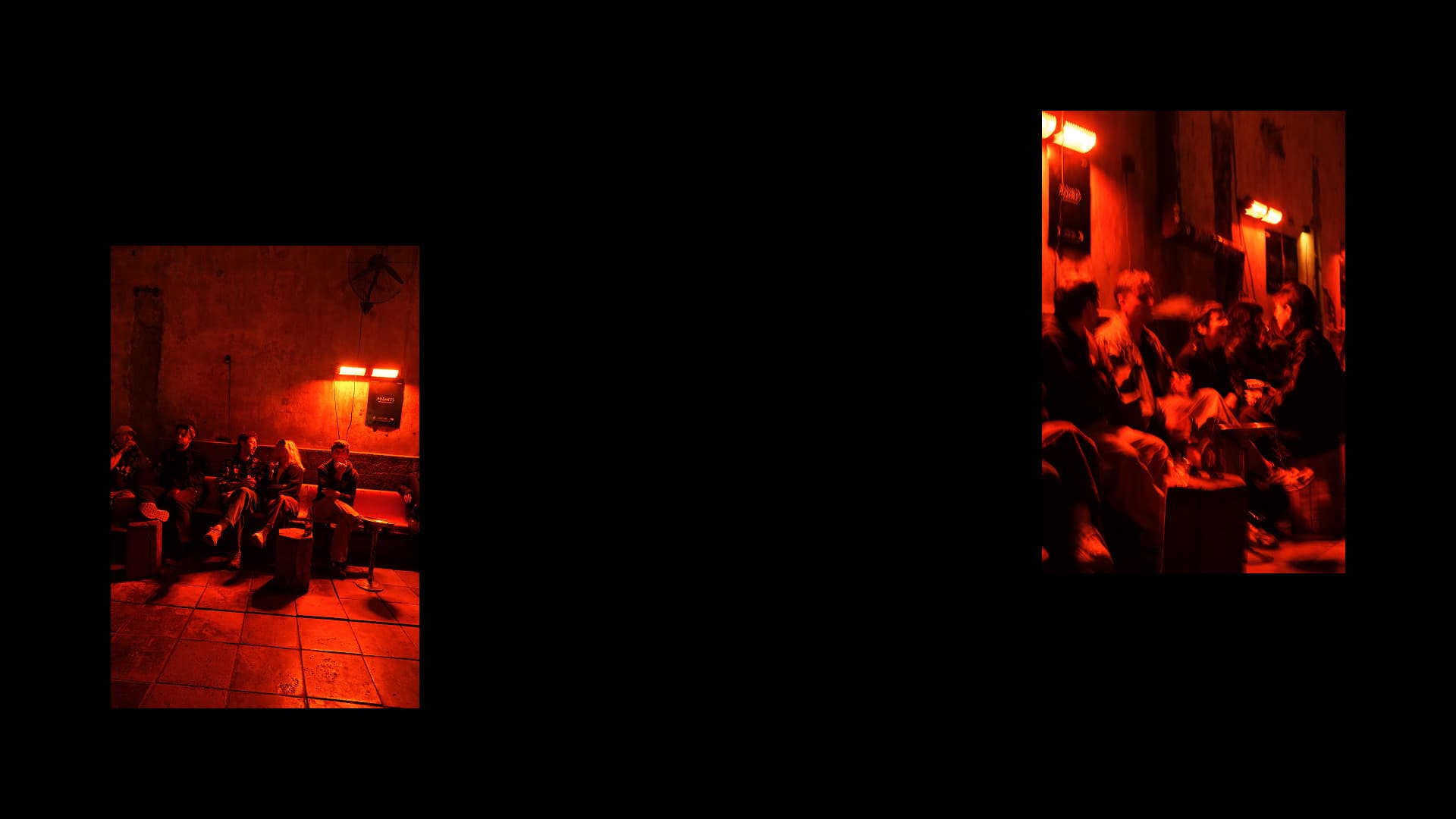
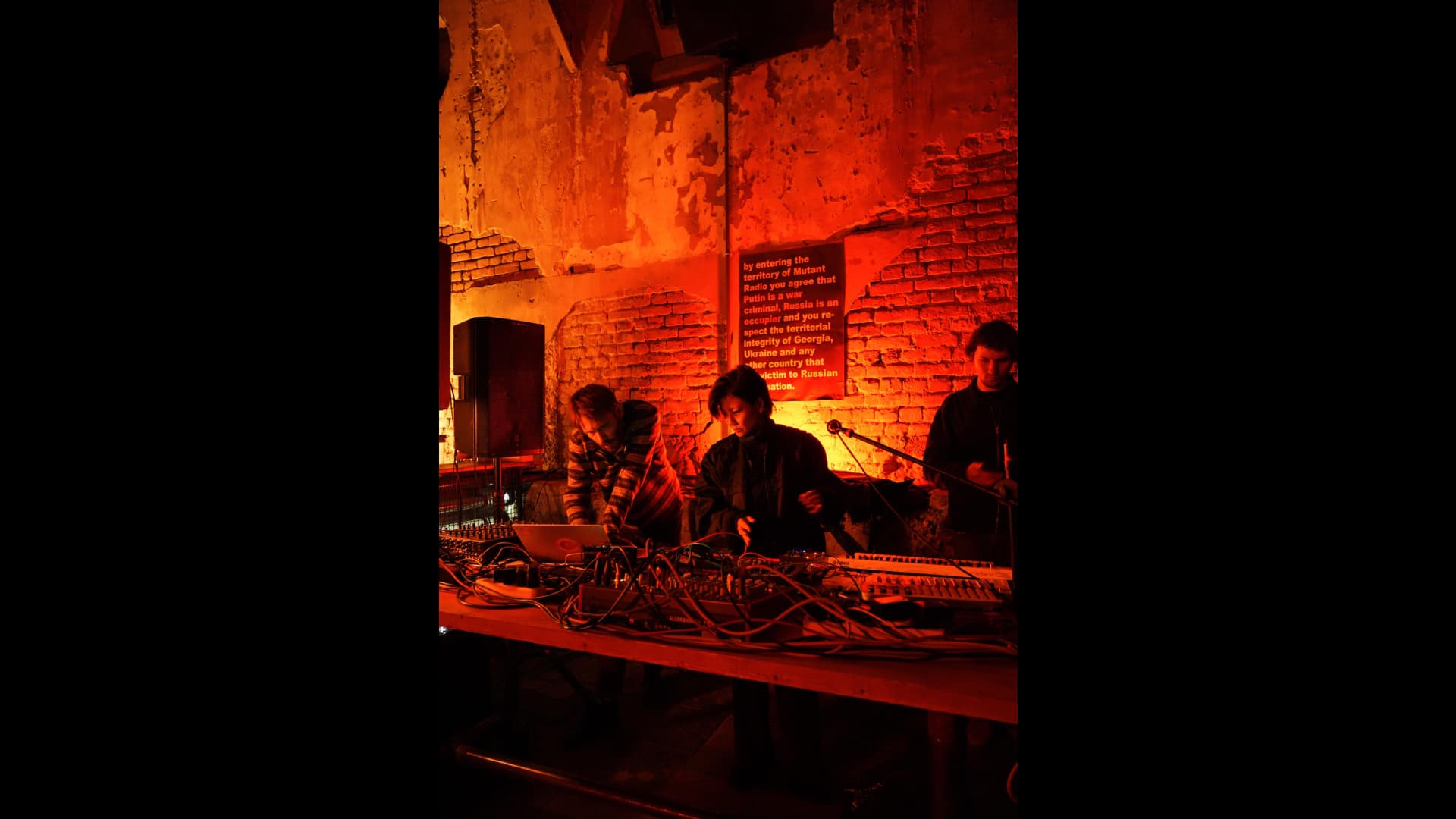
Among others, names are Night Oceann, Tete Noise, Nino Davadze, Gacha Bakradze, Sseq. “Have you been to Mutant Radio?”, all of the artists I met asked me. Nearly each of these ambient all-stars convened that night, as Gogiashvili was hitting the treacherous Georgian mountain roads. Chatting over stretched-out drum & bass sequences. One of Tbilisi’s odd features, Mutant Radio is basically a converted old bread factory, bare walls, and open at unpredictable hours. Upon arrival, a glass of “chacha sour”, Georgian vodka put in a fancy way, is pressed into your hand as music only grows bleaker hour after hour under a yellow light, with a metal chimney venting the room’s tension and energy.
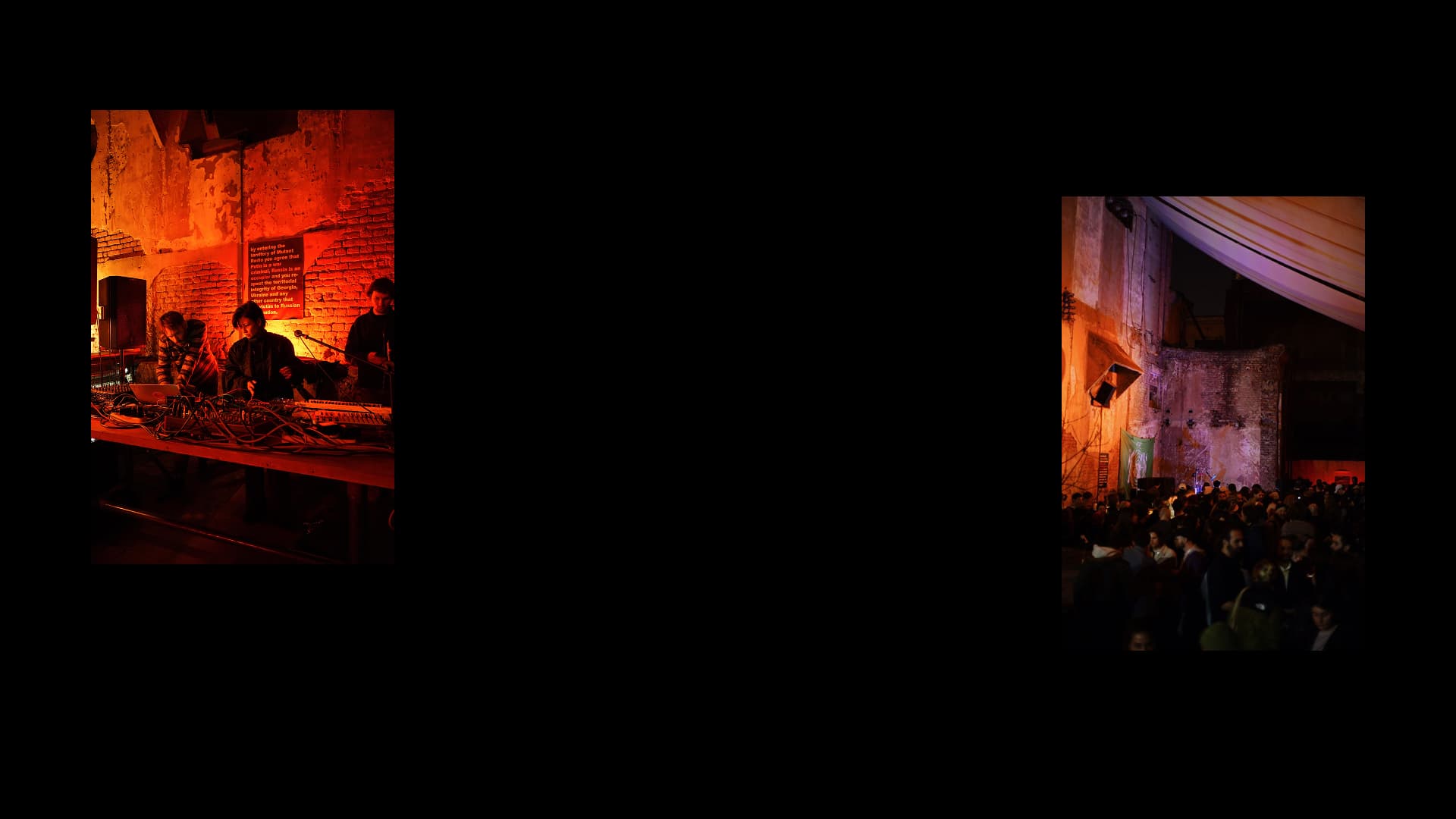
Founded in 2019, when Georgian Dream party first showed its “Russian face,” according to pro-European opponents, Mutant was the first dedicated space for “truly” alternative sounds in Tbilisi, co-created by Tata Janashia, a former audience member who witnessed police raids — often conducted on flimsy grounds — on infamous clubs Café Gallery and Bassiani the year before.
“We started because something was missing in Tbilissi and happened to be the spot where this community can amplify their voices. But it’s not as easy: as every independent organization in Georgia, we had to comply with their new rules,” Tata Janashia comments.
Begrudgingly, but to avoid being targeted as a “foreign agent”, Mutant gave up its NGO status, making European funding, a key crust for them, harder to get. Despite the growing pressure on civil society, the collective launched experimental artists like Awwwara recordings or Tina, bridging Tbilisi and Berlin, where Tata and her associates recently launched an annexe. She is freshly back from Istanbul, and setting up a November trip to France, including gigs in Lyon and Marseille. “Are we global?” she jokes.
Mutant is, as others, where Nina Simonishvili spent most of her time when she feels the need to go out. Once a marketing professional, she swiped her white collar for black outfits. For years she has been producing but went fully modular-synth only two years ago. Before this “golden age”, ambient required serious insider knowledge. “There were no Facebook pages, no dedicated venues, even for the patches you had to go to Europe. Now I can get a two-centimeter-wide tiny oscillator easily,” she laughs. Nina has been trying DJing for fun, even to entertain her 15-year-old daughter, who prefers poppier stuff, but her sound always returns to the ambient spectrum. “I always stretch the tracks, it’s my personal journey, but also the environment around me, this government…” In 2024, amid mass protests in which she participated, against the so-called “Russian law” targeting civil society, nongovernmentals and independent media, she produced “Non Violent Resistance” and sent it over to Soundcloud. Two tracks: a chaotic, hypnotic loop, one being a five-minute fragment of industrial scratches, stripped from techno and rebuilt, oscillating as if it were to say: “So yes this is ambient.”
Like an artist, a scene also has its own story. To understand this one, you need to ask the scene’s most cited artist: Natalie Beridze, 46, but you can call her “Tusia”. I met her on Fabrika’s terrace, a concrete courtyard of graffiti, trendy bars, comfy couches, and boutique shops, which has become a hub for Russians working remotely since the 2022 Ukraine invasion. Not exactly underground for a pioneer like Tusia, but she’s there waiting to give a lecture at CES, the nearby electronic music school where she mentored rising ambient stars like Anushka Chkheidze.
“When I started, there were literally two people making ambient in Tbilisi, so it wasn’t a scene. I became the third,” she recalls. Among the two early figures of the 1990s was her husband, Nika Machaidze, aka Nikakoi, known for blending folk songs into IDM in releases as early as 2000. Also with a chacha sour in hand, also dressed entirely in black, from hair to shoes, her latest project, Street Life (self-released, 2025), stitches together field recordings from protests against the government, a sonic diary of chaos and resilience.
The October 2024 legislative elections, widely seen as rigged, sent people back into the street once again. “In November, December, we were constantly in the protests, unable to focus on anything else. At home, glued to the news, stunned. I needed distance to process the anger, the fear,” she explains. Tusia recorded all of it on her iPhone. The result, dense, noisy, and “barely audible”, she adds, pushed the final album towards noise music. “Passing it through my machines, adding effects, I discovered strange, beautiful sounds that weren’t planned. A passing car, something like that. Layers stacked up, suddenly forming a harmonic structure” — a testament to finding order in turmoil.
Natalie Beridze is one of the few to have broken into Europe, with thousands of streams — not bad for ambient music — and regular international gigs. Abroad, it sparks unwanted political curiosity: listeners asked about Georgia, its unswerving pro-European struggle. “People usually aren’t curious about our country… But to me it is like a magnet. You can’t stay away too long,” she stoutly insists, puffing her vape, black as well, noting the pull of home despite opportunities in Germany and Europe, where her labels, among them being Berlin’s Monika Enterprise, are based. Being away is just short-lived.
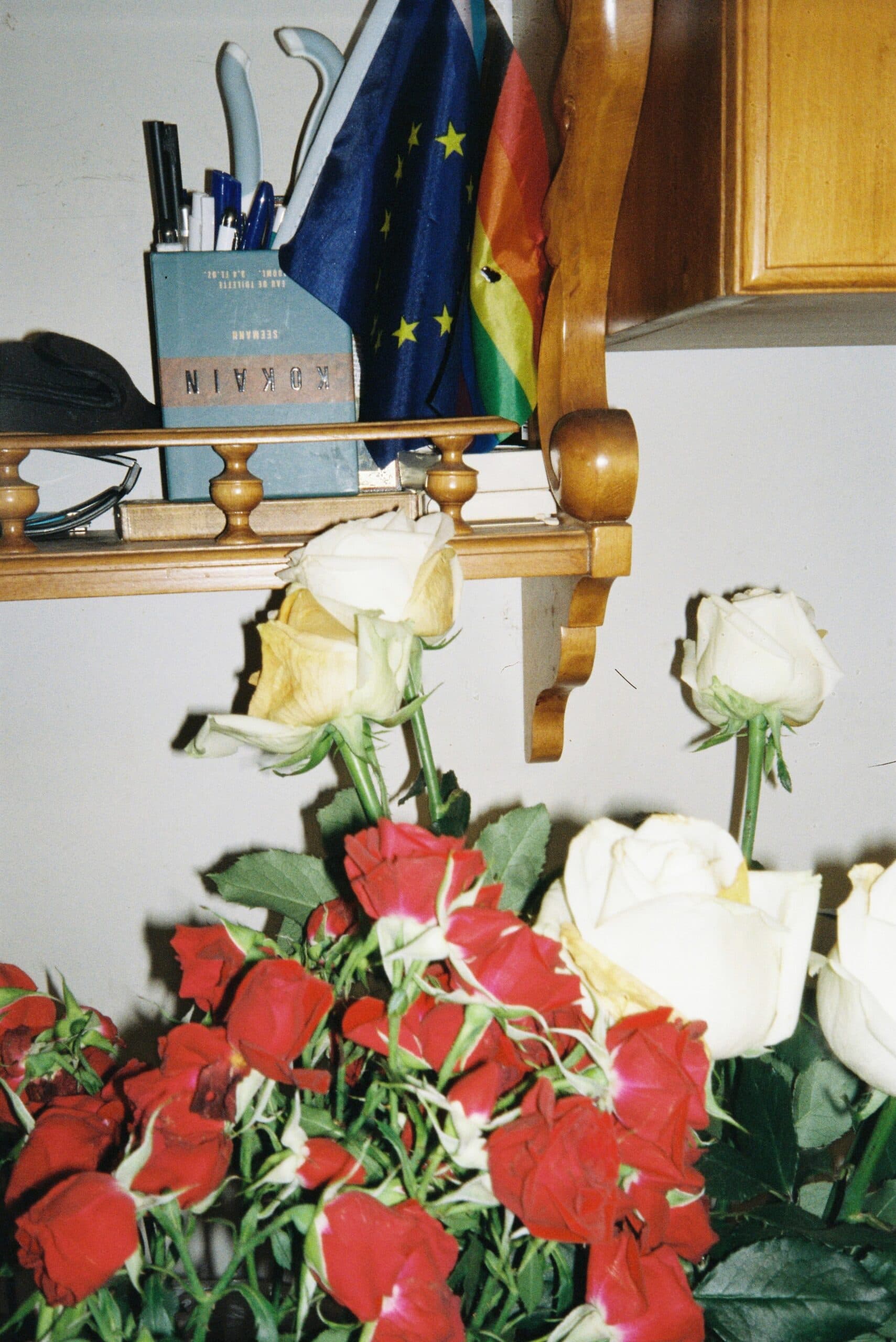
Rezo Glonti, 39 and a close friend of hers echoes this sentiment as he is each year months away from his homeland as a seaman around the world. Using Fruity Loops, Max/MSP, synthesizers, and field recordings, he crafts music immediate, personal soundscapes, closer to experimental stuff than other artists quoted. A sonic refuge in turbulent times.
On oil tankers, he carries a battery-powered OP1 synthesizer, a sampler, a few pedals, and when he is not composing, he basically reads while missing Georgia. That’s how he shaped for example his latest album, hours in software, recording his voice, layering it in Ableton. “I sang in a Georgian traditional choir as a kid, let’s say I started like this. I tried DJing, but it didn’t fit. I never played for fun. This music is honest, unconcerned with trends. I needed something more personal. Something for free people to feel free.”
This ambient movement isn’t anti-system in a violent sense. In Georgia it’s more reflective, a way to process societal tension. Protesters have remained peaceful; their music mirrors that ethos. That night at Mutant Radio where the city’s black-clothed creative crowds gathered, it was a few hours before what the discredited political opposition called a “peaceful revolution” supposedly set on October 4. Of course, none of it came to pass. Just another empty promise from these political parties that, according to many Georgians, lost credibility ages ago. Still, it says something: even with the stakes this high, the movement refuses to abandon its nonviolent stance. They’ve been holding that line for years—no matter the amount of fines against protesters or how much bullshit the government keeps throwing at them. As Beridze explains, “We’ve already done the revolution. We know the destruction it brings. That’s why we mostly oppose it even though we hate those who govern us.” She means 1917, the Russian one, four years before the Red Army stepped in Georgia.
In a country that has been marched over by Russians for centuries, whether it was under imperial yoke or a communist state apparatus, the new ambient scene takes inspiration in what is “truly” Georgian, if this exists amid the complex ethnic and cultural layers this country sleeps on, drawing on traditional folk music and Georgian Orthodox church harmonics. As a child, Beridze hid under her aunt’s piano during lessons, plucking the strings. “We grew up with drunken men around tables suddenly breaking into song. Four, five voices rising together. I still join them today. And ambient loops are essentially prayer music, same as in the churches. That’s where we all come from.”
In Georgia, music has been what binds a child to their grandparents, the before to the after, the pre-Soviet to the post-. The country just didn’t begin with Moscow’s experiments, that clumsy chemistry set of empire-building that tried to bottle a vast and ancient land, with geopolitical hangovers we’re still nursing today. Since the ultimate jolt of the invasion at Russia’s large-scale of Ukraine in 2022, history is back and most Georgians feel directly affected by it. If the government now prefers to erase that history — whether out of personal greed or under quiet orders from the Kremlin — artists like Tusia, Nikakoi, and the constellation of Georgian ambient musicians following in their footsteps, refuse to let that happen. Their weapon? Layers of sound so intricate or ethereal, that most people won’t even care to hear them. But beneath those shimmering textures lies something deeply political: the pursuit of beauty, and of freedom itself.
Amid political unrest and fading freedoms, Georgia’s ambient scene quietly thrives; a dark, hypnotic soundtrack to a country ploughed into autocracy, where beats stretch longer, silence speaks louder, and music becomes a mirror to society itself.
Photos by Thomas GuichardAdditional Photos thanks to Mutant Radio
Nika Gogiashvili isn’t grabbing a coffee in Tbilisi today. He’s heading to a ten-day silent retreat, a bold move for a musician whose life used to be measured in beats. Once a dance-floor regular, producing standard 4/4 tracks in Georgia’s capital he used to describe as “the new Berlin” to shift toward the quietly erupting ambient scene. These days, his music stretches, drones, and lingers, reflecting not just artistic evolution but also the political shadows enveloping his country. “I needed to center myself. With this environment, with everything happening here. We all need more meditation,” he says. Hard to disagree — his work feels sprawling, like standing on a ridgeline. Then he left and was yet again unreachable.
In brief: over the past two years, Georgia’s democratic institutions have been dismantled, leaving a single party, called Georgian Dream, widely seen as a Kremlin stooge, with near-total control. A tiny post-Soviet nation with fewer than four million people is now sliding toward a Putin-like model — ironic, given Russia’s historical enmity. For musicians like Gogiashvili, the question is stark: can Tbilisi remain a party hub while basic freedoms are stripped away, as pro-European Georgians (two-thirds of total population according to reliable polls) are protesting daily for over a year?
Don’t get me wrong. The growing presence in the streets of titushky — black-clad thugs backed by the state — didn’t stop clubs from operating; crowds are still packed, but partying just isn’t enough for catharsis. A slower, deeper, darker alternative has gently taken root: young artists creating extended ambient tracks infused with slow, intricate rhythms or steeped in mountain folk traditions — ambient has a wide range of them. Perhaps it is the fate of all night owls, searching for what they couldn’t find before, spying into new layers when the dance floor no longer satisfies. In Georgia, it feels like a direct reflection of the political machinery: a descent into the darkness.
Among others, names are Night Oceann, Tete Noise, Nino Davadze, Gacha Bakradze, Sseq. “Have you been to Mutant Radio?”, all of the artists I met asked me. Nearly each of these ambient all-stars convened that night, as Gogiashvili was hitting the treacherous Georgian mountain roads. Chatting over stretched-out drum & bass sequences. One of Tbilisi’s odd features, Mutant Radio is basically a converted old bread factory, bare walls, and open at unpredictable hours. Upon arrival, a glass of “chacha sour”, Georgian vodka put in a fancy way, is pressed into your hand as music only grows bleaker hour after hour under a yellow light, with a metal chimney venting the room’s tension and energy.
Founded in 2019, when Georgian Dream party first showed its “Russian face,” according to pro-European opponents, Mutant was the first dedicated space for “truly” alternative sounds in Tbilisi, co-created by Tata Janashia, a former audience member who witnessed police raids — often conducted on flimsy grounds — on infamous clubs Café Gallery and Bassiani the year before.
“We started because something was missing in Tbilissi and happened to be the spot where this community can amplify their voices. But it’s not as easy: as every independent organization in Georgia, we had to comply with their new rules,” Tata Janashia comments.
Begrudgingly, but to avoid being targeted as a “foreign agent”, Mutant gave up its NGO status, making European funding, a key crust for them, harder to get. Despite the growing pressure on civil society, the collective launched experimental artists like Awwwara recordings or Tina, bridging Tbilisi and Berlin, where Tata and her associates recently launched an annexe. She is freshly back from Istanbul, and setting up a November trip to France, including gigs in Lyon and Marseille. “Are we global?” she jokes.
Mutant is, as others, where Nina Simonishvili spent most of her time when she feels the need to go out. Once a marketing professional, she swiped her white collar for black outfits. For years she has been producing but went fully modular-synth only two years ago. Before this “golden age”, ambient required serious insider knowledge. “There were no Facebook pages, no dedicated venues, even for the patches you had to go to Europe. Now I can get a two-centimeter-wide tiny oscillator easily,” she laughs. Nina has been trying DJing for fun, even to entertain her 15-year-old daughter, who prefers poppier stuff, but her sound always returns to the ambient spectrum. “I always stretch the tracks, it’s my personal journey, but also the environment around me, this government…” In 2024, amid mass protests in which she participated, against the so-called “Russian law” targeting civil society, nongovernmentals and independent media, she produced “Non Violent Resistance” and sent it over to Soundcloud. Two tracks: a chaotic, hypnotic loop, one being a five-minute fragment of industrial scratches, stripped from techno and rebuilt, oscillating as if it were to say: “So yes this is ambient.”
Like an artist, a scene also has its own story. To understand this one, you need to ask the scene’s most cited artist: Natalie Beridze, 46, but you can call her “Tusia”. I met her on Fabrika’s terrace, a concrete courtyard of graffiti, trendy bars, comfy couches, and boutique shops, which has become a hub for Russians working remotely since the 2022 Ukraine invasion. Not exactly underground for a pioneer like Tusia, but she’s there waiting to give a lecture at CES, the nearby electronic music school where she mentored rising ambient stars like Anushka Chkheidze.
“When I started, there were literally two people making ambient in Tbilisi, so it wasn’t a scene. I became the third,” she recalls. Among the two early figures of the 1990s was her husband, Nika Machaidze, aka Nikakoi, known for blending folk songs into IDM in releases as early as 2000. Also with a chacha sour in hand, also dressed entirely in black, from hair to shoes, her latest project, Street Life (self-released, 2025), stitches together field recordings from protests against the government, a sonic diary of chaos and resilience. The October 2024 legislative elections, widely seen as rigged, sent people back into the street once again. “In November, December, we were constantly in the protests, unable to focus on anything else. At home, glued to the news, stunned.
I needed distance to process the anger, the fear,” she explains. Tusia recorded all of it on her iPhone. The result, dense, noisy, and “barely audible”, she adds, pushed the final album towards noise music. “Passing it through my machines, adding effects, I discovered strange, beautiful sounds that weren’t planned. A passing car, something like that. Layers stacked up, suddenly forming a harmonic structure” — a testament to finding order in turmoil.
Natalie Beridze is one of the few to have broken into Europe, with thousands of streams — not bad for ambient music — and regular international gigs. Abroad, it sparks unwanted political curiosity: listeners asked about Georgia, its unswerving pro-European struggle. “People usually aren’t curious about our country… But to me it is like a magnet. You can’t stay away too long,” she stoutly insists, puffing her vape, black as well, noting the pull of home despite opportunities in Germany and Europe, where her labels, among them being Berlin’s Monika Enterprise, are based. Being away is just short-lived.
Rezo Glonti, 39 and a close friend of hers echoes this sentiment as he is each year months away from his homeland as a seaman around the world. Using Fruity Loops, Max/MSP, synthesizers, and field recordings, he crafts music immediate, personal soundscapes, closer to experimental stuff than other artists quoted. A sonic refuge in turbulent times. On oil tankers, he carries a battery-powered OP1 synthesizer, a sampler, a few pedals, and when he is not composing, he basically reads while missing Georgia. That’s how he shaped for example his latest album, hours in software, recording his voice, layering it in Ableton. “I sang in a Georgian traditional choir as a kid, let’s say I started like this. I tried DJing, but it didn’t fit. I never played for fun. This music is honest, unconcerned with trends. I needed something more personal. Something for free people to feel free.”
This ambient movement isn’t anti-system in a violent sense. In Georgia it’s more reflective, a way to process societal tension. Protesters have remained peaceful; their music mirrors that ethos. That night at Mutant Radio where the city’s black-clothed creative crowds gathered, it was a few hours before what the discredited political opposition called a “peaceful revolution” supposedly set on October 4. Of course, none of it came to pass. Just another empty promise from these political parties that, according to many Georgians, lost credibility ages ago. Still, it says something: even with the stakes this high, the movement refuses to abandon its nonviolent stance. They’ve been holding that line for years—no matter the amount of fines against protesters or how much bullshit the government keeps throwing at them. As Beridze explains, “We’ve already done the revolution. We know the destruction it brings. That’s why we mostly oppose it even though we hate those who govern us.” She means 1917, the Russian one, four years before the Red Army stepped in Georgia.
In a country that has been marched over by Russians for centuries, whether it was under imperial yoke or a communist state apparatus, the new ambient scene takes inspiration in what is “truly” Georgian, if this exists amid the complex ethnic and cultural layers this country sleeps on, drawing on traditional folk music and Georgian Orthodox church harmonics. As a child, Beridze hid under her aunt’s piano during lessons, plucking the strings. “We grew up with drunken men around tables suddenly breaking into song. Four, five voices rising together. I still join them today. And ambient loops are essentially prayer music, same as in the churches. That’s where we all come from.”
In Georgia, music has been what binds a child to their grandparents, the before to the after, the pre-Soviet to the post-. The country just didn’t begin with Moscow’s experiments, that clumsy chemistry set of empire-building that tried to bottle a vast and ancient land, with geopolitical hangovers we’re still nursing today. Since the ultimate jolt of the invasion at Russia’s large-scale of Ukraine in 2022, history is back and most Georgians feel directly affected by it. If the government now prefers to erase that history — whether out of personal greed or under quiet orders from the Kremlin — artists like Tusia, Nikakoi, and the constellation of Georgian ambient musicians following in their footsteps, refuse to let that happen. Their weapon? Layers of sound so intricate or ethereal, that most people won’t even care to hear them. But beneath those shimmering textures lies something deeply political: the pursuit of beauty, and of freedom itself.