PAM followed Jupiter & Okwess on their American tour this summer, which included a stop at Coachella, one of the most prestigious music festivals in the USA. A trip to Uncle Sam’s country narrated by the Congolese cowboy and shown in images by director Florent de La Tullaye.
At 5 am on April 14, 2023, Jupiter and his four stage partners (Montana, Yendé, Eric, Richard) arrive in Los Angeles. They’re off on an American tour, which includes Coachella, one of the biggest - if not the biggest - festival in the world, with over 200,000 spectators strolling the 33-hectare Empire Polo Club for two weekends. Beyoncé, Billie Eilish, Ariana Grande, The Weeknd, Rosalia, Blackpink... the great stars of American and world pop all parade here. The only thing missing was Jupiter, one of the Congo’s biggest touring stars, who doesn’t play rumba, unlike his other compatriots. No sooner had he stepped off the plane than he and his staff were on a mini-bus driving through the Californian countryside. After three hours, like a mirage in the middle of the Californian desert, a gigantic silhouette appears: it’s that of the festival’s emblematic ferris wheel. Coachella.
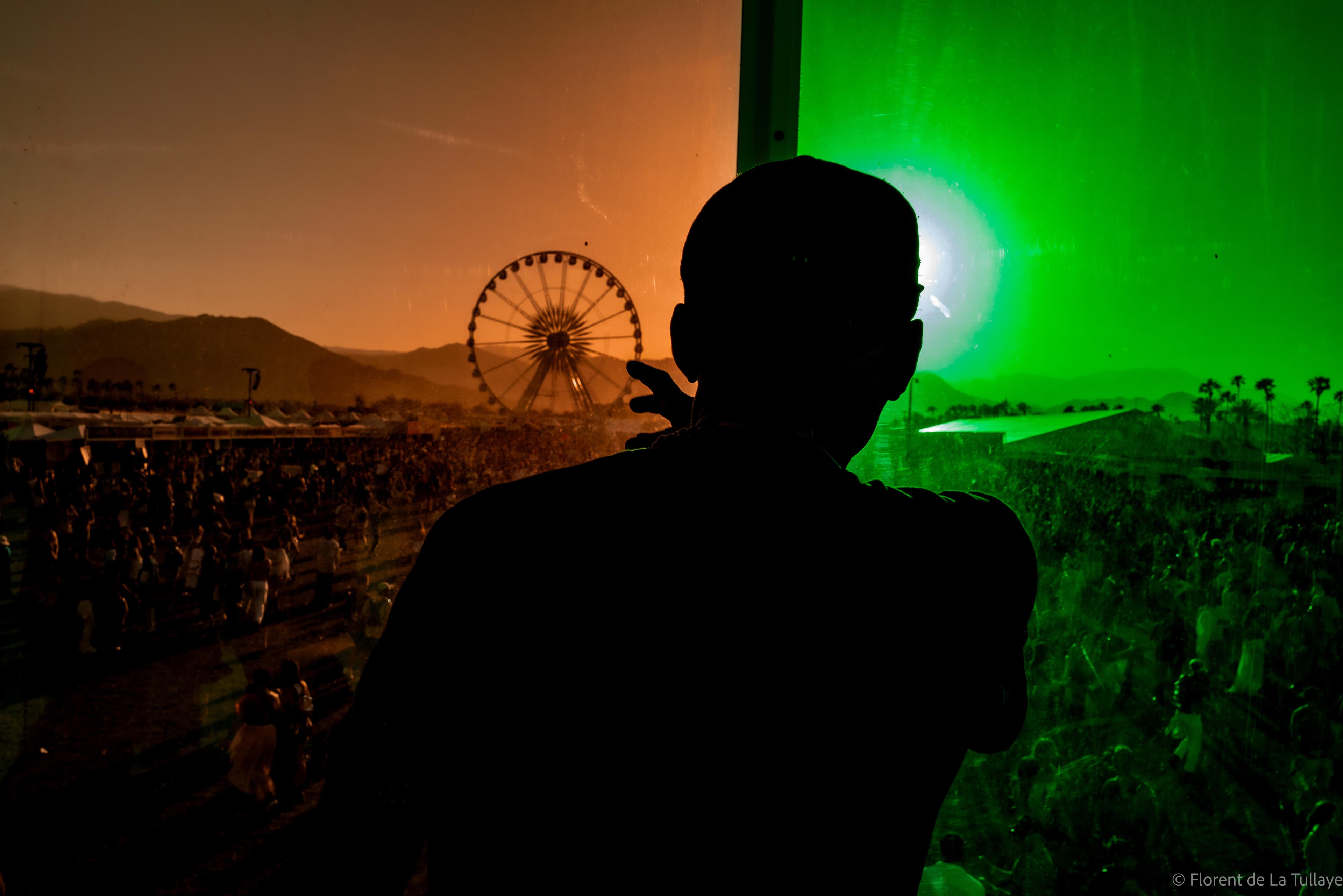
Jupiter is not impressed: a few months ago, he didn’t know about Coachella. But he understood its scope when everyone started calling him when they saw his name on the lineup. Before him, Konono N°1 (with Björk) in 2007 and the group Mbongwana Star seven years later had already planted the Congolese flag in this desert that comes alive every year with the festival. When he arrived, he was loaded onto a golf cart and taken to the Gobi stage, where he was due to perform that day and the following week, at the difficult hour when the sun is at its hottest and many festival-goers are seeking shade and rest. But at 1.20pm, when Jupiter took to the stage, the sound of Okwess brought festival-goers to their feet: very few people here know him, but his electric trances inspired by traditional Mongo rhythms hit the spot. Who could’ve doubted it?

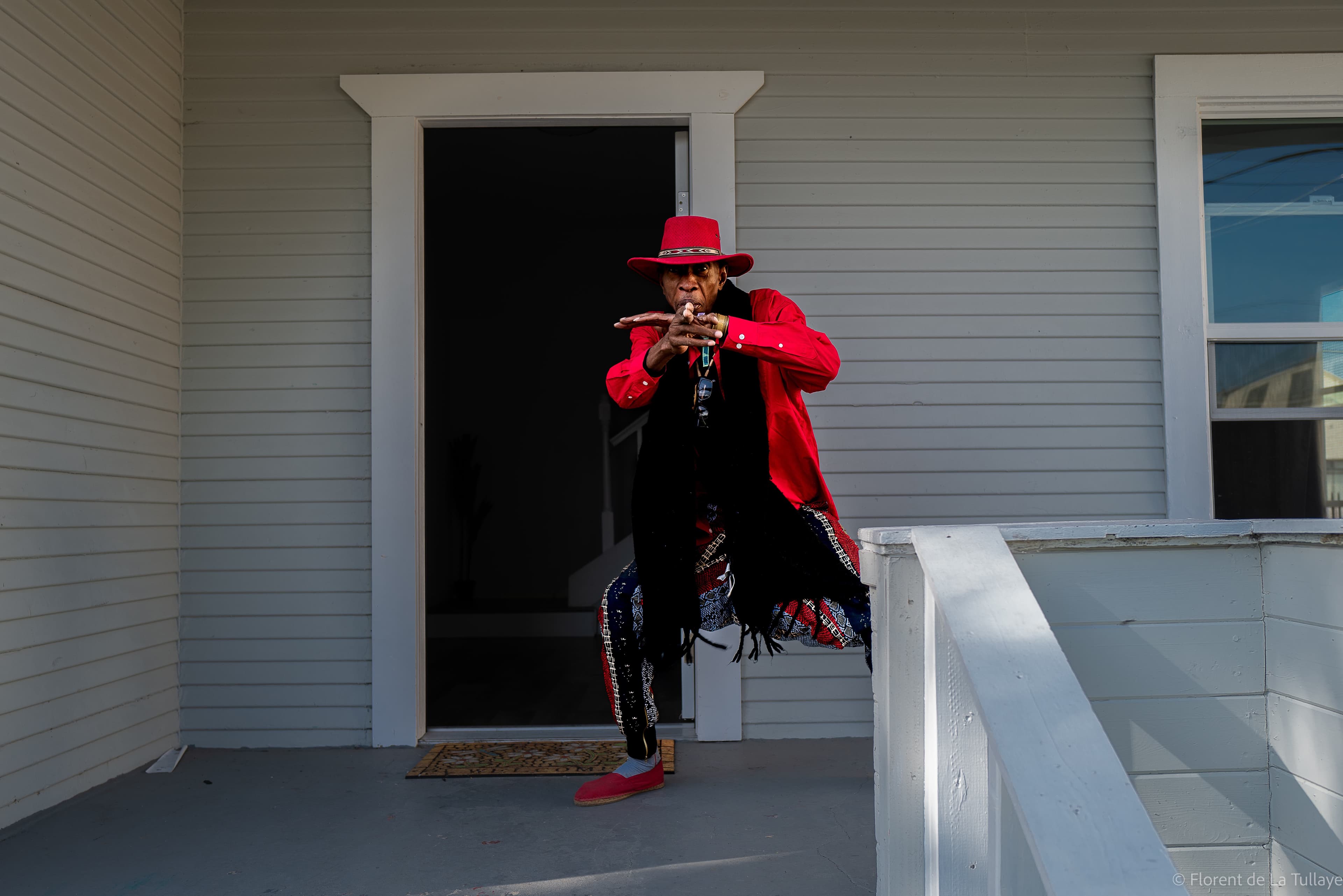
Don’t be surprised to see Jupiter dressed as a cowboy: his outfit is a long, little-known link between the Congo and the USA. As he explains in the film, since the 50s, the image of the United States has been conveyed by Western films, which the Congolese, as elsewhere in Africa, consumed with delight. It got to the point of contributing to the lifestyle of some of Kinshasa’s youth, who liked to pose for the camera dressed as cowboys. In the 60s, street slang was called “hindou-bill”, because it drew on the culture of Bollywood films as well as “Bill’s” films (in reference to Buffalo Bill), i.e. westerns. Jupiter, the general of the Kinshasa commune of Lemba, has retained traces of this culture, and it’s at work here in the land of cowboys and the American dream. So much so that at Coachella, he was quickly dubbed “Django di Kongo” (in reference to the cowboy in the 1966 film Django). But the singer is no fool: dressed as a cowboy, his sympathies lie with the Native Americans. In the film, we see him revelling as he attends the rehearsals of a native band from the Cahuilla Nation. He’s convinced: they too have African ancestors!
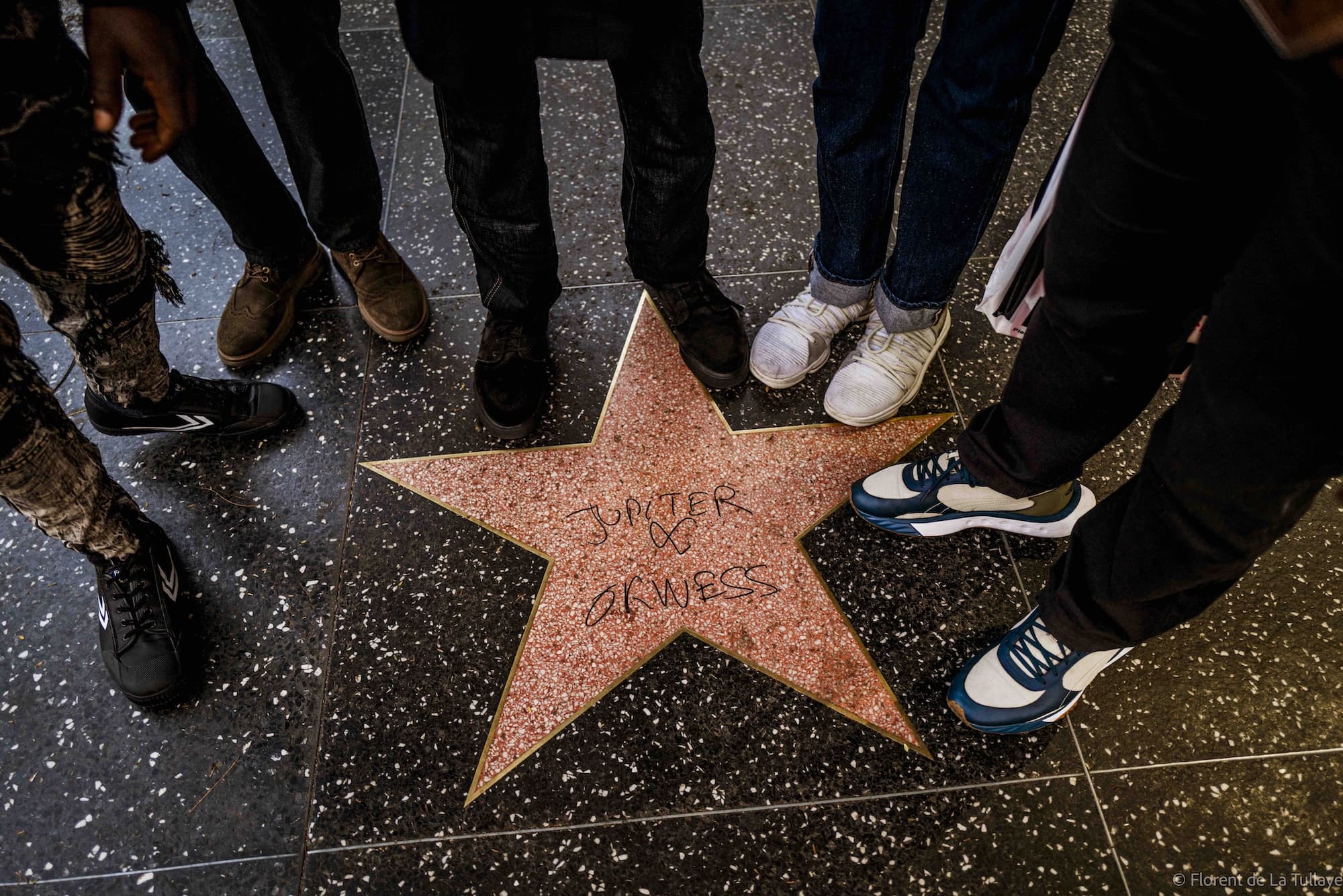
Of course, Jupiter and his band had time to take a stroll between their two Coachella sets, and they didn’t miss a chance to walk down Hollywood Boulevard, whose sidewalks are emblazoned with the stars of America’s greatest song and film stars. On the “Walk of Fame”, Montana the drummer took a photo of Michael Jackson’s star. And then, as luck would have it, there’s a blank star on which no name has yet been inscribed. What if it was engraved with Jupiter and Okwess? The opportunity was too good to miss, seized by a facetious stranger (he insists on remaining anonymous) who had a marker on him... and here they are, part of history. The photo, posted by Florent de la Tullaye on his Facebook page, has even become “news”, with the speed of unverified information on the internet. This is how it ended up as an established fact on Congolese news sites.
The king of bofenia-rock (named after the musical style he invented), after delighting the curious audience at Coachella, continued his tour to Mexico, Brazil and Japan, before returning home to Kinshasa to catch his breath. His participation in the famous festival led to another long series of concerts a few weeks later in the USA and Canada. North and South America are becoming increasingly open to African music. Jupiter knows this, and also knows how much this growing curiosity owes to Afro-descendants who, eager to reconnect with their roots, have increased public interest. And then there’s the next album to finish... A new contribution to the great epic of Congolese music, and to “Congology” as a whole.
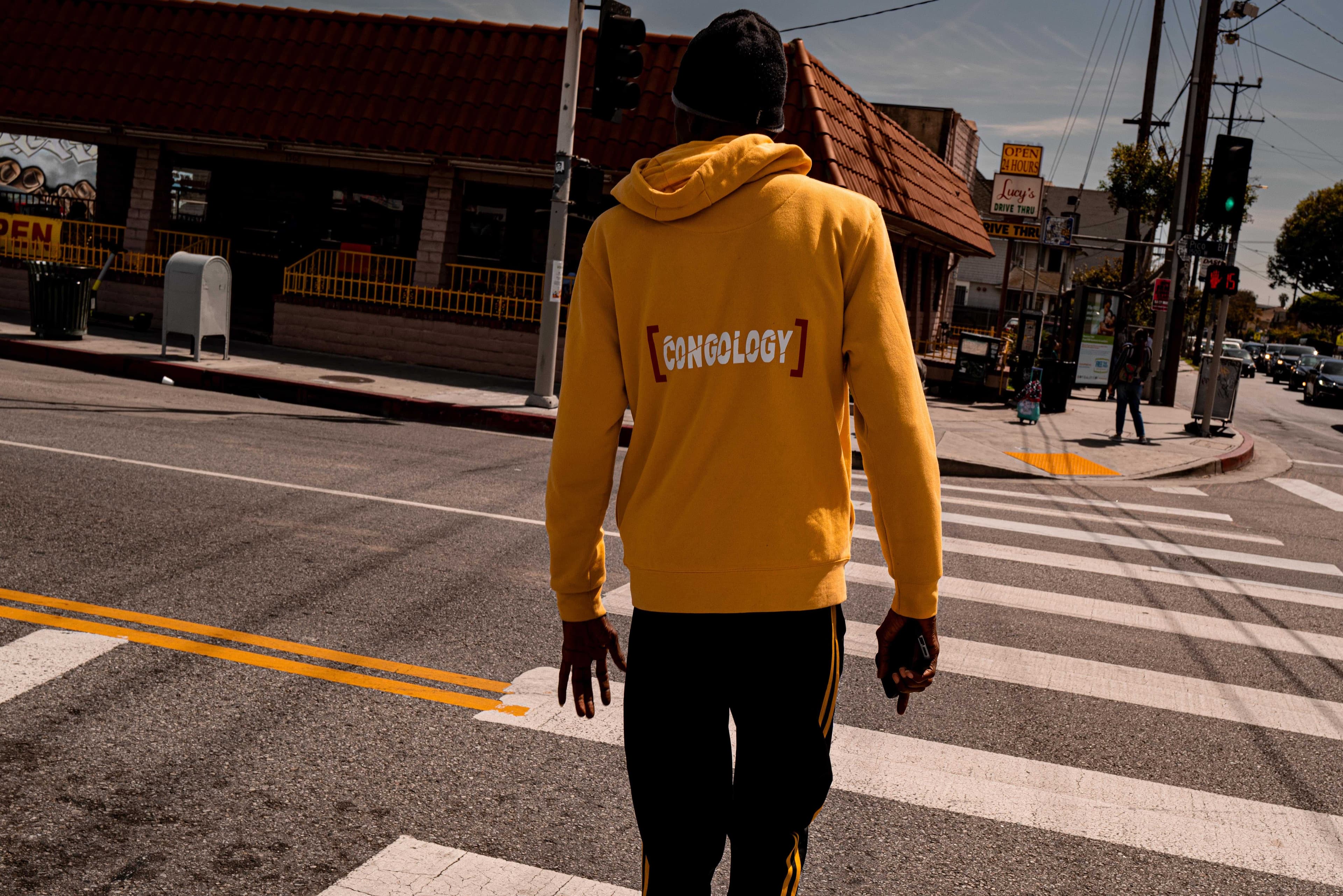
As director Florent de La Tullaye (who also captured the photos above) writes: “Congology is a complex science, which combines the challenges of everyday life with the vitality of rumba, and the ability to smile in the face of life’s vagaries, which offers bananas with one hand but scatters their skins under our feet with the other. In short, it’s an in-depth study of existence between natural splendor and human absurdity. This philosophy is reflected in Jupiter’s music, blending joy and melancholy, cultural richness and the harsh social realities of the Congo.”