A trip into the original twerk music from the traditional bend of Ghana’s muslim majority Dagbon region, where DVD rips and Facebook Lives keep an ancient drumming tradition alive.
Photos & Videos by Morgan GreenstreetEdited & Adapted by Christian Askin
In the orange-gold haze of a harmattan afternoon in Tamale, capital of the Northern Region of Ghana, a wedding celebration is underway. A local assemblyman is marrying his fourth wife and the compound is buzzing with music: A DJ plays local and international hits in the front of the house, drummers pound ancient phrases/praises on hour-glass lunga and boom-buzzing gun-gon drums under side-tents, alongside one-string gonje fiddlers accompanied by (too) many shakers overpowering the humming melody.
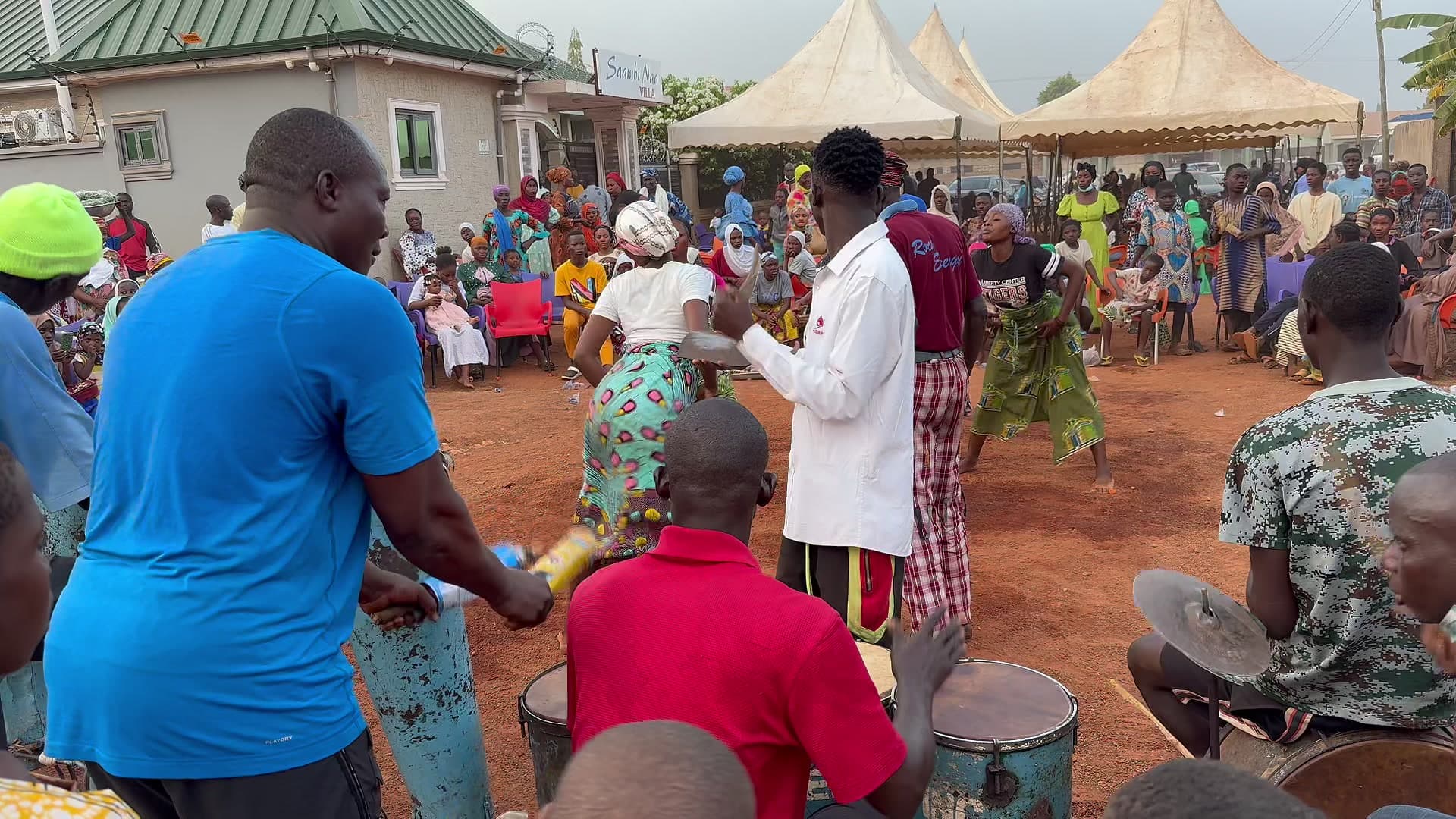
Behind these tents, at the back of the compound, something different is happening: a simpa group is in action at the center of a circle of spectators. A group of young dancers shimmy in the center of the circle, while drummers beat a row of bright blue drums. Their rhythm is driving, fast, relentless, varying in details but unwavering in energy. In the center of the circle are pre-teen and teenage dancers in headscarves and cloth wraps from the waist to the ankles, moving barefoot across the red earth, arms slightly raised, bent at the waists, buttocks jiggling in constant motion. Young girls at first glance, among them is one effeminate boy, also dressed in a wrap.
Moving among the dancers is a tall, thin man wearing red and white checkered bell-bottoms, a blue sash at his waist, a red cap, and a maroon shirt that reads “Rock Energy”. He executes fancy footwork in the dirt, then stops, hand to his ear, wailing praises over the driving drums before grabbing a dancer by the hand and directing her movements. Another group of dancers, older teenage girls, enter the ring, shaking their buttocks harder, backing up to the drums, pushing the drummers to increase the pace of the frenzied rhythm. “This is show – proper show!” yells a man in a blue shirt, the chairman of the group.
The pace quickens, the dancers synchronize their shaking with the hits of the drums. With a sudden call from the congas, the dance is over and everyone disperses.
See is Believing: live simpa from Dagbon
This is the See is Believing simpa group of Nyanshegu community. There was a time when every community in Dagbon had at least one simpa group. Forty years ago, the community of Nyanshegu had four simpa groups. The story goes that simpa arrived in the region in the 1930s, brought by Hausa and Kotokoli peoples from neighboring Togo. It is a neo-traditional dance music like many others that arose in Ghana—and West Africa more broadly— during the late Colonial period through early Independence. Gome, kpanlogo, borborbor, amedzro and others are newer forms of acoustic entertainment using drums, vocals and sometimes trumpets or other brass instruments. At first simpa was played with square frame drums but soon the groups transitioned to locally made metal drums: conical congas for the lead drummer, three short toms called “jazz”, and the bass drum and hi-hats, accompanied by shakers and a bell and often a trumpet or two.
“I started as a kid: the simpa, it was in my house,” Abdallah, the chairman of See is Believing told us. “In those days, there wasn’t light – electricity- in the village, in our community. So when you see the moonlight in the night, the children will come out and play small before going inside to go to sleep.” He told us that See is Believing is in it’s third generation: “The chief of this community started it, even they took it from their forefathers…I took it from them— that is I inherited it from them, they handed it over to me.”
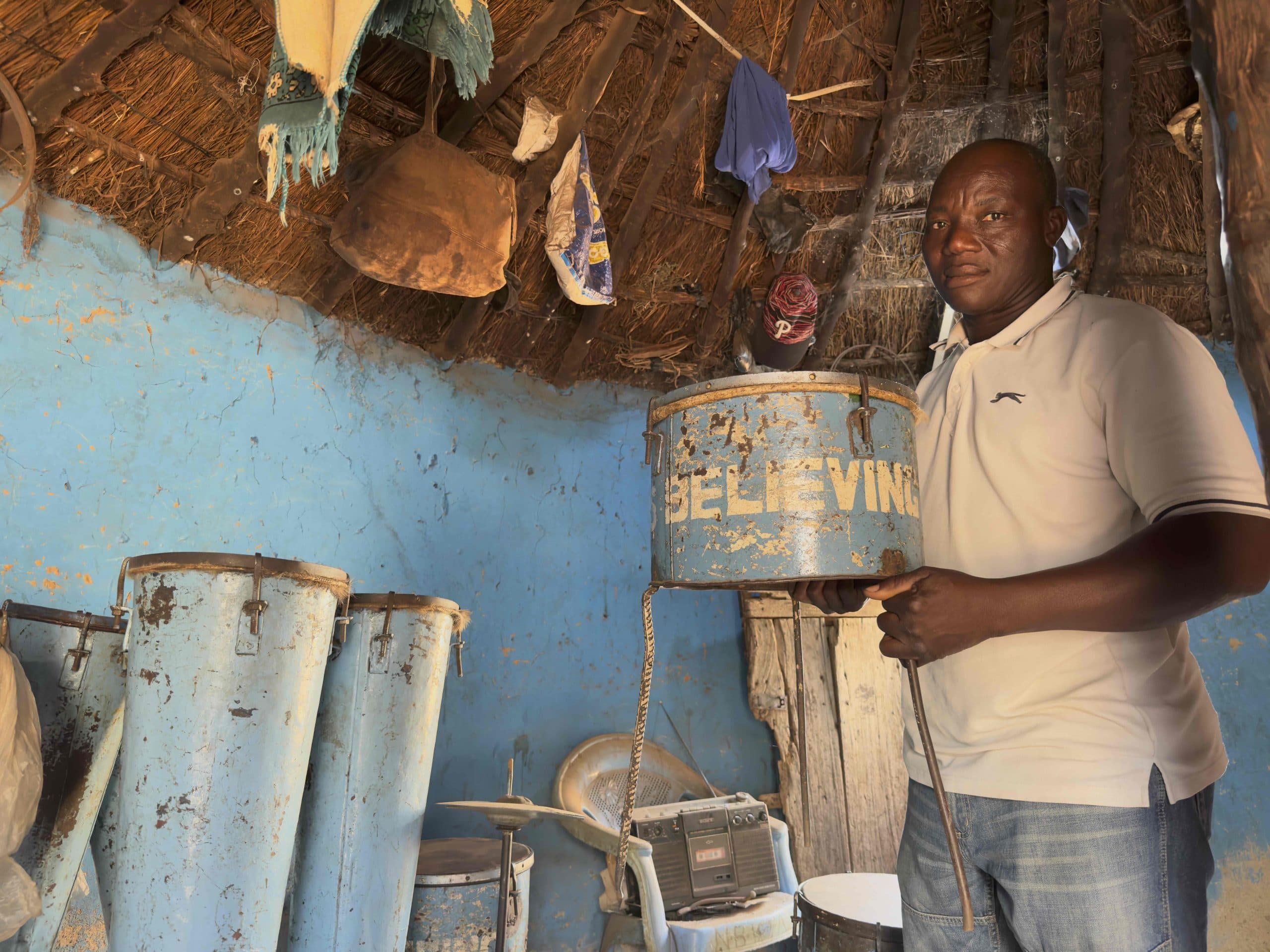
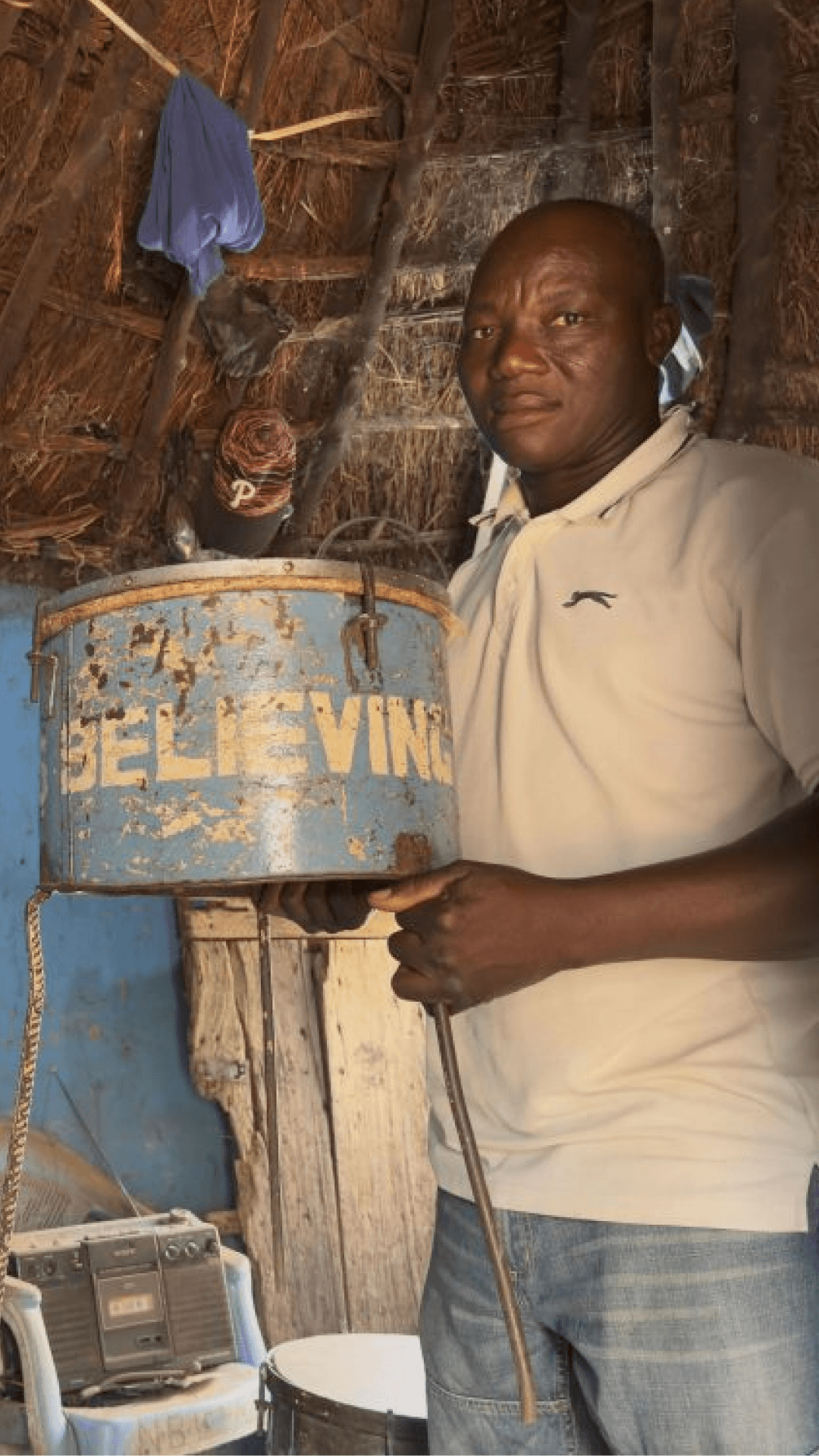
By most accounts, the heyday of simpa was the 1980s, when the style as it is played today solidified and focused around a massively influential local simpa singer named Gingani Gawani, who held the undisputed crown of the local scene until his death about ten years ago. To this day, many of the simpa groups and artists sing his compositions and refer to him as a founding figure of their genre. One lasting tribute, the lead simpa singers/dancers are known Gawani today.
Ebony Dickson and the birth of studio simpa
So how do we get from the acoustic neo-traditional simpa of drums, trumpets and teenagers shaking their buttocks by the light of the moon to the gritty, auto-tuned, VST synth trance of studio simpa?
Travel forty-five minutes on the Tolon road from Tamale, past the University for Development Studios campus in Nyankpala, down a dirt road to the left and stop when you see a sign with a faded photo of the Canadian rapper Drake and a sign that reads: “Ebony services.” Behind the iron-bars and florescent lights of a barber shop, open the side door to a one-room studio with raw foam coating the walls floor to ceiling, a desk in the corner with large studio monitors, and a condenser mic on a white elbow stand. Behind the desk is Mohammed Fuseini, known as Ebony, a self-taught producer, sound engineer, barber, farmer, painter, electrician… Ebony is the architect of ‘studio simpa’ as it is known in Dagbon today. He is responsible for recording just about all of the top simpa tracks right here in this room.
Despite a lack of formal training, he knew for a long time that he wanted to make music. “When I was a student, I wanted to buy a piano. My brother said, ‘No no, don’t buy piano: you buy TV, if you buy TV, your friends will come and watch.’ I bought TV. But my mind was still on piano…. I went to a friend who was a student, and asked him… is there anything in the computer you can press so you hear sound?’ He say, ‘Yes! I have FL studio, but I don’t know how to use it.’ He brought it and overnight I was on the computer. I couldn’t, do anything, it was making “bbgbgbgbgbg” I said ‘Ey?!’” Ebony laughed, imitating the disastrous sounds of his first attempts.
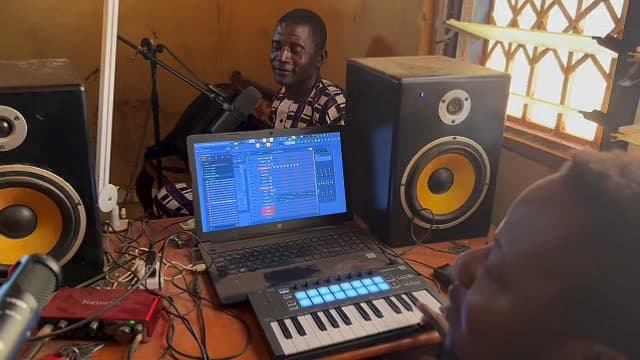
Behind the desk, Ebony hammers with two fingers on his laptop keys and a small midi keyboard. A beat emerges: booming kicks ground a driving repetitive bell pattern, filled out with organic percussion fills.
“I sampled the live drums with my phone to get the right feeling,” Ebony says.
But he kept working at it with the goal of transforming live simpa into something new. “I put it in my mind that, the way we enjoy foreign music, is there no way we can also enjoy our local dance?”
Ebony started frequenting the late night simpa sessions in the neighboring villages, listening closely to the drummers, recording on his phone, returning to his room, and programming beats in FL studio. “I was listening to the way they play the sound and listening to the way I play. After it looks similar, I try to introduce these foreign instrumentals, so it will sound better.” Ebony is referring to the FL studio stock synths he uses to great effect, sometimes echoing the melodies of the singers, sometimes creating a hypnotic bed for the vocals.
When he was ready, he called a local simpa singer known as Dickson Gawani. Ebony told him: “‘I’m trying something, when I finish, I want you to try something on this beat.’ When he [Dickson] put his voice, oh e dey go!”
They would meet in Ebony’s room late at night after his working hours as a barber and record until dawn, taking naps as necessary. “By that time, we didn’t have a soundcard, no condenser microphone.” Instead, he bought a set of headphones with a built-in mic. “That’s what I used to record Dickson Gawani’s first track.” he laughs, singing the beat.
“Our aim was to promote simpa. When people recorded the live simpa, it was too noisy, but Ebony decided to put it to modern instruments to clear the noise and make it attractive with a quality sound.” Dickson recounts. “I talk about the lifestyle of the people, the attitudes, behaviors and situations that people are living in, and I used myself as an example. That’s why I sang ‘Dickson Gawani’.”
With the explosion of studio simpa, other music producers like DJ Chare and Fasco Gee jumped in the game, but many executive producers preferred to come to Ebony because his productions had a high rate of success. “That’s where they started bringing a lot of artists,” Ebony said. In the next few years, he recorded albums for other local Gawanis including Bala Zaaku, African Gawan, Baansi Nyanya, Aminu Dakogu, Amidu Takpule, Obaako and Alhassan Kukuonaa, all of whom had hits in the local market with their collaborations.
But Razak had a vision to push other boundaries: after producing another successful album with Dickson Gawani, he approached Sumayatu Yaa Naara, a Dagbani film actress, about recording a simpa album. Traditionally, women sing the simpa choruses, but the lead is reserved for the Gawani, who, until that time, were all men.
“I told her that I want us to do something historic, something remarkable that has never happened before. I told her we should go to Ebony, the master beat maker, to sing a simpa song. She said she can’t. I encouraged her, and we went to Ebony’s studio.” Razak recounted. “Ebony is the kind of person who, regardless of who you are and the direction you want your song to go, will compose a beat to suit your song and interest.”
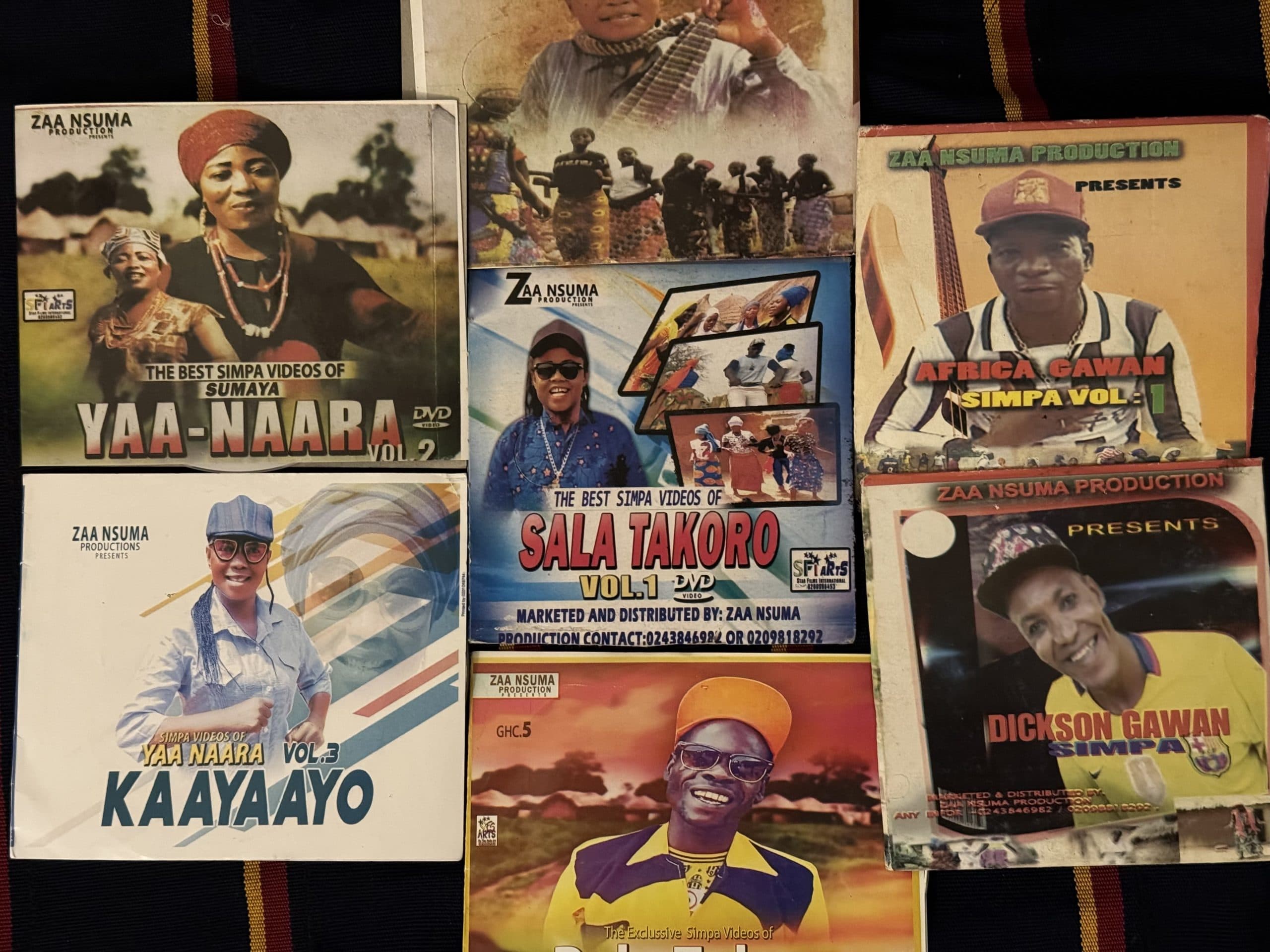
At first they had a hard time because Yaa Naara was unfamiliar with the studio setting and had never sung lead vocals before. “Through patience and collaboration with Ebony, she came out with her first album Volume 1, which contains a song titled ‘Kayayo.’ Because it was the first time in Dagbon that a female sang a simpa song, our Chiefs were totally happy with it.”
Dagbon is a deeply traditional and patriarchal society and every community has at least one Chief who must be consulted and the Chiefs may weigh in on any matter that affects communal life or tradition in Dagbon. The blessing of the Chiefs would be very important for the success of any public project, but even more so in the promotion of a female Gawani, which challenged gender roles in society.
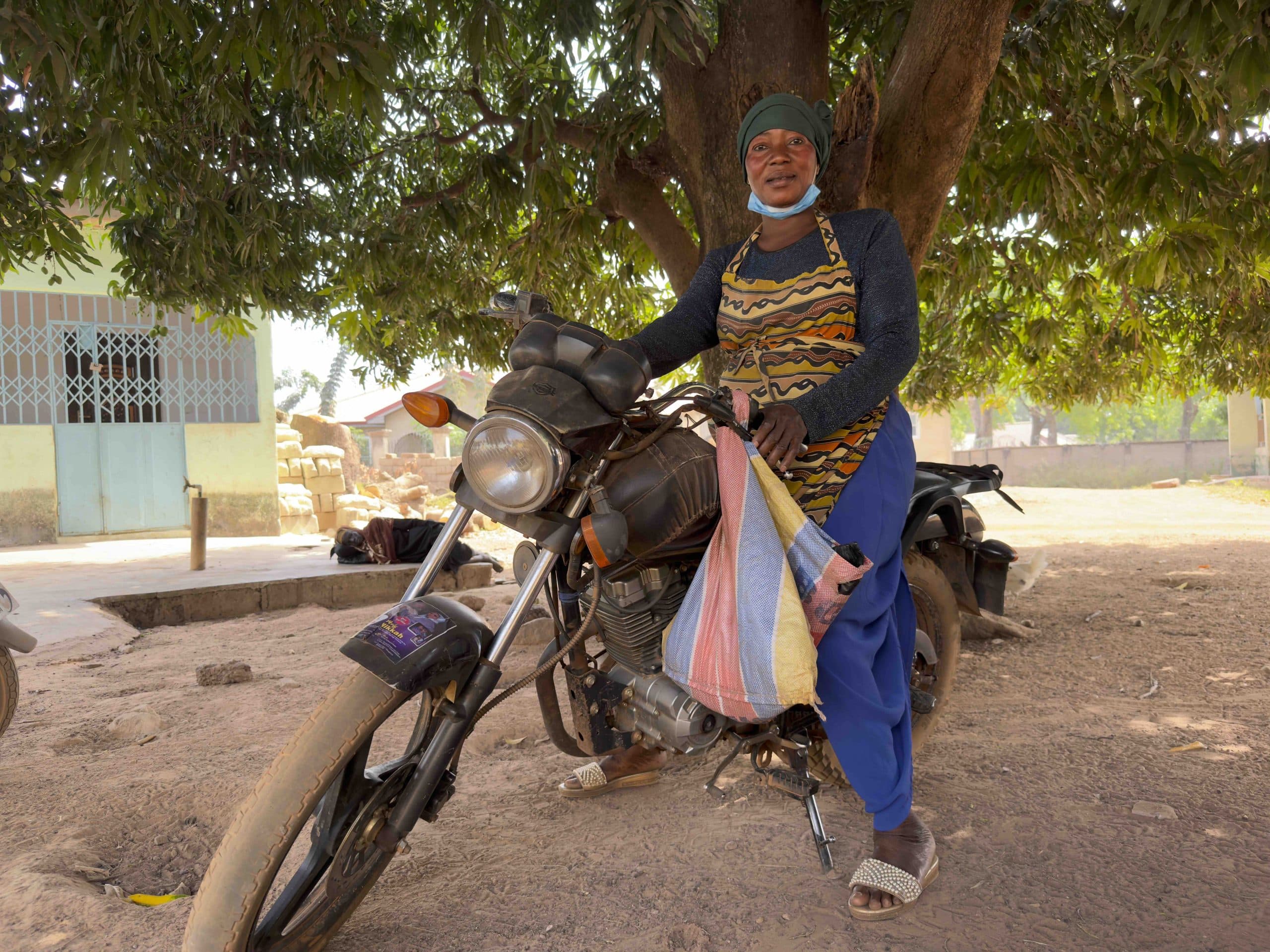
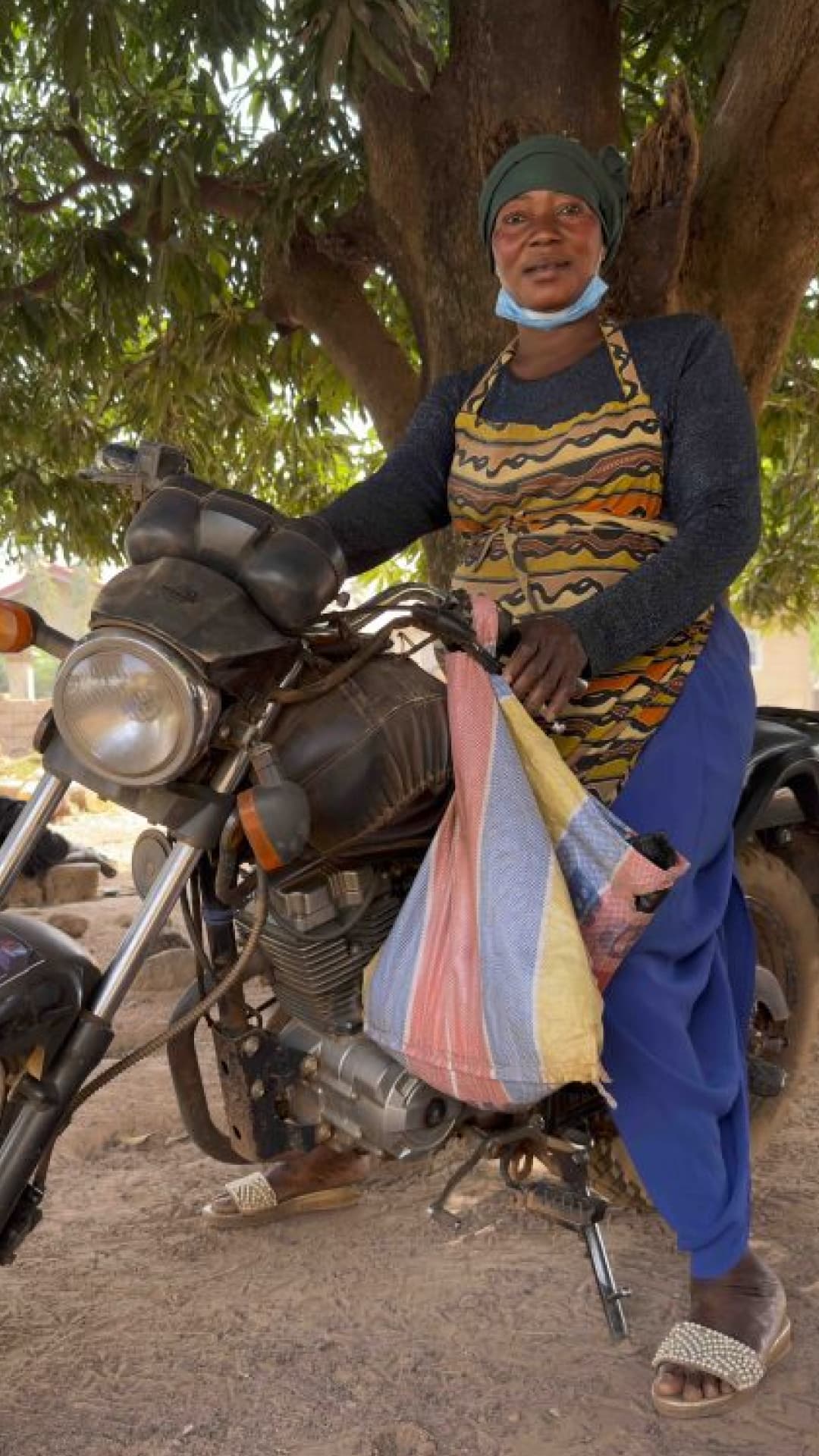
We met Yaa Naara at Bizung school. She was wearing a patterned apron, green headscarf and blue surgical face-mask to filter the harmattan dust on the roads. She was on her way to the market on her motorbike to sell sacks of milled corn meal. She removed her shoes upon entering the room, as is customary in Dagbon; her hands and feet were calloused from many years of hard work.
“How I came to be a simpa artist is that I was a young dancer of simpa in the early days,” she said. “I learned and practiced the dance with my sisters over there and because of that I developed a passion for being a Gawani. My Volume 1 was historic because, since the beginning of simpa, no woman ever produced a simpa track on CD, and to the extent they sold it in the market... The general populace accepted it and thanked me for such wonderful work.”
Yaa Naara’s success opened the doors of simpa to other women, including Sala Takoro, another star simpa singer, managed by Razak. We met her at Razak’s kiosk on a bright street in the outer market of Tamale.
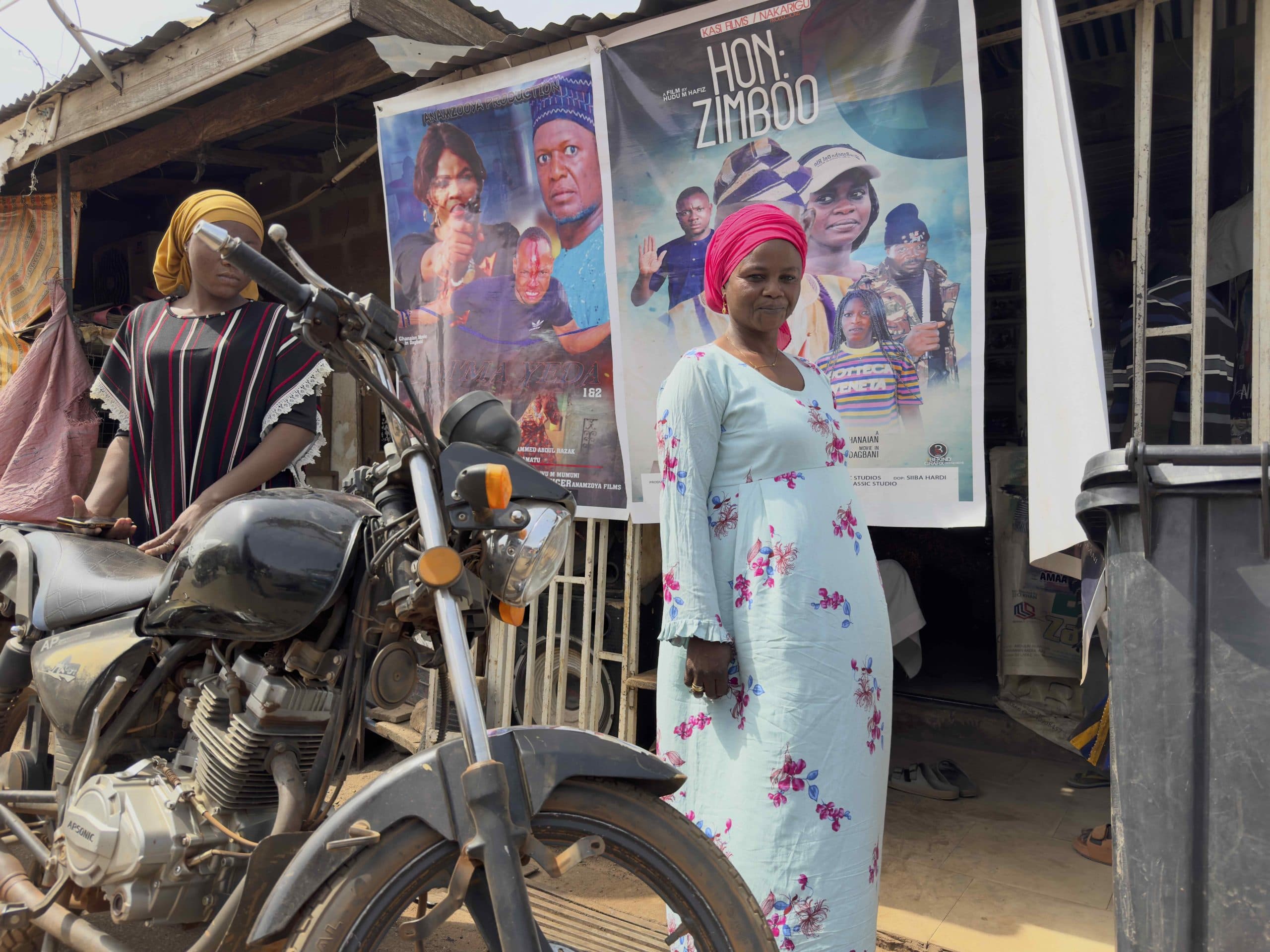
Outside, Takoro was wearing a light blue dress and pink headscarf, but in her music videos she usually dresses in the same manner as the male Gawanis; in a cap, trousers and a sash at the waist.
“We are familiar with simpa dresses after all. It is part of our culture and customs,” she explained.
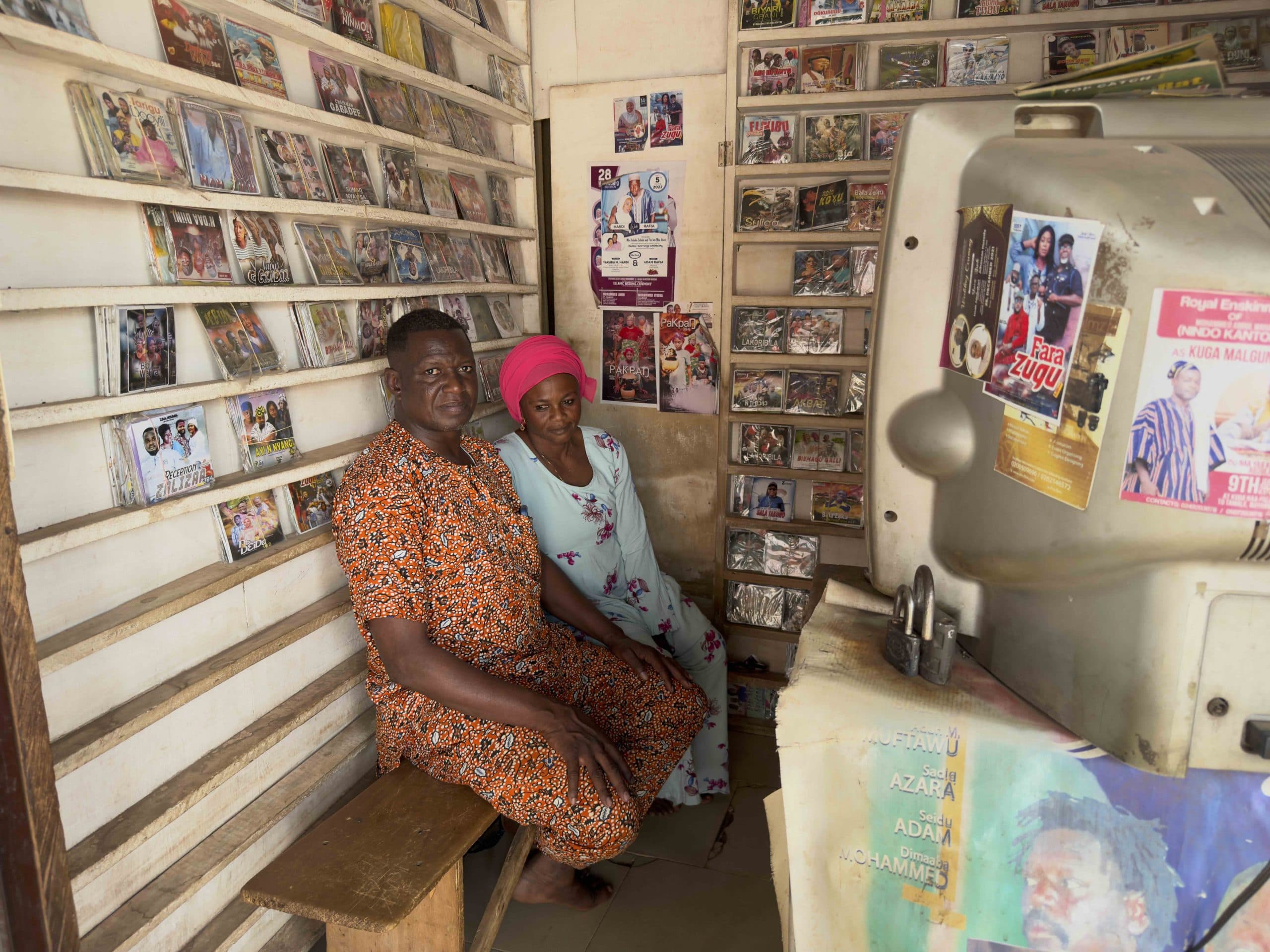
Pushing up the flap of a movie poster with Razak’s face on it, we slipped into the relative darkness of the shop where the manager and artist sat on a bench against a wall of racks displaying colorful DVDs.
When her album came out Sala Takoro was instantly celebrated in Dagbon. “People accepted it, and I was shown love anywhere I went. They still ask for more CDs. We were not criticized. Rather, they motivated us for such historic efforts.”
The success of Yaa Naara and Sala Takoro has opened the gates of simpa to other female Gawanis, including Akosuwa Gawani who competed in the 2023 Zaa TV Simpa competition. While this small cultural revolution wouldn’t have been possible without the rise of digital studio simpa, the role of women in simpa is mostly still defined by the strict, patriarchal gender roles of Dagomba society.
Gender, religion, and simpa
Islam has become central to Dagomba society since the conversion of king Naa Zangina in 1700. Dagombas are predominantly Muslim and, for the most part, have conservative ideas of gender norms. Although it is very common to see women driving cars and motorcycles in Tamale and owning their own businesses and selling produce in the market, one Gawani told us, “The pride of a lady, how respectful she is and how business-minded she is are all nothing if she is not married to a man.”
In his doctoral dissertation Islam and Gender in Dagbon [2017, University of Cape Coast], Mustapha Abdul-Hamid describes how women are marginalized by misogynist interpretations of Islam and how Dagomba society has become increasingly patriarchal:
In the late 1970s to early 1980s there was a phenomenon in Dagbon called ja’milti febbu. Ja’milti febbu literally translates as “whipping prostitutes.” In this practice, which was sanctioned by both traditional rulers and Afanema [Islamic scholars], scores of young men were unleashed onto the streets at night after 10:00pm and any woman who was found roaming the streets at that time was to be considered a prostitute and whipped. Initially there were officially sanctioned vigilante groups who were “licensed” to engage in ja’milti febbu. Later on, any young man who felt inspired by the desire to “protect public morality” joined in the frenzy of whipping women on the streets at night. [237]
During the same time period, live simpa was flourishing in Dagbon. Within this context, simpa dancing — which mostly takes place late at night—exists as an area of cultural transgression against the norms of Islam in Dagbon, where female sensuality and male lust are allowed, though within limits.
There was a case in 2020 when a local station, Zaa TV, came under fire from Tamale Imams for an evening simpa show where viewers could share their screens and dance along to the songs, often dressed in house clothes that were deemed inappropriate for public viewing.
“Here in Dagbon or in Islam, it is not permissible for a married woman to dance and overly shake herself for any man other than her husband.” Razak explained. “Simpa dance is different from what they are doing on Zaa TV Zoom. Some married women exposed certain parts of their bodies to an extent of unacceptable shaking of buttocks to others beside their husband and viewers across the globe. So when that act triggers the minds of people, they will begin to say simpa dance is not good.”
“But the way it was played on the TV station was the problem in the sense that it was played at times when a woman should be with her husband. In some cases, the husband would enter the room to be with his wife, and the woman would use a single cloth around the breast, dancing, shaking the buttocks to other men publicly on the TV station. That is why they were kicking against the simpa dance.”
Razak contrasted the backlash against this TV show with the place of live simpa in the community: “We have never seen a live simpa at any naming ceremony being chased away by anybody. If simpa wasn’t good in our culture, our elders would have kicked against it like the way they chase after Dramadol and the weed smokers. But who has ever chased away simpa dance? Nowhere.”
However, the prohibition against married women dancing simpa is not confined to the screen. Yaa Naara told us, “For a married woman to dance simpa is Islamically and culturally unacceptable because the dance is mainly based within the waist, and it’s not advisable for a married woman to shake her buttocks to other men. For me, I can dance simpa because I am not a married woman.”
Several days later, we met up with Naaimah, one of the older dancers of See is Believing simpa group. She was accompanied by the group’s chairman, Abdullah, at the group’s headquarters in the community of Nyanshegu. We sat on a bench outside a store-room where the group keeps their drums.
“I was twelve years old when I started dancing simpa, but now I’m eighteen plus,” Naaimah told us. “It’s a good thing. Dancing is my hobby. My mother was dancing simpa, my sister also was dancing simpa.” However, her brother didn’t approve. “The time I started dancing simpa my brother was asking me to stop. If you are dancing it, they are looking at you as a bad person, but it’s play. It’s about tradition.”
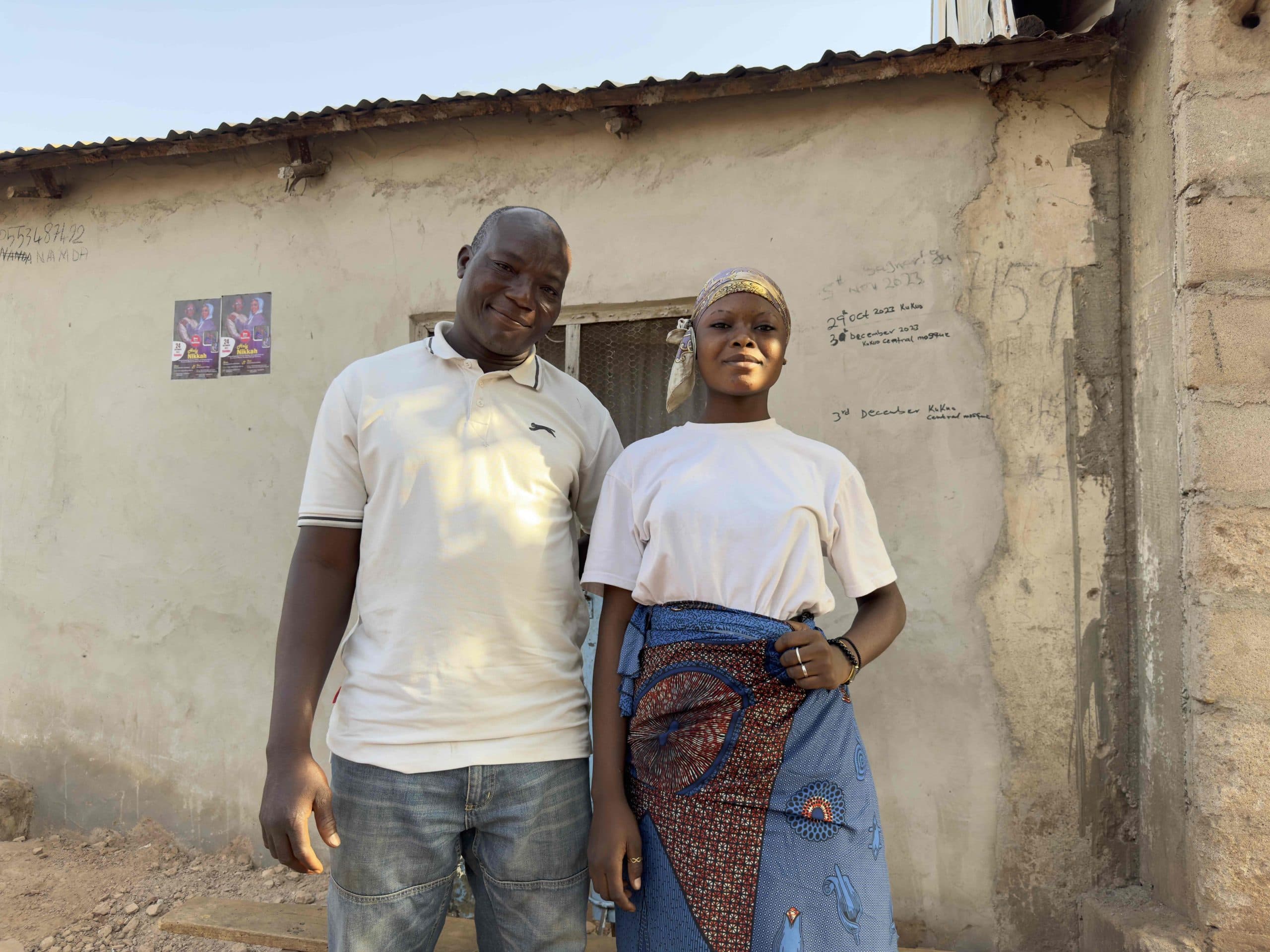
Naaimah decided to continue dancing, since she had the support of her mother. Her sister had now married and, as a result, stopped dancing. “Some people are saying that simpa is not good, but it doesn’t matter. It is my own hobby. I like to dance and I go and join them.”
Naaimah is currently a student and she’s learning hairdressing at a local salon. However, once she gets married, she plans to stop dancing. “If I get married, I can’t continue,” she laughed. “It’s not only me! In our group, no one is married. You can’t dance and they look at you like that.”
Sala Takoro also got her start dancing with the Nyanshegu See is Believing group before becoming an actress and later a simpa singer. She opened up once we got to talking about dancing:
“The way simpa is danced does not go contrary to our culture. In the olden days, I used to dance simpa with my senior sisters, of which they were married… In the period I used to dance simpa, the Gawani would only raise and hold your finger up while you do your dance moves. If they say I should dance the olden days simpa, I will, but today’s simpa, to be frank, I can’t dance it. Simpa is still the same, but it is the dancing style that changes.”
There is a section of a 1984 British series called Repercussions: Drums of Dagbon that includes footage of Gingani Gawani dancing with several young girls. The girls dance with one hand raised and a slight fist, gently moving their shoulders and backs from the waist while Gawani takes their hands and guides them as they move slowly and subtly to the drums. But times have changed.
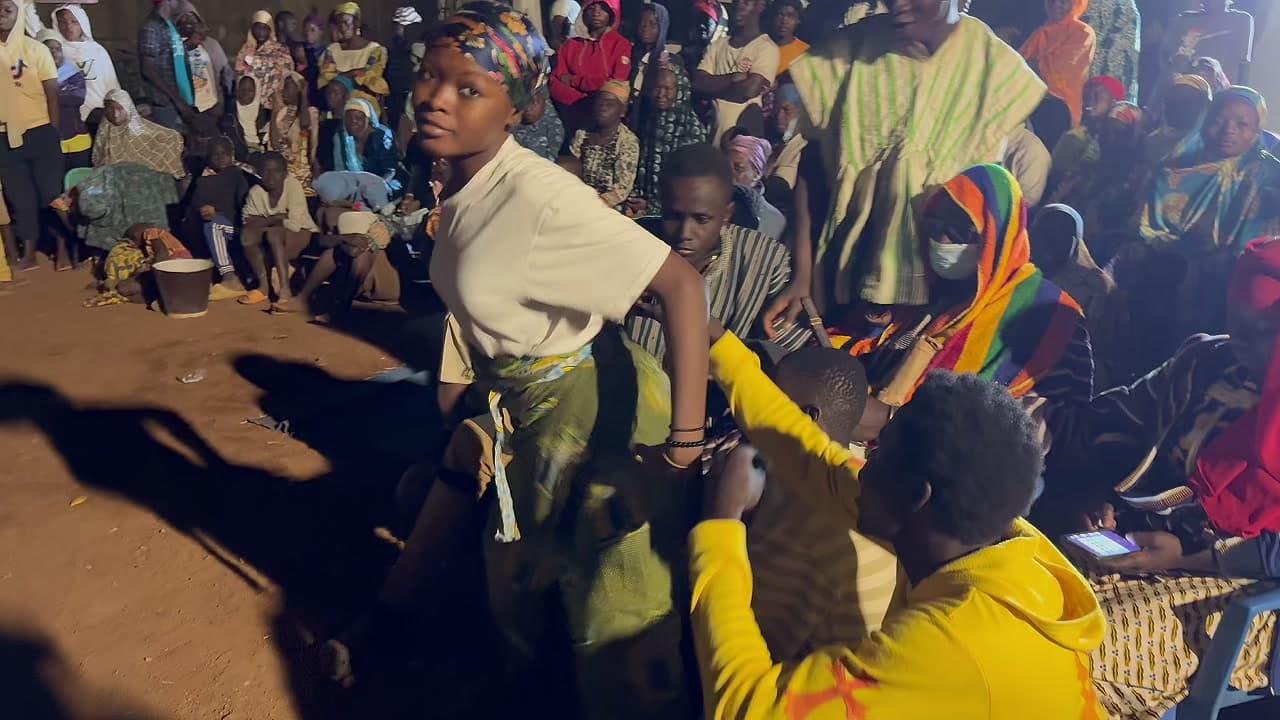
“Our modern-day simpa dance changes, which focuses on shaking the buttocks and the waist, and frequent touch of the Gawani “ Takoro continued.
“The changes occurred about ten years ago. It is the dancers who brought the changes of shaking the buttocks and waist, which is in the interest of the young men for spending money on them and earning them applause.”
Razak explained that in the past, the dancers were not paid, they participated for their own enjoyment and any money that the spectators dashed on them during their dancing was collected by the group and saved for future expenses such as repairing drums or transportation. At some point, this practice changed and the dancers were allowed to keep at least some of the money. Around the same time, the dancing also evolved.
“Currently, the organization of simpa dance has totally changed. Now, before you invite the simpa dance group to any occasion, an amount of money will be paid to the group elders after bargaining. Money spent on the dancers at the dance floor belongs to the dancers, but after the dance, a token will be given to every participating dancer from the amount paid earlier, which in the early days was different. That is the change that has occurred in the simpa realm.”
Of course, simpa is not the only African and Pan-African neo-traditional dance that focuses heavily on booty-shaking. Other examples on the continent include mapouka from neighboring Côte d’Ivoire, singeli, baikoko and kigodoro in coastal Kenya and Tanzania (often more explicit than simpa dance) not to mention so many dances in the African diaspora: baile funk, New Orleans bounce, perreo, twerking…
In the live simpa context, sometimes women also spray the girls with money, either placing the bills in the dancer’s hand or directly on her shaking buttocks, the way the men do.
When we asked Naaimah if the current style of dancing brings more money, she said, “Yes. You have to benefit something from it. I’ve been benefiting from it.”
From Wapariga to Shakara: local and outside influences on simpa
Aside from its acquiescence to the culture of the times, simpa also incorporates some traditional rhythms and musics of Dagbon. For example “Aguro”, from Ya Naara’s second album, uses the sapashina rhythm of the warriors clan of her hometown, Tolon. The chief of Tolon (Tolon Naa) is the traditional leader of all the warriors of Dagbon. She explained, “Tolon, in general, is a town for warriors – sapashina- and I have a lineage to the traditional kingship.”
The gun-shot samples in Ebony’s production also mimic the practice of ceremonially firing muskets. “Damba” from her third album uses the damba rhythms of the annual chieftaincy celebration. On these tracks and some of his simpa productions Ebony uses lunga talking drum samples to create the feeling of live percussion.
We visited the Gawani Alhassan Kukuonaa in his village of Jantong wulanyili, about a forty minute drive from Tamale. He explained that live simpa follows a generic form with five main elements. “Wapariga”is the introduction, slower and rhythmically syncopated. Next is“Highlife” which features the “jazz” drummer playing lead instead of the congas and is clearly based on Akan highlife. “Letters” features drum language from the conga drummer. Then to the main body of the dance, called “Show” which contains the sections zangalewa and shakara. In the course of a live simpa night, this cycle lasts from twenty to thirty minutes and repeats with each new round of dancers.
Alhassan Kukuonaa told us that the shakara dance comes from a traditional dance. “Dagombas call it tora, but because we incorporate it into simpa, we called it shakara from ‘Shei waa’ (waist dance).” As in the traditional dance, during shakara, the dancers bump hips with each other and with the Gawani.
According to the few pieces of historical writing about simpa from former Ghanaian president John Mahama (My First Coup d’Etat) and musicologist John Collins (Highlife Time), simpa groups in the 1970s used to frequently perform covers of James Brown and other international pop songs, often with new lyrics sung in Dagbani or Hausa. They also performed local Akan highlife songs, Congolese and Francophone African pop songs and basically anything popular at the time. One enduring aspect of this history is the name of one of the main rhythmic sections of simpa, “zangalewa”, which is possibly derived from the 1986 song “Zamina mina (Zangaléwa)” by the Cameroonian makossa group Golden Sounds, famously plagiarized by Colombian superstar Shakira in 2010.
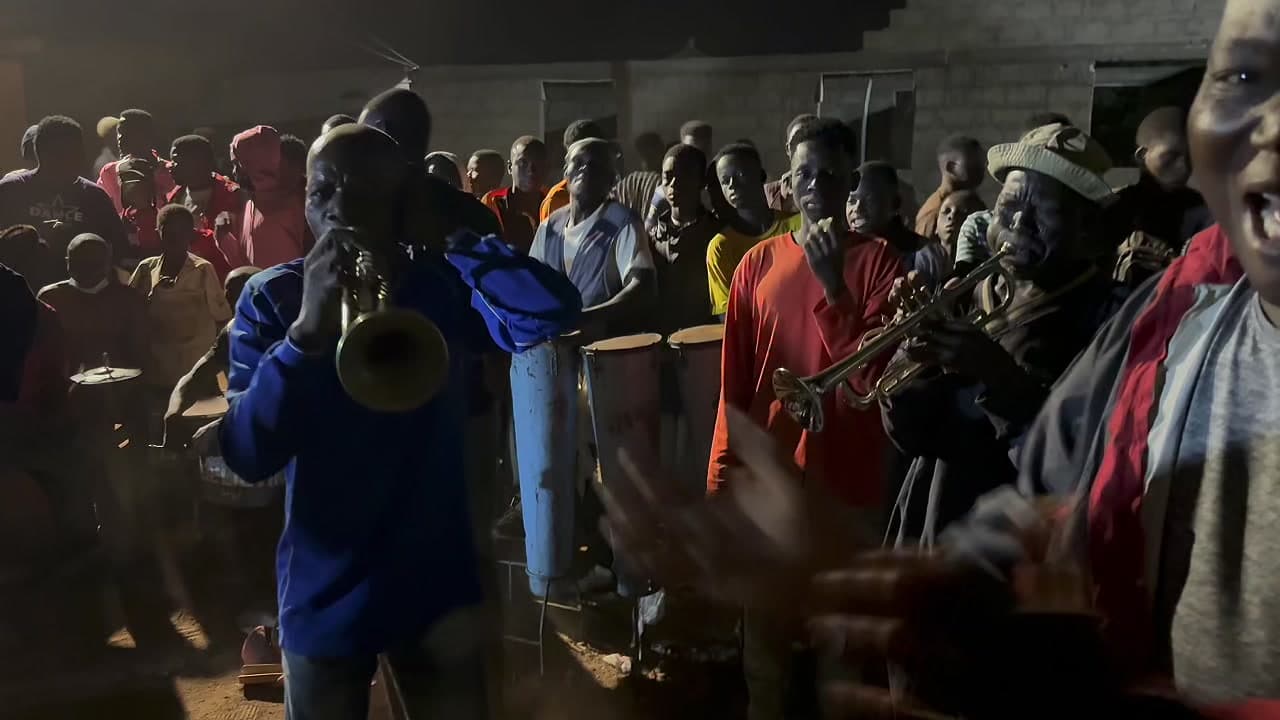
During the live simpa night with See is Believing in the neighboring village of Jana, the trumpets quoted melodies from the 1977 international hit “Ziboté” by Ivorian singer Ernesto Djédjé, a fragment of “Zamina mina (Zangalewa)”and a Bollywood motif.
Bollywood films remain very popular in Dagbon, and Indian film music and fashion styles have had a crucial influence on simpa. When Dickson Gawan gave us a USB crammed with mp3s of his music, he also copied a digital rip of 1982 Bollywood film Disco Dancer. During that dance scene, the percussionist plays a set of three conical congas that bear a striking resemblance to local drums made for simpa. The lead dancer Mithun Chakraborty wears bell-bottoms, a waist sash, and high-heeled boots. He exhibits a flashy, flamboyant dancing style, at one point even bumping his hips against a female dancer in the manner of Gawanis during “shakara” sections of simpa.
“We lack support” the economics of studio simpa
Despite the flash, simpa artists are mostly farmers, not professional musicians or full-time artists. Bala Zaaku, Dickson Gawan, Alhassan Kukoanaa and Obaako all live in the outlying villages and communities surrounding Tamale and spend much of their time farming.
While local pop singers such as Fancy Gaddam, IsRahim and Macassio are fully embracing mainstream Afrobeats aesthetics and digital economics, pushing an image of quick money and modernity, simpa artists are having a hard time adapting to the internet age. Prior to the release of the Autotune The World compilation Studio Simpa: Digital Dance Music on VCD from Dagbon, Northern Ghana, no simpa music is was distributed digitally to Youtube or DSPs. When we discussed this with producer Mohammed Razak, he complained that someone had uploaded his productions to Youtube without his knowledge and without benefiting him. He hasn’t yet digitally distributed his own productions.
“The question matters a lot to us,” Razak said. “Truly, the use of DVDs in the olden days was beneficial for us, but now it seems outmoded. A lot of us sat for a meeting to discuss how to adopt changes to benefit from our intellectual works. Some suggested that we should use pen drives, while others opposed it by saying people will still steal them. Others said we should be sharing our projects on social media. Most of us lack the education on the use of social media and what social media is all about.”
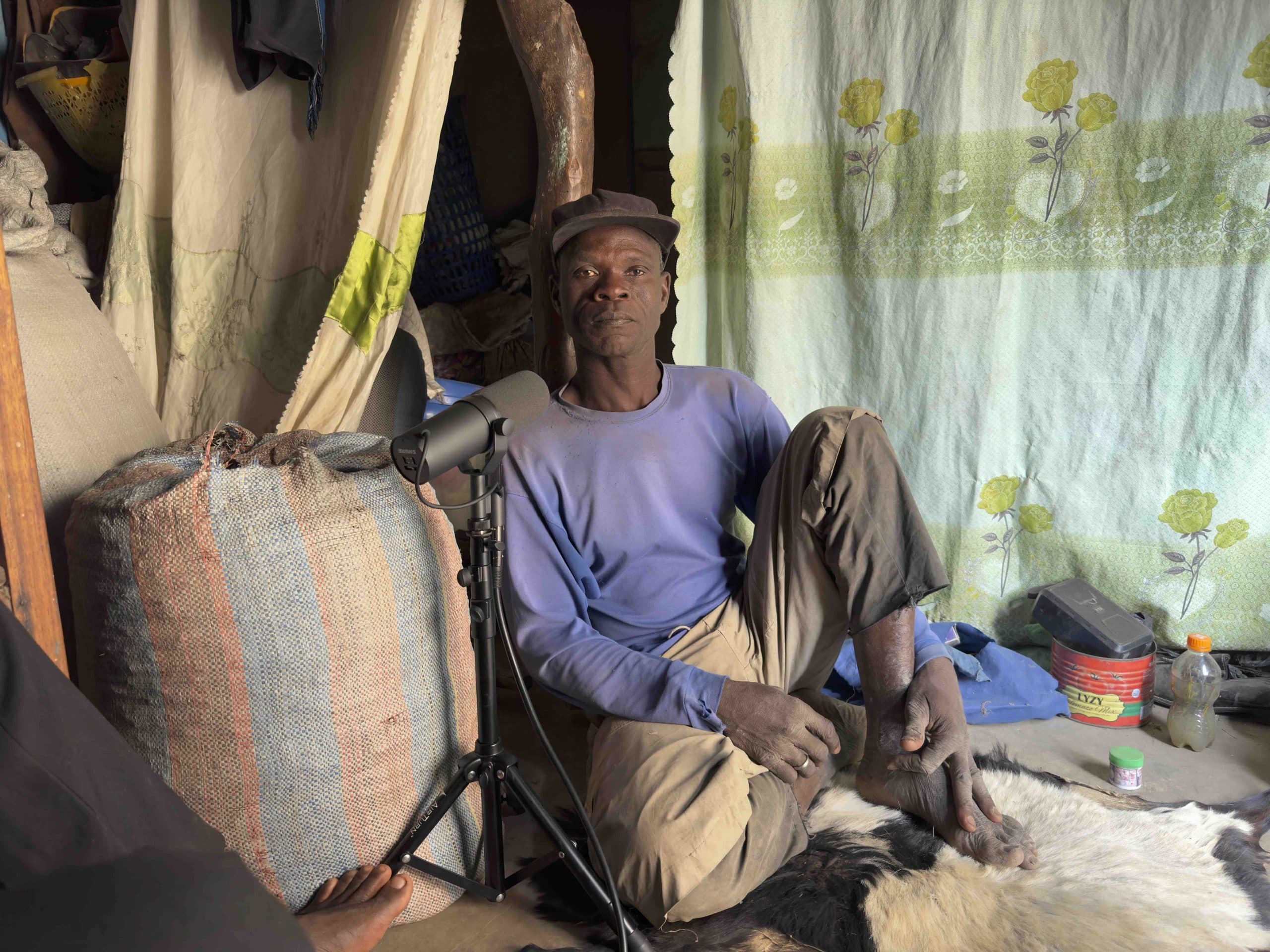
In an age where musicians struggle globally to monetize their recordings, simpa musicians are at a further disadvantage since their audience remains overwhelmingly local. Nevertheless, the studio simpa scene is far from dead. Ebony the producer is currently working on his own debut album, Alhassan Kukuonaa is sitting on an album, Yaa Naara as well, waiting for executive producers to fund the videos and bring the music to the market. Bansi Nyanya recently recorded an album with DJ Chare on the beats. Director Tahid Abu filmed and edited the videos, which have not yet been released. It can cost up to 4000 Ghanaian Cedis (roughly 300 Euro) to complete the filming and editing of a DVD, still a sizable sum in the local economy. Ebony, if he is working directly with an artist, usually works out favorable rates or works on spec. With a producer, he charges up to 1,500 GHS (roughly 100 Euros) per track.
Yaa Naara blames the local radio and TV stations for diluting the incentive to buy the music. “In these modern days, they show simpa dance every Sunday on some stations. Because of that, when you go to sell CDs on the market, people’s excuses are that they no longer use CD players. Because of that, producers are afraid of making losses.”
These days she’s focused on selling yellow corn meal. “I am now busy with my business because the track that you will sell may not benefit due to the continuous show of simpa on some northern stations. So doing that is a waste of time. It’s about two years now since I’ve set foot on any location for filming.”
It remains to be seen how simpa artists and producers will adapt to the internet age and whether simpa, live and studio, will continue or fade away. “If you go to villages, every area has its simpa group, but there may come a time when simpa groups are no more because of rural-urban migration to do kayayo.” Yaa Naara said. “It has weakened the groups. Even in Tamale town, it is not easy getting ladies to form a simpa dance except those who maintain their simpa group.”
Dagomba simpa music remains virtually unknown outside the Dagbon Kingdom of the Northern Region of Ghana; but perhaps that can change thanks to the wave of studio simpa Ebony and Dickson set off that still reverberates through the streets of Tamale today. The era when simpa dominated enterainment in Dagbon may have come and gone, but there are still new Gawanis and dancers gaining fans at the live simpa competitions promoted by Zaa TV. As long as simpa is still played at weddings, as long as teenagers are still shaking their buttocks after midnight and as long as the local Gawanis are still seeking out music producers to put their wailing songs to a beat, there is a chance simpa will continue to evolve with the times and reach new ears.
Alhassan Kukuonaa concludes, “God should let them help us, so that simpa music can go far. In this business, we always pray for growth. When you see growth, you will know that God has answered your prayers. Dagombas have a saying; befriend a monkey so that he can bring down your stick when it gets stuck in a tree.” If this sounds confusing, let’s just say that we hope the monkey can bring the simpa artists the growth that they pray for...
UP NEXT...
In Dakar, in the industrious commune of Grand Yoff, the sound of Assiko vibrates every day, late into the night. Between the sandy alleys and the adjoining multi-story houses, the percussion resonates with a powerful vital energy accompanying the daily lives of its inhabitants.