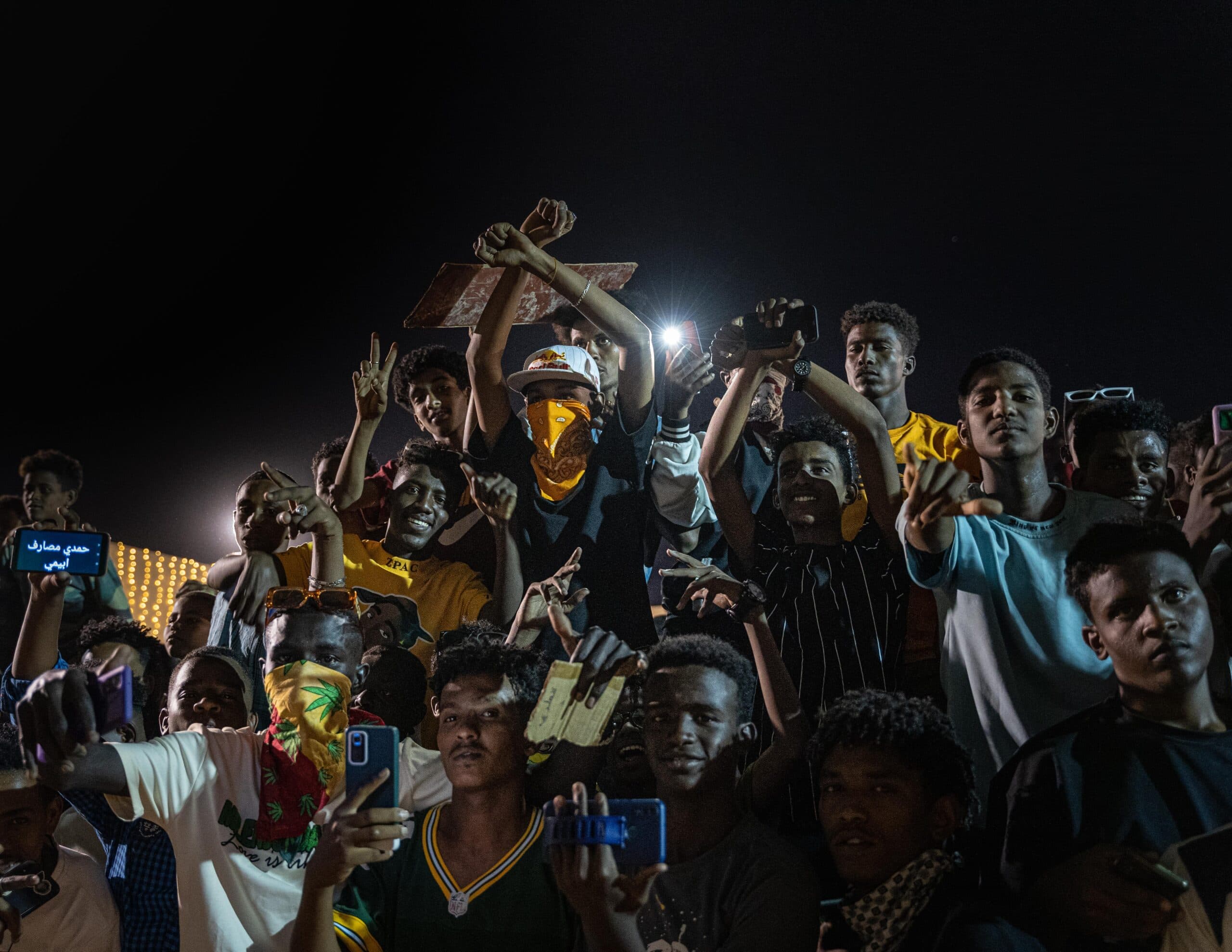
Born in the suburbs of Khartoum, zanig is a music that has conquered the hearts and minds of Sudan’s youth, finding in it a means of catharsis and free expression. The sound that once rang out in the capital’s late night dancehalls is a reflection of the city and its people who continue to fight to survive a merciless war between two military factions vying for power. Before the massacres and the tragedy, Bastien Massa and Arthur Larie set out to learn about this vital sound, the artists who bring it to life, and their audience—swept up in a collective frenzy by electric licks on Casio keyboards.
Photos and videos by Arthur Lariefield production by Omer Alghali Alhagtranslation by Christian Askin
February 2021. In the Sudanese capital, night envelops the Souq al-Arabi market. Along one of the streets leading to the Jackson bus station, street vendors begin to pack up their wares. In the covered alleys, only the streetwear stores are open to welcome a few customers. The grating sound of megaphones endlessly repeating prices of goods gradually evaporates. Another sound replaces it, coming from a poorly-tuned loudspeaker in front of one of the juice stalls with its delicately sweet name: ‘The Mango King’. A jerky synth rhythm stirs the insides of our bodies, irresistibly drawn into the movement. It’s a sound reminiscent of Egyptian Mahraganat, but with something unique. As we move away towards the main thoroughfare, we find the same rhythm emanating from a tuktuk. The neon lights and sound system on the rear deck give it the appearance of a mobile nightclub. As we zip along the streets of Khartoum, the driver responds amused: “This? That’s zanig!”
February 2023. The concert has already started when a friend warns us: no advertising or general announcements here. It’s the first concert since our return to the Sudanese capital. We head for the other side of the Nile, to Shambat in the northern part of the city.
This was one of the most active neighborhoods in the mobilization against the coup d’état of October 25, 2021. Every week, crowds of young people took to the streets to protest against military rule. At dusk, on vacant lots in the middle of a city block, debates accompanied by film screenings of political documentaries. But that evening, it wasn’t the sound of bullets or stun grenades that echoed through the neighborhood. That evening, Shambat was shaken by a zanig concert.
In the street, heady music spills out from inside the Khader Bashir Theater, attracting dozens of young people who crowd in front to try to get in. At 3,000 Sudanese pounds a seat (around $6), some have to make do with the muffled sounds leaking from the concert hall. Luckily, the hall has no roof. To fend off those without tickets who try to sneak in, the policemen in charge of the venue’s security chase away the free-loaders, brandishing a long whip which they snap at the slowest among them. A maneuver that does nothing to discourage the excited youth. Inside, it’s all about Nigeri. For these youngsters aged 12 to 30, he’s the zanig icon, the absolute reference. A star that we chase on all three banks of the river and who slips through our hands. Always on the move, in life and on stage.
Behind his keyboard, with dark glasses screwed to his eyes, Nigeri bounces his fingers on the keys of his Technics 2000, a Japanese synthesizer from the early 1990s. With each new track, he inserts an antique floppy disk, an object most of the audience is too young to know. He may not have invented zanig, but Nigeri has certainly made it popular in Sudan. From private apartments, he has taken the zanig to public places and concert halls, creating a whole universe that goes beyond music. On stage, the star is surrounded by dancers who link up steps inspired by the Nigerian and Congolese dances of the great Fally Ipupa. A mix of improvisation and synchronized movements. Opposite him in the pit are his ‘zanbari’: his audience, dressed in their own style, sporting identical sunglasses, repeating in lockstep the broken yet fluid movements dictated by zanig. Everyone knows Nigeri’s moves. Everyone idolizes him.
A compact mass, that’s the essence of the term zanig, which means “crowded” or “tight”... In the crowd with its free look and attitude, everyone can dance and shake their body without fear of social judgment, including a few girls present that evening. “For many adults, those who listen to zanig are seen as shamassa, losers, bad company who have dropped out of school,” laments Ahmad, a student and absolute fan of Nigeri. A perception strongly rooted in Sudan’s history.
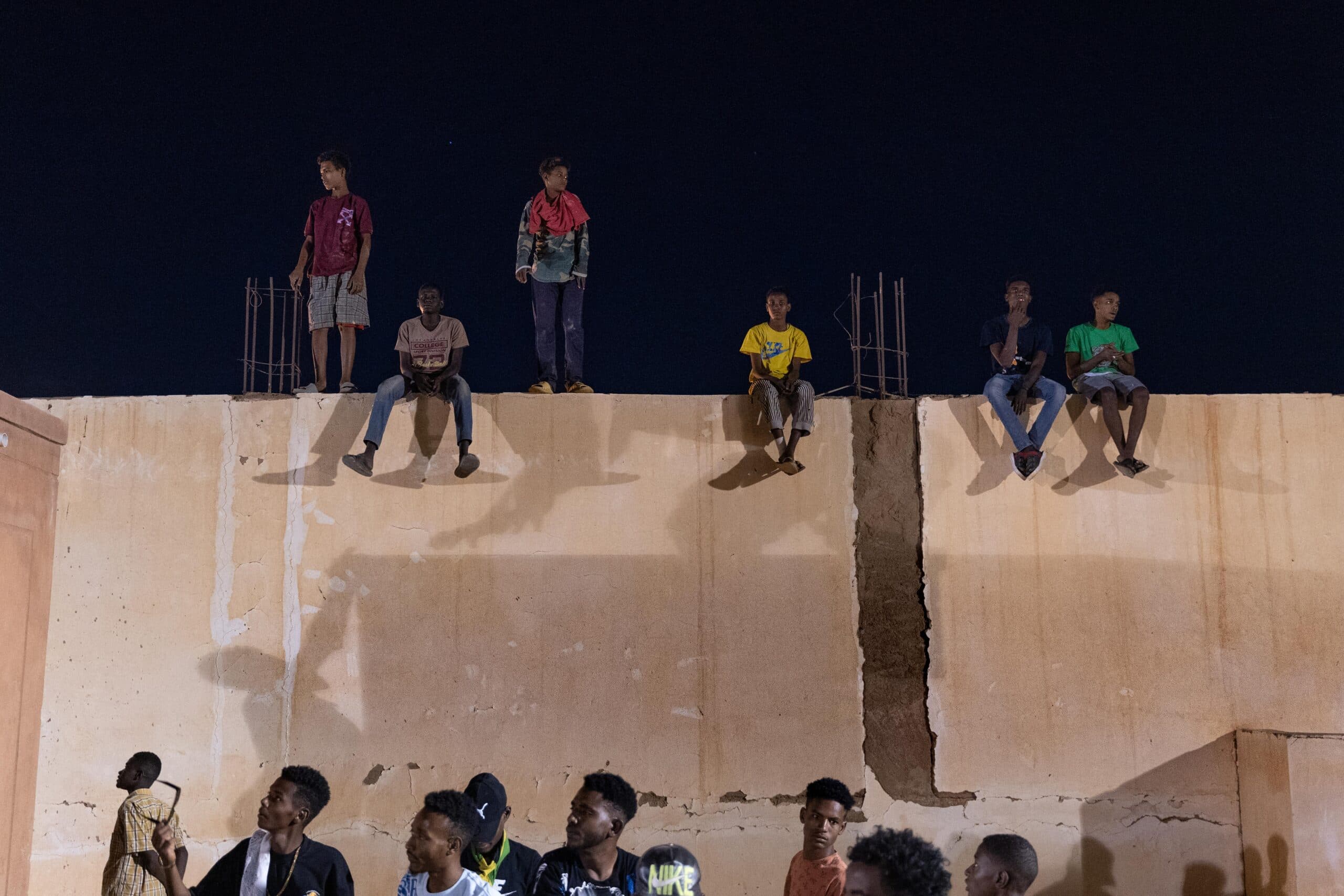
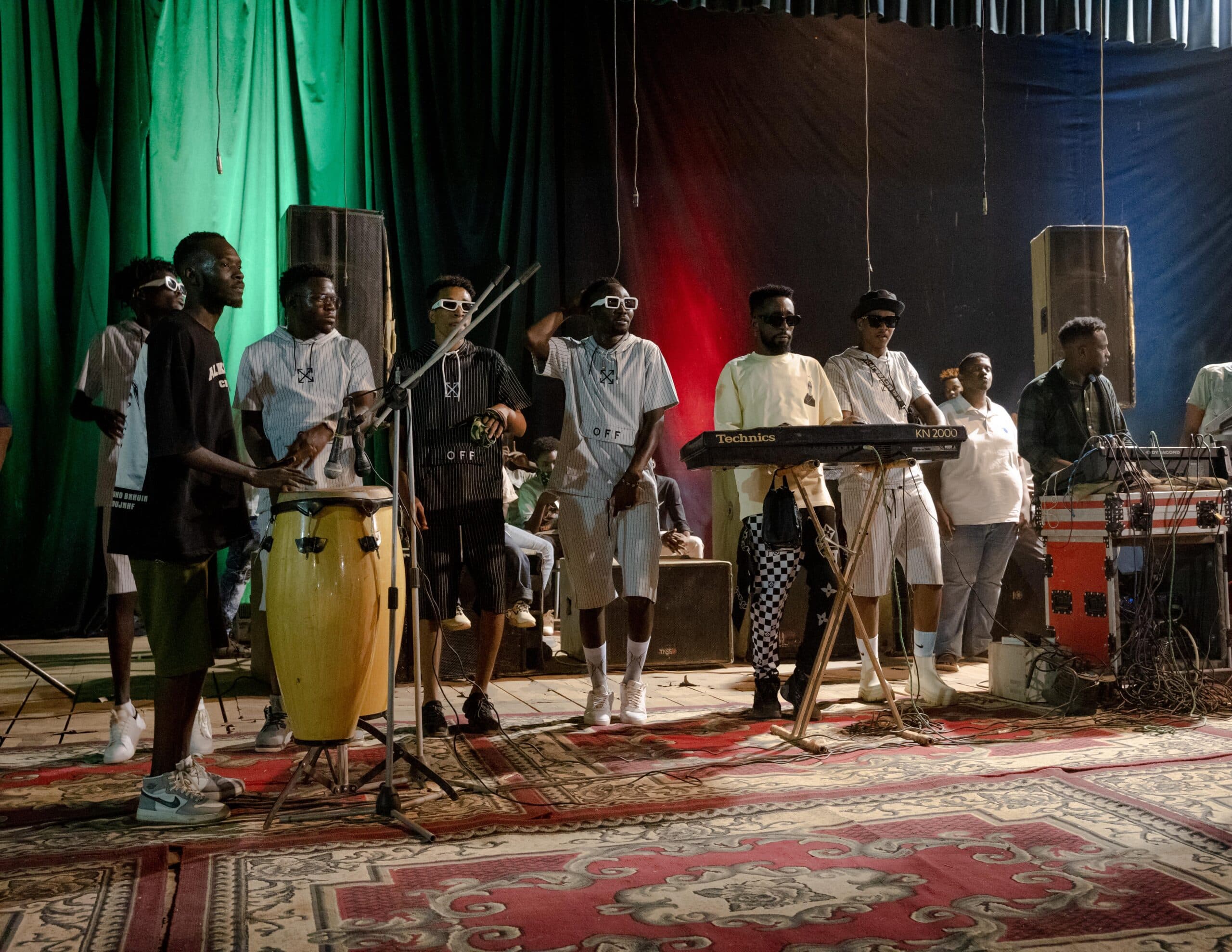
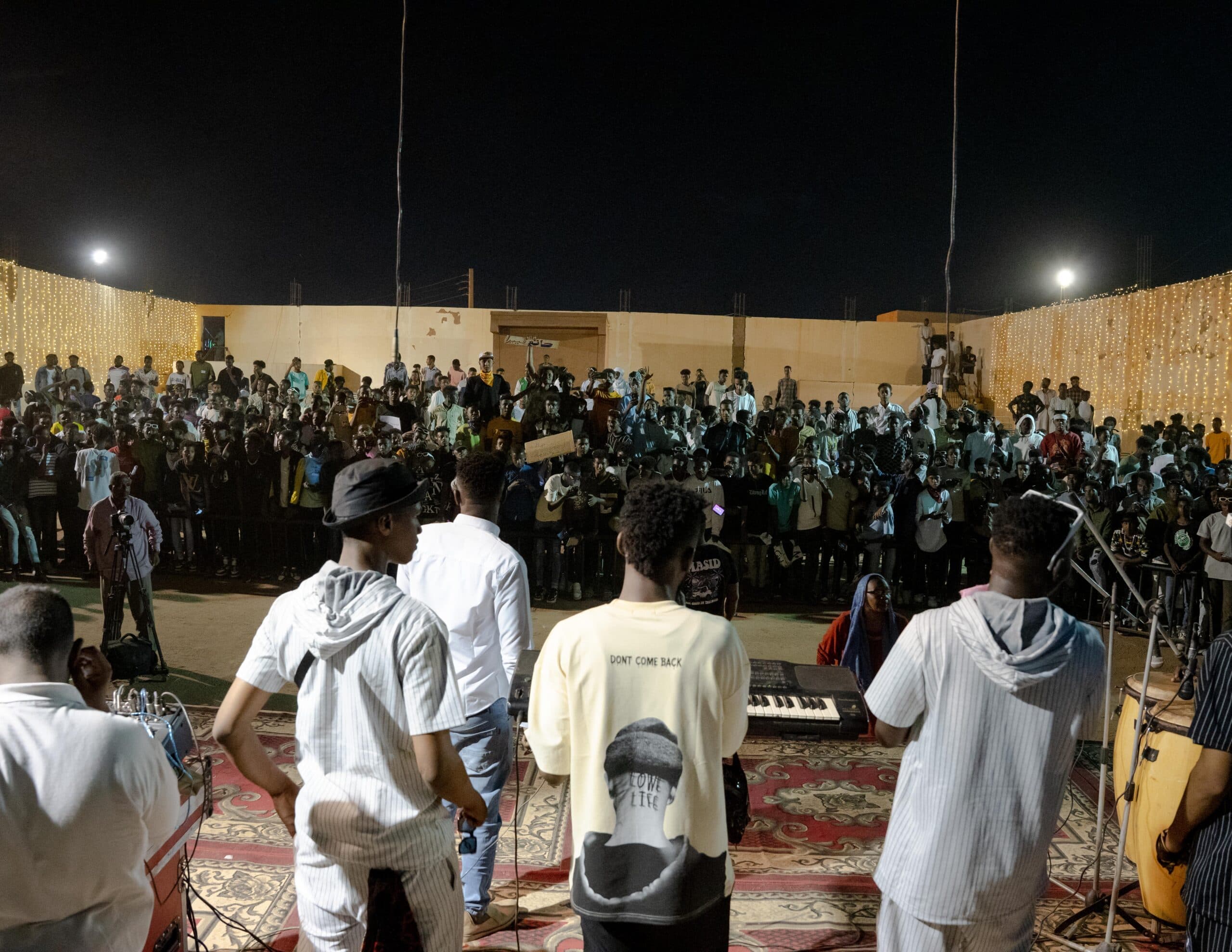
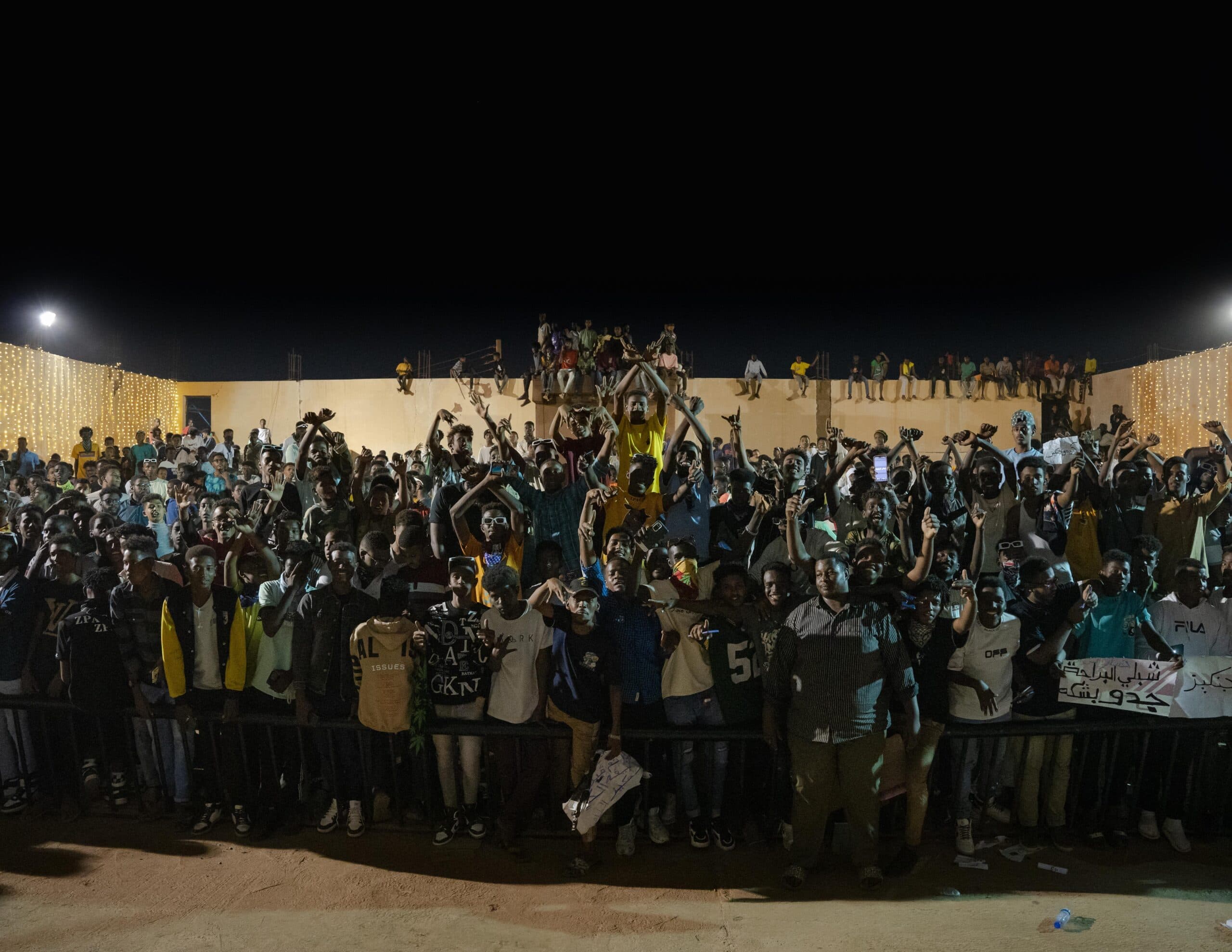
For years, zanig was perceived as “musiqa al-habat”, decadent music, by the country’s central elite. Unlike traditional Sudanese music, which focuses on lyrics, zanig is essentially based on rhythm. It’s dance music. “It’s not written music,” says Magdi el-Gizouli, a researcher at the Rift Valley Institute who has taken a close interest in zanig, “it’s more like jazz in its early days, with improvisation depending on the mood.” By encouraging the mixture of men and women, and emphasizing group dancing and suggestive body movements, zanig was in direct opposition to the conservative values advocated by Omar al-Bashir’s Islamic dictatorship. Khartoum’s inhabitants have long preferred haqiba, with its classical Arabic lyrics of love, to this music, which has African roots. This founding style of Sudanese music takes its name from the suitcase (haqiba) in which the famous radio presenter Ahmed Mohamed Saleh stored the old records he played on his show in the 1940s.
A far cry from the cultural and artistic associations of the “Walid el-Nil” (children of the Nile), a term used to designate the elite of the central region of the country where the river flows, zanig has adopted the use of simple language, accessible to all, including some Sudanese whose mother tongue is not Arabic. The lyrics are explicit and deal with everyday problems like deceit and rivalry. “You didn’t necessarily have to be educated to understand the meaning of the lyrics. It was the language of the street,” explains Magdi el-Gizouli. Though meanwhile, the country’s urban youth developed a new slang, rendók, inaccessible to the uninitiated.”With zanig, the wall between the audience and the artist has been broken, and there’s this exchange, this relationship that is created during each concert that traditional Sudanese and Arabic music in the mainstream didn’t produce.”
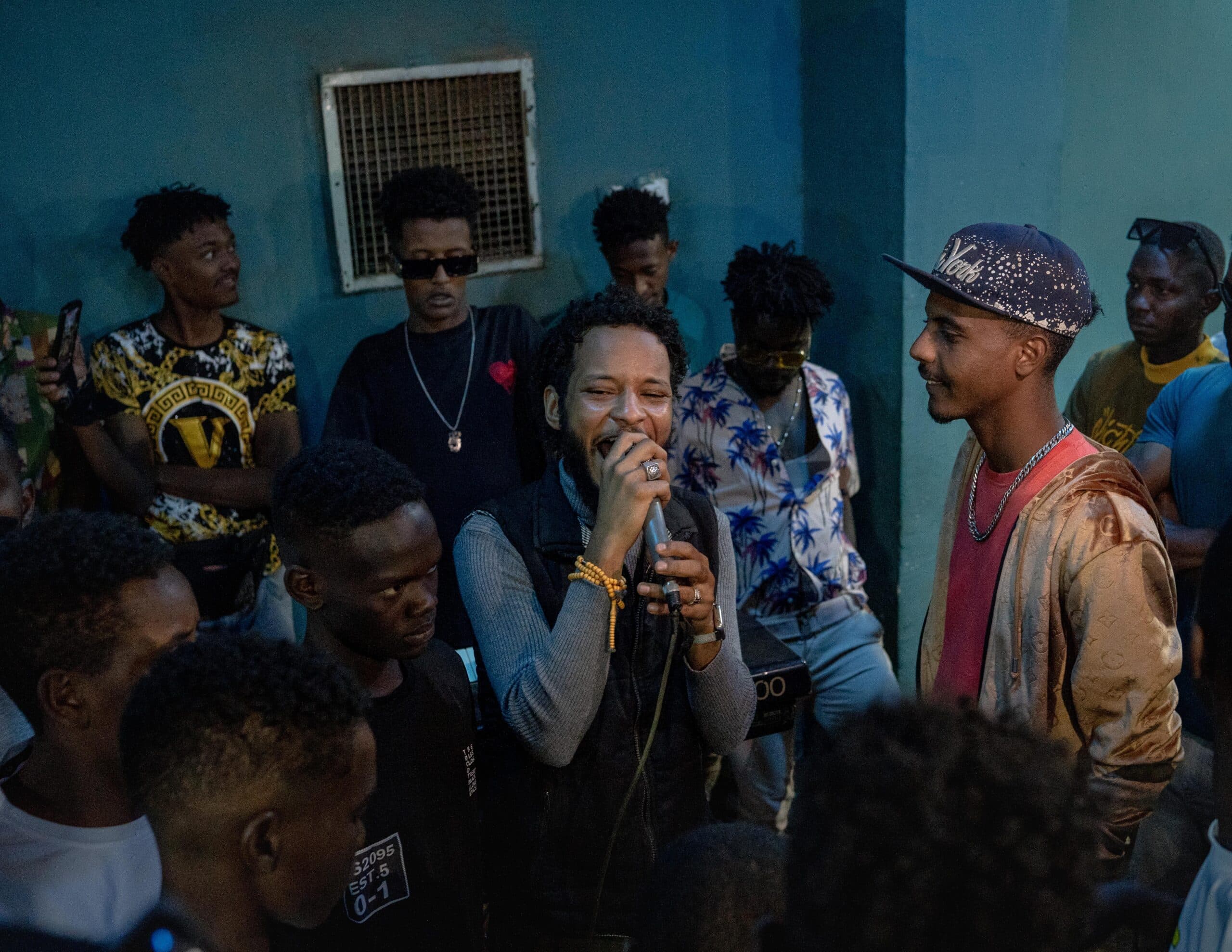
For journalist Adeel Colour, who grew up attending the first zanig gatherings, this genre doesn’t really have a definition. “It’s a style, a way of being, a feeling like you’re out of it, you can’t explain it, and what you feel will be different from what he feels or what I feel, that’s what zanig is. The moment a connection is made between the artist and the audience, the moment when the pianist starts to solo on his synthesizer and builds up the pressure and the madness of the music that’s going to drive the crowd crazy, that’s the moment that can be defined as the zanig,” he says, voice breathless and eyes sparkling, caught up in a flood of happy memories.
On the tenth floor of a high-rise building in one of the city’s most sought-after districts, a gentle breeze dissipates the heat rising from the street. A luxury in this city. But the end of winter is near and already the cool nights are fading. Although Khartoum is far from sleep, silence is gradually winning out over the hustle and bustle of the day. Freed from the shackles of the sun, the inhabitants begin another day when the outside becomes tolerable again. From here, you can see the different districts of the capital, cut into three by the White and Blue Nile. Khartoum, Omdurman, Bahri, divided into political, economic and industrial centers. But to grasp the origins of zanig, we need to look as far off as possible, and delve into the outlying districts of Sudan’s vast capital.
The emergence of zanig is intimately linked to Sudan’s history of conflict since its independence in 1956. When it came to power, the Arab and Muslim majority in the north of the country imposed a common language, culture, and religion. A standardized vision of a country rich in diversity relegated other African identities to subcultures that are often rejected. For decades, this attempt at standardization fueled numerous rebellions against the central government, turning the country’s outlying regions into battlefields.
With the outbreak of war, hundreds of thousands of Sudanese emigrated to the capital which, until the outbreak of civil war last April, was considered a haven of peace spared from the multiple conflicts. These communities from Darfur, Kordofan and Blue Nile are gradually settling on the outskirts of the city, which is expanding as the civil wars continue.
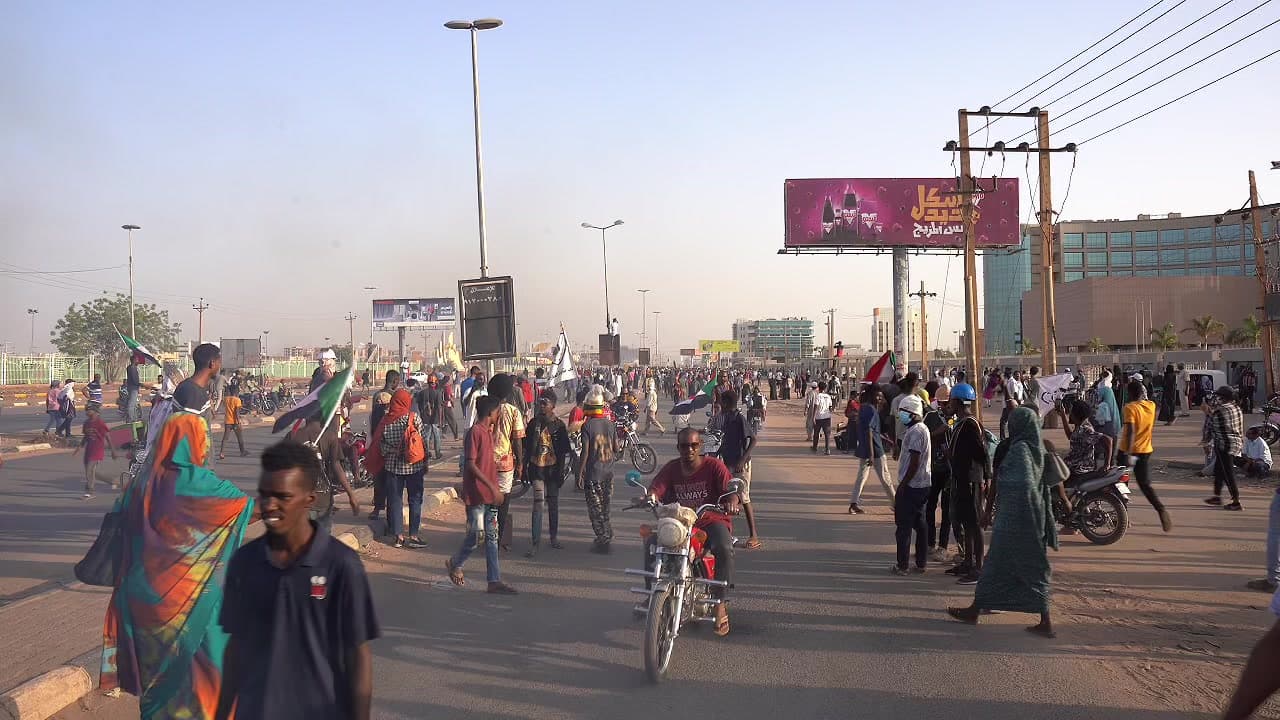
Janoub el-Hizam, the southern belt from which Nigeri hails, is one such district. Historically, this part of the city formed a “forest barrier”, designed by President Nimeiri (1975-1989) to halt the advance of the desert on the city. Under the reign of Omar al-Bashir, the regime’s caciques destroyed this belt, taking over the land to sell it and enrich themselves. Those sometimes referred to as the “muhammasheen” (the marginalized), settled in camps with evocative names: “Jabarona” (We were forced), “Taradona” (We were thrown out), transforming over time into the outskirts of the capital. For the center, these margins, known as the “black belt” due to the darker skin of their inhabitants, have always been perceived with racism, and as a danger.
This is where zanig emerged and developed. Its pioneers were part of its youth, cradled by multiple influences as diverse as Sudan’s many cultures. The various “African” communities (as they are referred to by the elite) also played a part in forging this constantly evolving style. “Everyone has brought their own musical influences with them,” says journalist Adeel Colour. “There are halftones, different styles of Arab and East African music such as tum tum, dardât and sarya, West African percussion. The church, by training young pianists for Mass, was also important: these young artists grew up in an extremely rich musical environment that enabled zanig to be born.”
But it was in Omdurman, Khartoum’s commercial twin, that it all really began. As you wind your way through this maze of sandy alleyways, amidst one-storey, flat-roofed houses, the history of zanig becomes apparent. Especially in the Abassiya district. It’s here, among her daughters, that Nigeri’s mother welcomes us, describing a boy more interested in musical instrument stores than school. “He used to play concerts in the neighborhood, it was packed with people, everywhere in the street, on the rooftops,” his sister recalls with wonder. This is also where Ayman al-Roubaa grew up, a native of the Jebel Nouba (Nuba Mountains) in Kordofan, recognized as the founding father of zanig.
Zanig soon became a fixture in these neighborhoods. This rapid spread was all the more surprising given that this music was rejected by the country’s elite, banned from the airwaves and television programs. Everything is done under the table. USB keys are exchanged and the good tunes are carried from neighborhood to neighborhood by tuktuk. Spreading zanig as they go, the drivers become essential promoters. With the arrival of the internet, videos with poor sound quality recorded on phones ended up on YouTube. Even today, there are no official productions or studio recordings. The tracks are burned directly onto a USB stick during the concert. “It’s in the very essence of zanig, like jazz in its early days: if you record it, you kill it,” insists Magdi between sips of hot tea.
The rise of zanig coincided with that of Inqaz, the Islamic dictatorship established by Omar al-Bashir in 1989. Faced with Sharia law and the morality police, zanig naturally retreated to the underground and the counterculture. Concerts were informal or secret, mixed gendered, and often included alcohol and drugs. “Some people said they went to pray at the mosque to escape their parents’ control, but they went to zanig parties,” recounts Ismail, an early fan. Anything to displease a regime whose police didn’t hesitate to arrest and torture.
Far from the official concert halls where haqiba stars performed, zanig evenings were held in private apartments or on vacant lots in the street. There was no promotion or advertising, and parties were generally improvised and free. “Everything worked by word of mouth, or even simply by ear, following the echoes of music in the neighborhood. It’s easier to avoid the police on the outskirts where there’s less authority. There were policemen, but they were the brothers or cousins of those who came to listen to zanig,” explains Magdi. The artists used to go there by tuktuk, with their keyboards sticking out of their tricycles. It was a chance for them to show off their new creations and get a feel for the audience’s reactions. Despite precautions, police raids were not uncommon, and equipment was regularly seized. “When an artist was in trouble, we’d get together for a potluck. We’d call friends in Qatar or the USA, who’d send money so he could buy a new synth,” recalls Adeel Colour.
Although zanig culture was in total opposition to the values of the Béchir regime, there was no manhunt on the part of the authorities. Zanig has always been able to accommodate the regime and its politics without questioning them. “It would have cost them too much to repress it. It was a catharsis that wasn’t political. And the government didn’t know how to deal with young people, how to talk to them, how to understand developments,” says Magdi el-Gizouli. This lack of political commitment is still evident today. When big names in zanig were asked about the political aspect of their music and the influence of the revolution (which led to the fall of Omar El Bechir on April 11, 2019), I was met with a series of vague answers, if not a wall. “Zanig is not the music of the revolution,” confirms Magdi.
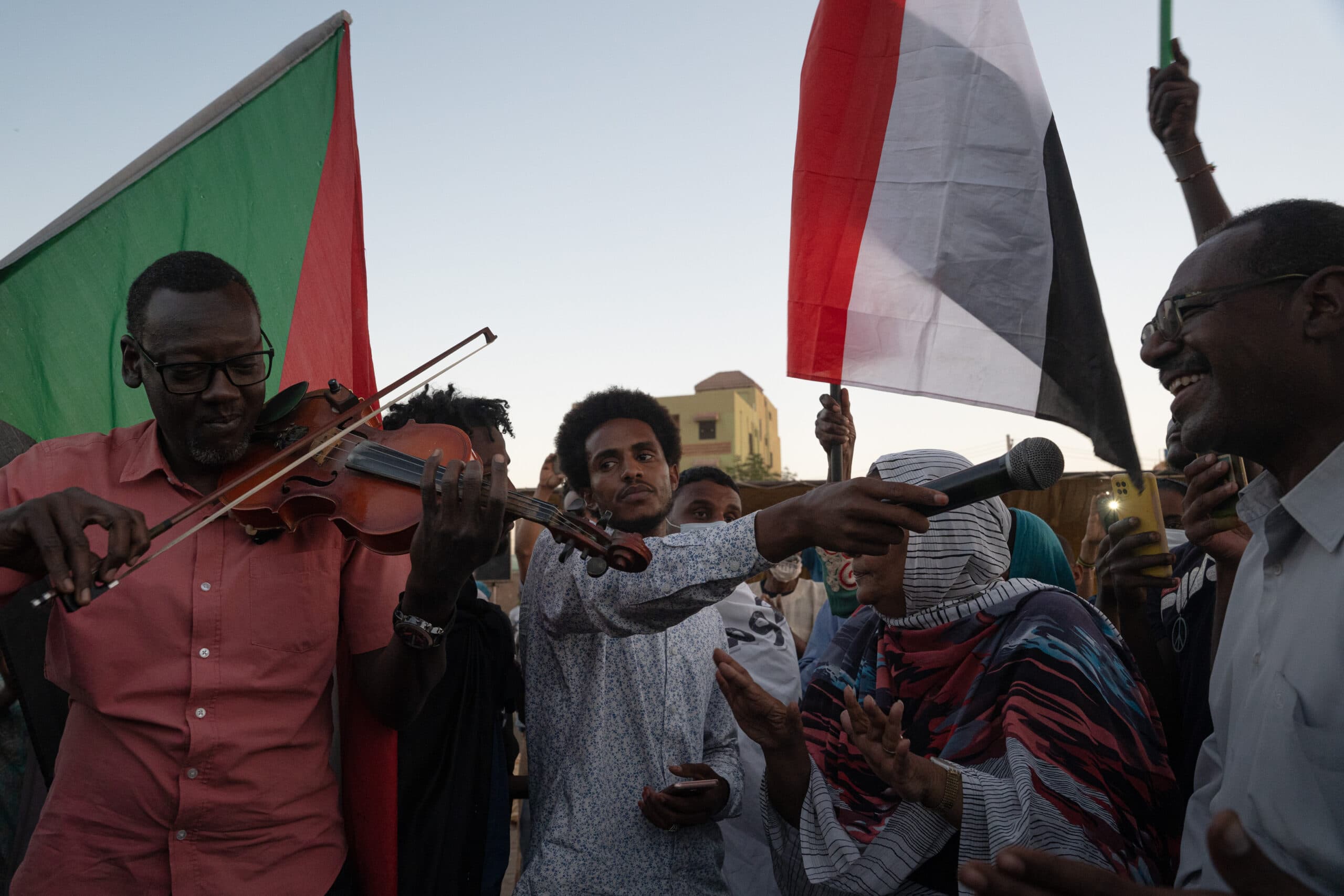
However, during the revolution, the long sit-ins held daily from April 6, 2019 until their bloody dispersal on the following June 3, was an opportunity for many young people to finally discover a space for expression without limits and without police, sometimes described by the demonstrators as “Sudan’s Woodstock”. For three months, in front of army headquarters, between the Nile and Khartoum University, one concert followed another. It was an explosion of desire that had been contained within the walls of studios or private homes for too many years. In all four corners of the sit-in, thousands of people chanted the songs of Mohamed Wardi, the Sudanese icon who died in 2012. There was rap, reggae, Sudanese classics, and... zanig. But the artists kept a low profile. It wasn’t until his audience questioned his absence from “Qiyada”, the nickname of the sit-in, that Nigeri decided to return from Saudi Arabia during the revolution. He went there to show his support for his fans, but did not give any concerts.
“Even under Bashir, there were occasional lyrics critical of the dictator, but that wasn’t what the music was about; nobody woke up and said I’m going to make a song against al-Bashir,” explains Ofgair Shareef, founder of the Sobajo cultural center in Riyadh. “Zanig artists have to be neutral, otherwise they know they will be targeted by the authorities.” A reality that persists even after the fall of Omar al-Bashir. Ashq el-Jabal made a song about Hemeti (the nickname of the head of the Rapid Support Forces, at war with General Al Buhran) while young people on the outskirts of Khartoum were being gassed or injured in the weekly demonstrations against the coup.
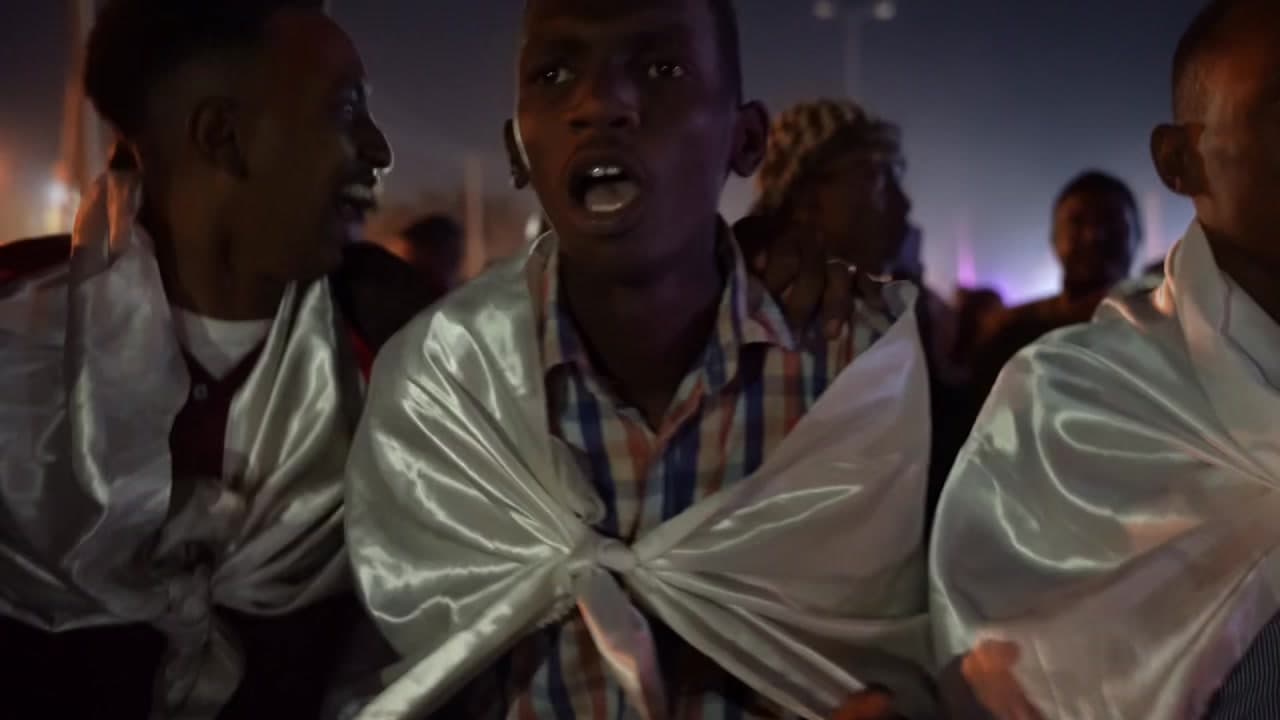
“To protect themselves, they often refer in their music to the police, the army, judges or internal security, paying homage to them so as not to get into trouble,” explains Adeel Colour. “It’s their backup to be able to get the authorizations to organize parties, so as not to have any problems if the party goes past the scheduled time, they all have relatives in the police so as not to have any problems, because in their audience and their community alcohol and drugs often circulate.”
“You have to think of zanig as a social transformation, a change in society. Not through the prism of political history,” says Magdi el-Gizouli. In this way, zanig is connected to revolution. While the artists were not involved and sought to remain neutral, the zanig community was very present in the demonstrations during the revolution and later against the coup d’état. “We used to have zanig evenings, and afterwards we’d go out and demonstrate in the streets during the revolution,” recalls Ismail at a concert organized at the Sobajo cultural center. They all oppose the old and conservative takeover of the country. “The revolution took zanig into another dimension: the whole of Sudan listened to zanig, and now all Sudanese know what it is,” adds the teenager.
Like many countercultures evolving under the radar of the authorities, zanig became more than just a musical style. A veritable tight-knit community has sprung up around it, with its own rules, tensions and friendships. It’s a young milieu, made up of rickshaw drivers, day laborers, and women running small businesses... Already present in the public eye, these women occupy an important place in the history of zanig. The artists surrounded themselves with female singers better known as Gona, strong women, divas of the stage. Although women artists are not always fully appreciated in Sudanese society, they shine at the forefront of the zanig scene. They found a place in this community where their way of being embodies a certain freedom. “These gonas have become the voice of women from a whole section of society that is often marginalized,” insists Adeel. While the pioneering Al-Roubaa could manage on his own, from 2005 onwards zanig evolved towards a marriage between the keyboardist and the gona. Each needs the other. “The gona is like a salad that accompanies a dish, it’s there to support, to balance,” Adeel metaphorizes. “Zanig people live together. Of course, there are problems between artists, and singers talk to each other through their music, but it’s a very close-knit community,” he continues.
In Nigeri’s apartment in al-Ma’mora, south of the capital, people come and go like ants from an anthill. Managers, dancers, communication and logistics managers... Nigeri occupies a separate room, his private dressing room, where the artist rehearses while frantically pounding his keyboard. The other two rooms are furnished solely with beds and sofas, a place to rest when returning from concerts that sometimes go on late into the night. It’s communal: we eat together, sleep together and travel together. A life on tour.
To handle his business, he has his managers, one of whom, Jagool, only manages Nigeri’s image in Omdurman. Anti-drug concerts, private parties, and end-of-school-year ceremonies... Beneath his modest exterior, Jagool is almost as famous as Nigeri in the streets of Omdurman. In Khartoum, it’s Ahmed Tiji, a taller, slimmer and livelier boy who manages his affairs. These two are at the head of the Nigeri universe, around which gravitate the singers and dancers, including the fearsome Moustique who, despite his small size, is all the rage. The group revolves around Nigeri, but operates as a collective. At each new concert, they think about the style of clothes that the star and his dancers will wear. “We have a boutique in Abassiya where we stock American-style clothes and accessories, like glasses etc.” says Jagool, a large money pendant around his neck.
But the circle of zanig artists extends even further. There are the “bahama”, literally “with them”: these are the fans who are very close to the artists, who communicate on social networks, look after the artists’ image, take an interest in the audience and new youth trends or the “tariqat al shaabi” (which could be translated as the “youth lifestyle”). Some take care of security and logistics others are drivers. For artists performing at weddings or private parties, assistants are in charge of making sure that the money poured in or glued to the singer’s forehead is properly collected, without any unscrupulous hands helping themselves along the way. A single artist can easily be surrounded by 30 to 40 bahamat. “This group is constantly on the move with the artists, they go everywhere, to the café, in the houses, when signing contracts with promoters and on trips. Travel is central to the zanig movement and parties, and the parties began with travel, because it wasn’t easy to play close to home,” explains Adeel Colour.
“Today it’s no longer zanig,” asserts Adeel Colour, “they’re similar styles, but zanig is with a Technics 2000, that’s all. Zanig died after Nigeri.” An observation shared by Mohamed Osman, a veteran of the generation between Roubaa and Nigeri. He still uses the 2000 sometimes, but like the new generation, he’s switched to the Technics 700: ”It’s a keyboard that gives the artist more possibilities and lets you play with a gona”.
As the style evolved, so did its acceptance by society. Even at “Walid el Nil” weddings, zanig artists have a place of pride. In this pre-Ramadan period, when the weather has not yet dampened spirits and bodies, the wedding season is in full swing. At the Khartoum Fair, in the upscale Manshya district on the banks of the Nile, the three reception halls of the Prestige Hall are always booked. In one of these weddings, the newlyweds called on Hiba Jabrah, a gona in vogue, and Tasso, one of the hottest keyboardists of the moment. Here, the lyrics are softened and toned down so as not to offend, but the rhythm and the invitation to dance remain. Long confined to the capital’s suburbs, zanig is now on display right in the heart of the city. “Although there are still people who listen at weddings and criticize it when they get home,” Adeel laughs.
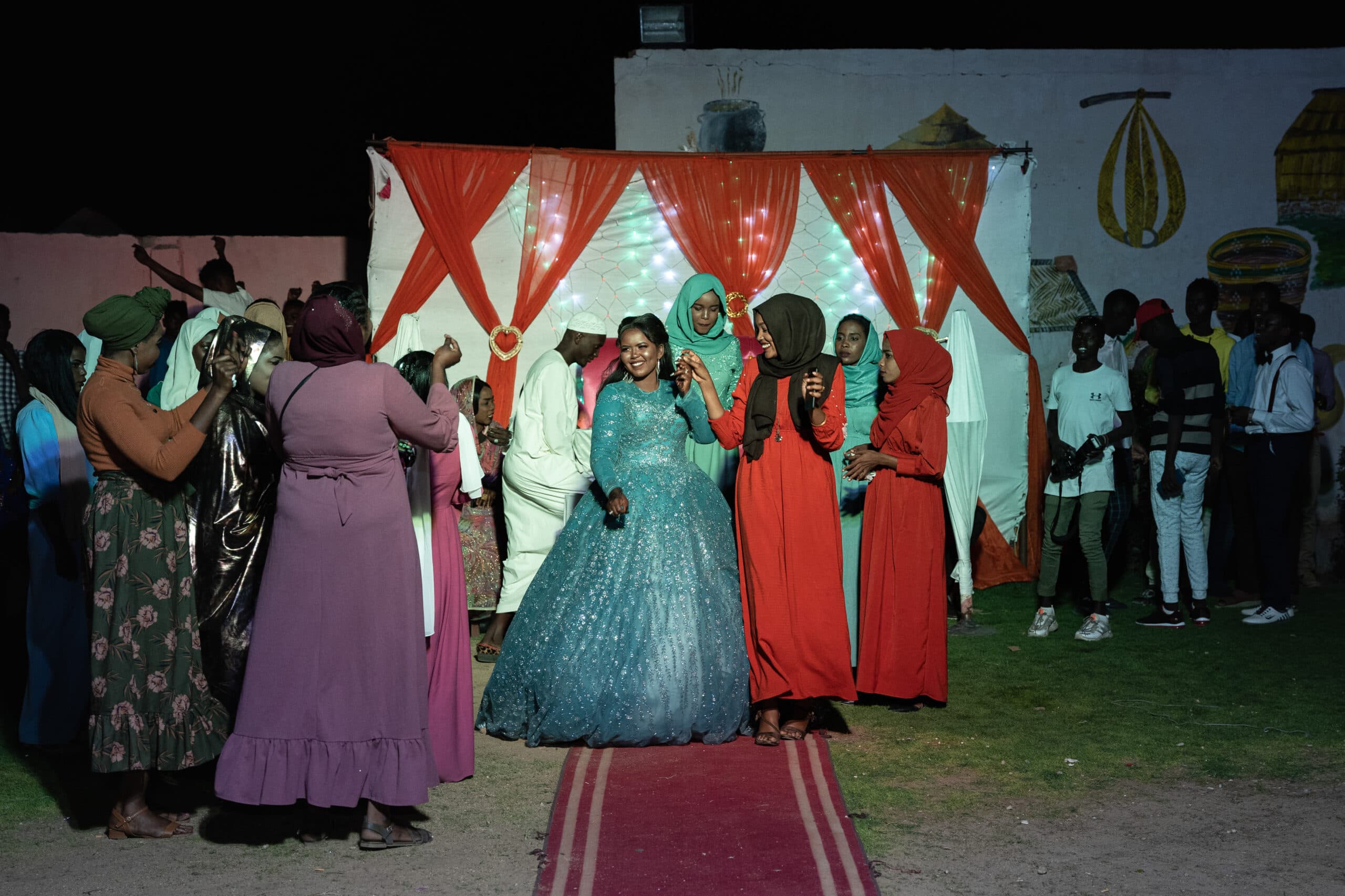
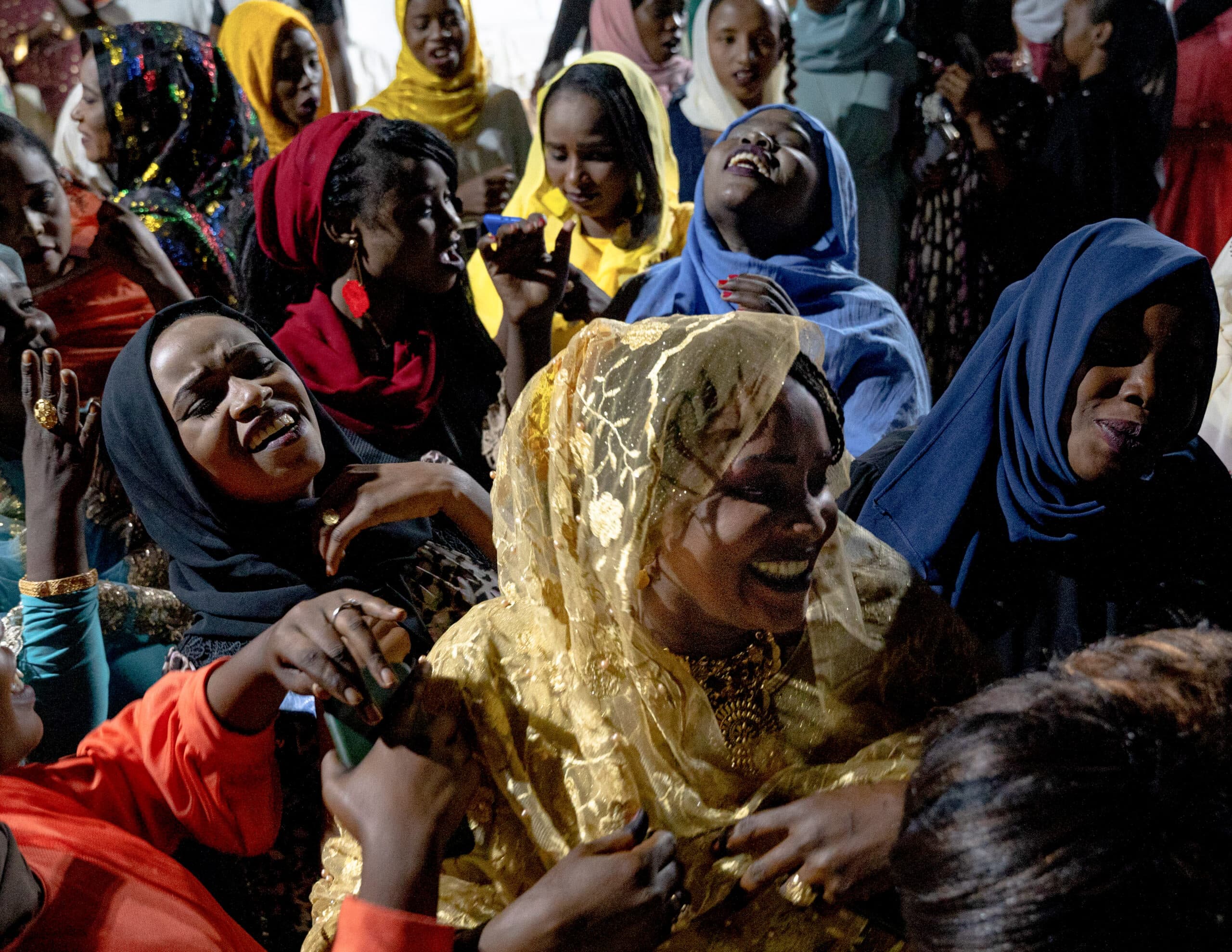
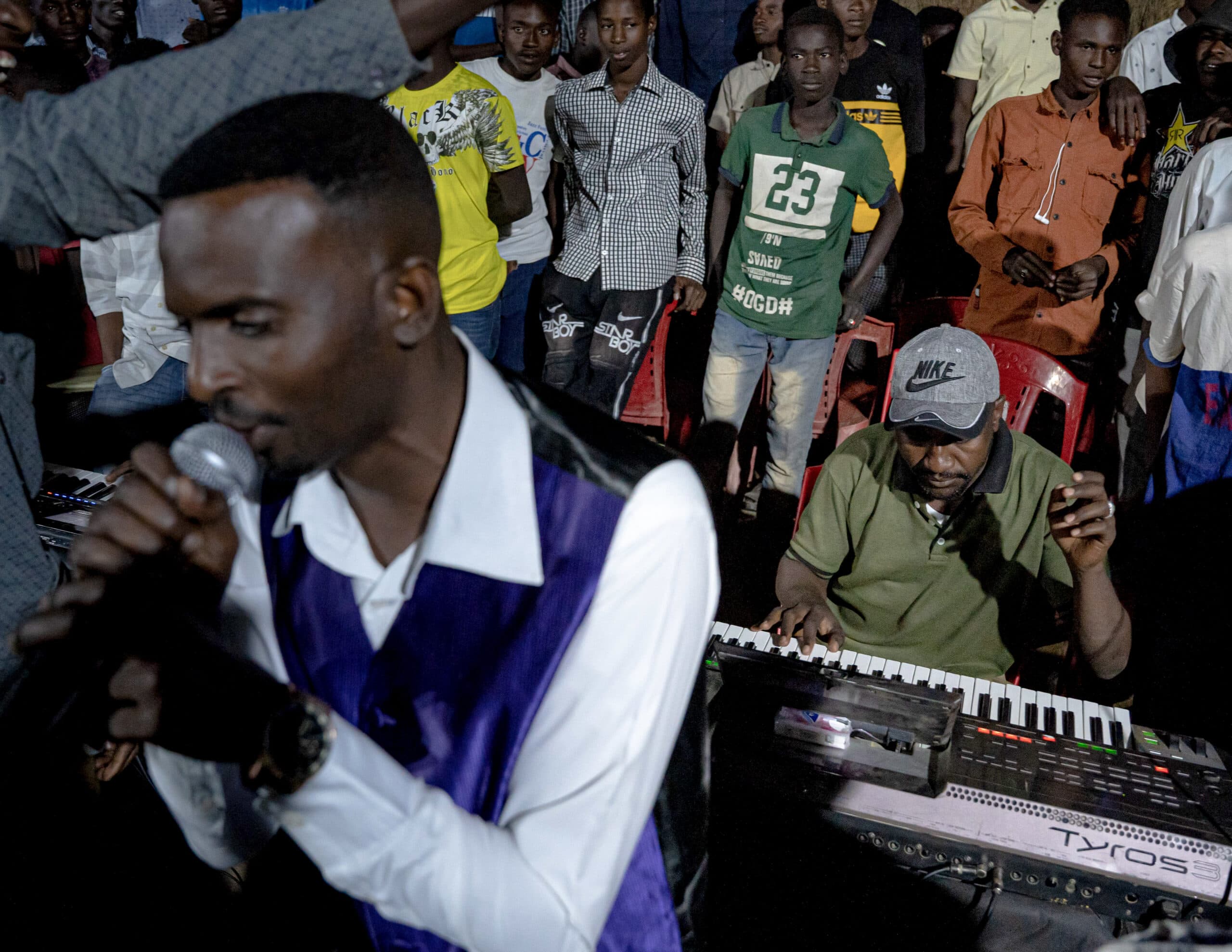
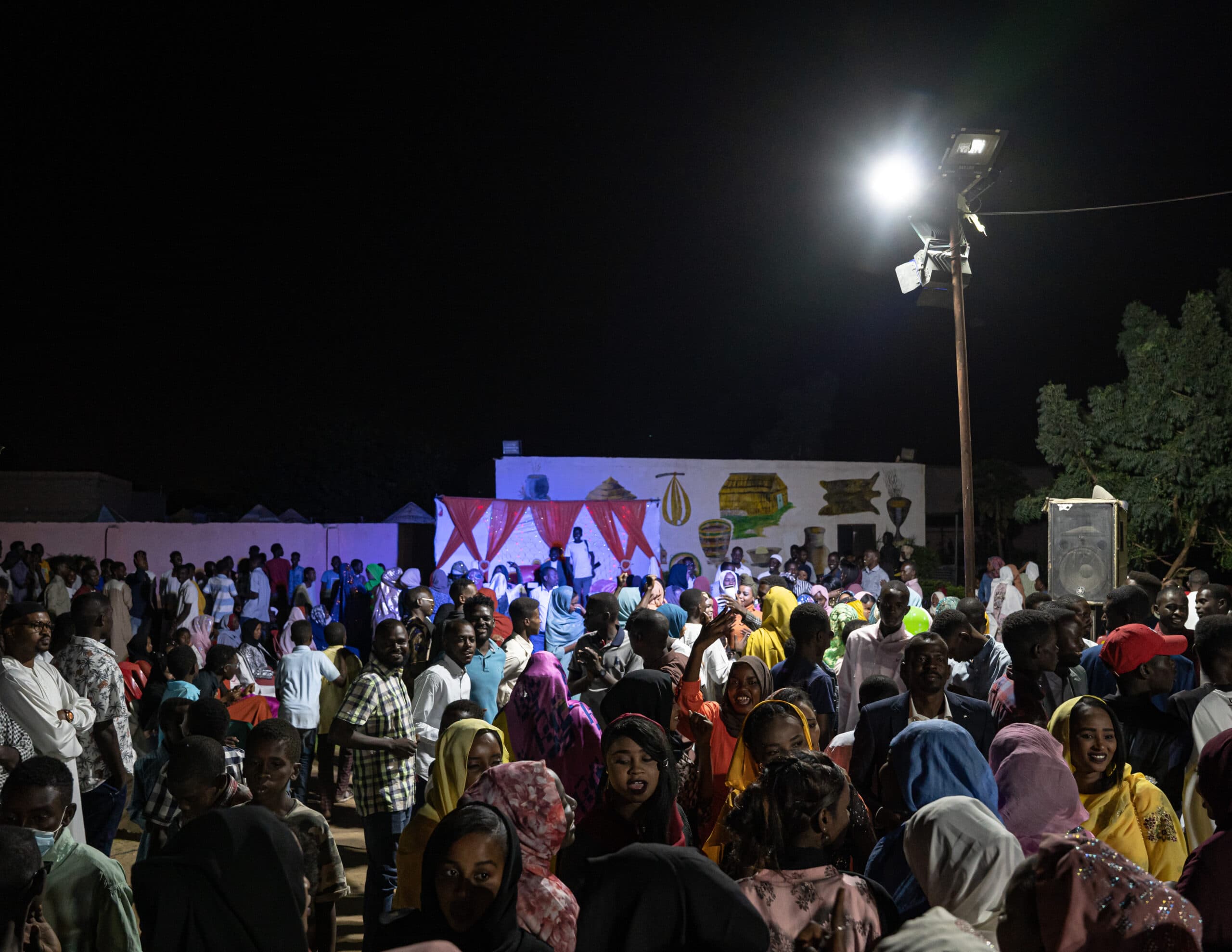
“I’m going to play for some students. It’s the end of school and the school has asked me to do a little concert,” explains Nigeri, squeezed into the back of a Japanese car at the end of his journey. Today, many graduation ceremonies at schools and universities are accompanied by zanig, an unimaginable occurrence before the Sudanese revolution, just 5 years ago. Crossing the Blue Nile, the car makes its way south to Sobah, where the concert is held on a private farm rented by the school. On arrival, a hundred or so boys await the star. The teachers, hovering in the background, seem delighted by the initiative. From the first notes of the piano, several of the youngsters begin the appropriate choreography. After twenty minutes or so, Nigeri and his dancers drive off without a word, to everyone’s disappointment. But this departure is part of the show. Less than 5 minutes later, they’re back, much to the delight of the schoolchildren. After half an hour’s concert, the equipment is loaded back into the cars, driving off in a cloud of dust. This time, the concert is well and truly over, and nothing has been forgotten – except us.
Zanig now has its place in mainstream entertainment and culture. Emad Zakarya is co-founder of Telfizyon, an online media outlet for young Sudanese. In his al-Amarat office, the producer is working on a new zanig series, explaining: “The idea is to make a comedy about conflicts between gonas. A sort of third war of the gonas with Ashq el-Jabal and Marwa Daoulia.” It’s an idea that wouldn’t have been possible without the growth of this musical genre in Sudan. “Today, zanig is an integral part of society. Many people will want to watch a series on this subject,” continues the young creator, never short of ideas for original programs.
“But for every one who breaks through, how many stay in the shadows!” observes Mohamed Osman. “Most artists play for 2 or 3 years, try their luck and give up if they don’t succeed.” For these keyboardists in search of recognition, neighborhood parties, impromptu soirées, or local cafeterias are obligatory rights of passage for confronting the public. It’s here that zanig still embodies an urban counterculture. In al-Mawrada, on the second floor of an unpretentious building, young artists organize a concert at the drop of a hat. They represent the new generation, Nigeri’s successors. Despite its increasingly polished image, in this neighborhood, zanig is still underground. The forty or so people present are part of the hardcore keyboardists, producers, and sound engineers. In an electric atmosphere, bodies stir and warm up to the zanig’s lively tempo. Before long, the first scuffle nearly breaks out. The music resumes, the atmosphere is jolting. Fifteen minutes later, another brawl brings the concert to a definitive end.
In the Arkaweet district, south of the airport, just below where the planes land in the city center, half a dozen cafés offer live zanig. From the street, the jerky beat echoes off the facades of residential buildings. In this block of alleyways, wise old Khartoum shows its other face. Indoors, girls and boys activate their bodies, awakened by the beat of synthesizers. Promiscuity and co-ed dancing are the norm here. We sit on each other’s laps, we brush against each other, we embrace. At the microphone, the gona lets her saturated voice be heard. Following the requests of the audience, who shower her with 500 pound bills, she sings to the glory of the city’s neighborhoods: Janoub el-Hizam, Hajj Youssef... each bursting with joy at the announcement of their own.
Without warning, the sound cuts out. Five Sudanese, kalashnikovs slung over their shoulders, enter the café. Uniformed, the scene is confusing. They load the keyboardist, the gona, his assistant and all the audio equipment into the back of a white pick-up truck with no license plates, already three-quarters full. Curious customers don’t seem all that surprised. A reminder that acceptance of the zanig is not yet a given.On the Nile road heading north from Omdurman, the car passes an imposing building. The artists’ union. “They still don’t consider us real musicians,” says Nigeri without bitterness, “but we don’t need their official recognition, we have our audience.”
Since the start of the war, the face of the city has changed completely. Devastated by bombardments and bruised on a daily basis, survival is the order of the day. The places that symbolized zanig evenings, the cafés of Arkaweet, the Khader Bashir Theater in Bahri and the wedding halls of Riyadh, are now closed or destroyed. The sound of explosions and machine-gun fire now drowns out the echo of music. Like over 3 million Sudanese, many zanig artists have been forced to leave the capital to find refuge elsewhere in the country, in Madani, Kassala, Port Sudan or abroad in Cairo.
But the zanig has not been totally silenced. “The movement of artists has led to a cross-pollination of styles. As new zanig communities emerge in different cities, they incorporate local influences into their music and dance. Despite the difficulties, the resilience of the artists gives hope for the future of zanig,” says Ofgair Shareef.In the midst of conflict, zanig has also found an unlikely audience of late: “Soldiers fighting on both sides of the war apparently appreciate zanig. It may have played a part in protecting artists from the worst effects of war.”
UP NEXT...
Shot in the aftermath of the Sudanese coup d’état of December 2021, Arthur Larie and Bastien Massa follow Enas, a young percussionist who animates the protests, demanding the departure of the military from power.