Whether on a field recording mission in Tibet or lost in a conceptual exploration of the human condition, Wu “33” Shanmin unleashes her creative alter ego on the fringes of experimental music, composing alternate futures layered with hidden meaning. From a conversation at Utrecht’s Le Guess Who Festival? follow us into deep time as we unravel her discography to understand post-human nature, the precarious magic of intelligence, and the porous universe, where the myth of the golem rubs shoulders with Shanghai’s latest underground clubs.
PHOTOS & VIDEOS BY HqeivyField Recording photos by Wu ShanminIN PARTNERSHIP WITH LE GUESS WHO? FESTIVAL
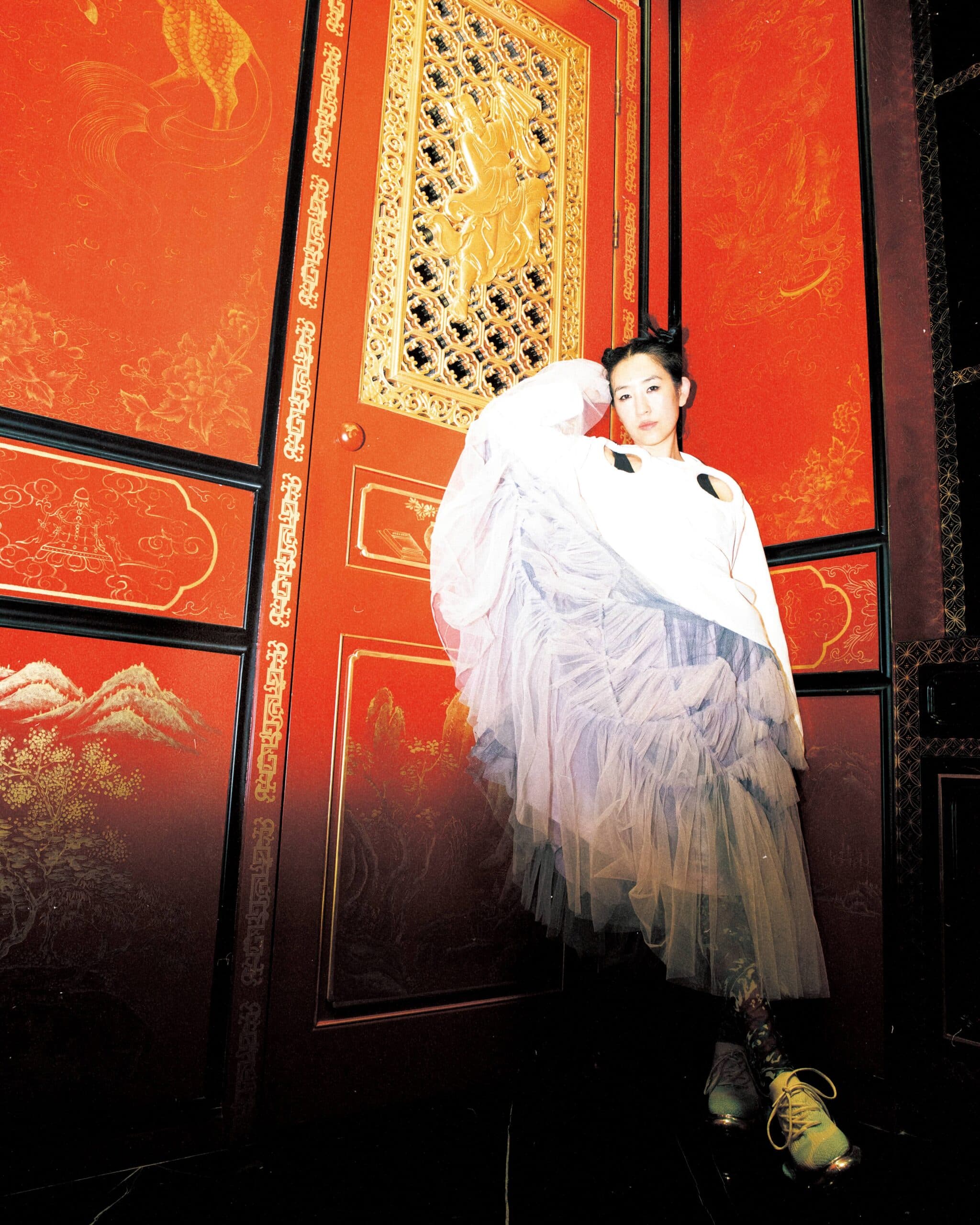
“I don’t listen to that much music,” 33EMYBW confesses. “I get my inspiration from movies and books.” Following the train of thought of 33—Wu Shanmin by name—is a daunting task, and interviewing her is just as challenging. Hidden beneath the hood of her Aphex Twin sweatshirt, the Chinese musician quickly withdraws, speaks little of her personal life, and, when discussing her work, employs an enigmatic, expansive, and often cryptic discourse. Hiding behind her concepts, the young artist nevertheless allows the portrait of a meticulous electronic musician to emerge, anchored—against her will—in a rich and deeply inspiring realm.
Because, like an author, Shanghai based artist, producer, and designer, is a world builder, pulling at the fabric of an idea until it stretches into a tome. But these ideas are immaterial. Musical. Mostly. 33’s albums (Golem, Anthropods, and Holes of Sinian) and EP (Dong.²) feel like a sci-fi trilogy (with a spinoff) made in a remote language with no subtitles. They are vast and pregnant with meaning. We the viewers are left putting the conceptual pieces together by referencing the mysterious symbols she’s left behind.
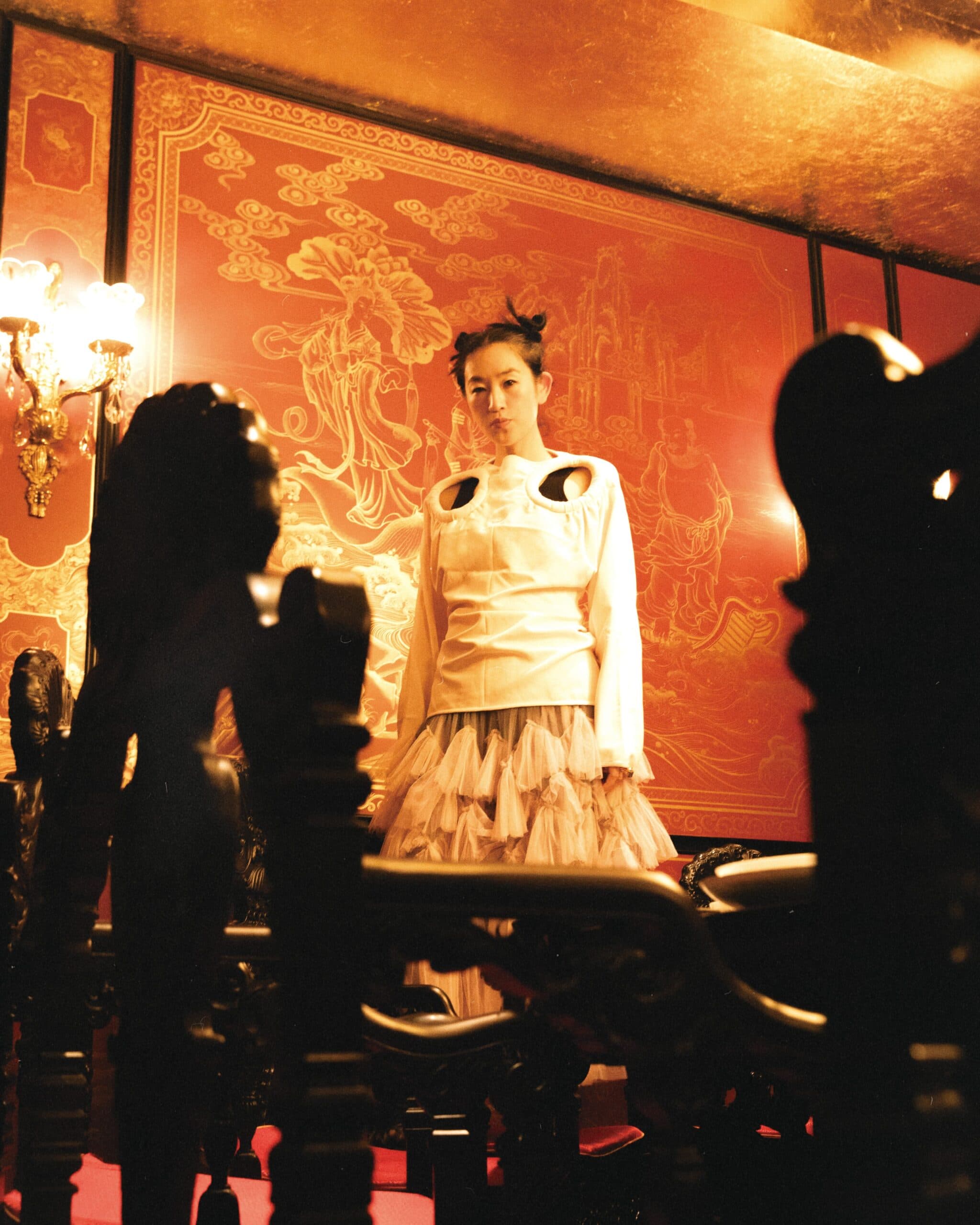
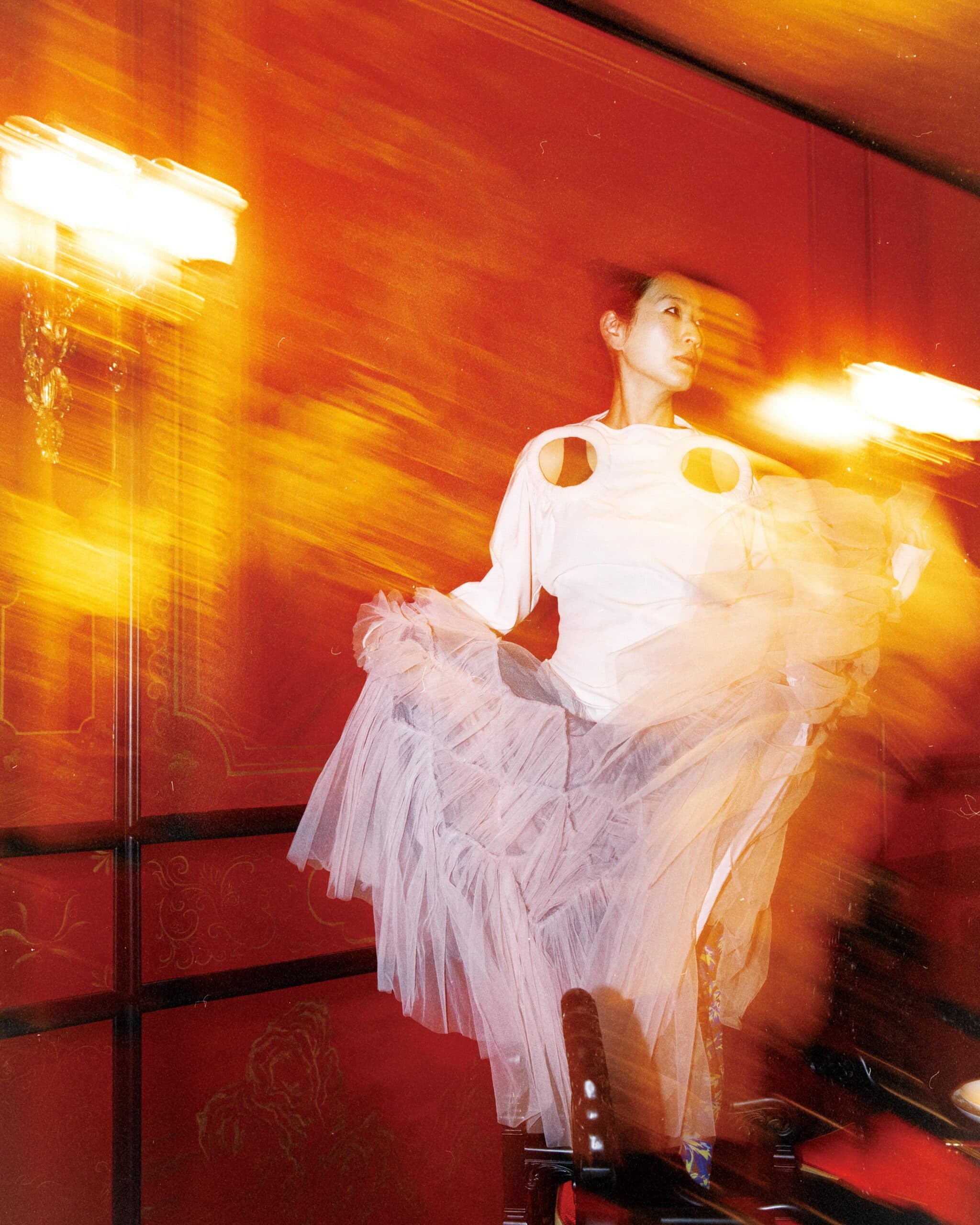
We met 33 (pronounced “San San” – three three in Mandarin) at Le Guess Who? Festival after her performance with Chinese noise artists and guitar pioneer Li Jianhong in the back of the Pieterskerk Church, transformed into a red-lit performance venue for the occasion. Le Guess Who? is one the world’s most ambitiously eclectic festivals, giving creative leeway to guest curators who put together astoundingly singular experiences. In this case, Chinese contemporary artist Tianzhuo Chen, the founder of Asian Dope Boys, known for his outlandish works that cross ancient traditions and modern purgatory, invited DIEJAMIN, HULUBALANG, ZAÄAR and GOTH-TRAD and others to perform across the festival’s 4-Day program. Between 33’s creative mashup with Li Jianhong’s noisy and consuming guitar, we had a chance to speak, before she was off again to the rooftop of another venue to perform from her own catalog of experimental sounds.
For 33 this is nothing new. You can find traces of her work going back as far as 2018. At least under the guise of 33EMBYW; San San has been playing in garage rock and post punk bands around Shanghai since her early 20s. “My first band was in 2003. I started learning bass at a place called Sus2 Music Factory,” 33 recounts. “The place was literally inside an abandoned factory—I’d spend four hours round-trip to get there, taking three buses from home, walking 15 minutes, and then passing through piles of scrap metal and machines to reach the classroom in a bungalow.” The band was called boojii and 33 played the synthesizer and provided the vocals. “During that time, I also started other bands in different styles,” she continues, “including a noise rock band and a drone ensemble, but I realized my interest wasn’t in playing instruments or sticking to one genre — I wanted to break free from those constraints.”
The unconstrained way became clear around 2015. Influenced by Shanghai’s experimental maverick Gooooose, 33 changed her name and started making electronic music in a mashup group called Duck Fight Goose. “Later, I met Gaz and released a track on SVBKVLT,” Shanghai’s premiere experimental label that has pumped out genre defying artists like Zaliva-D and Osheyack since the early 2010s. “I felt like I’d finally found my connection to music,” 33 admits. Like her label mates, 33’s music resists form; it’s broken, sibylline, wide-eyed. But it’s also drenched in far flung concepts that reach for the edge of time and the limits of human intelligence.
And so, to fully understand 33, it might be best to approach her work as an alien, ordained to decode the fugitive detail, like the extraterrestrials who will one day stumble upon the Voyager 1 Satellite. We deal in fragments, speculation, meta-logic and spaceless combinations. Most of all, we must resist the temptation of personal importance, thinking the message is tuned to our radio receiver’s individual settings, mistaking dial tones for music. “People want to hear something if they listen to a Chinese producer from China. But Chinese is not a genre for art,” 33 reminds us. And while we can do some reverse-calculus on her work’s trajectory to find that it comes from Shanghai, this is a detail among many. Albeit an interesting one.
Because, like 33, Shanghai is undefinable. COSMOpolital, EXTRATERritorial… Within it contains multitudes. Personal, real, and imagined. The city has transformed over time in ways yet unrecognisable, like our Edicarian ancestors or our Anthropodic descendants (more on that later). Like, maybe, you or I, after the blunt force of personal history. So we plant our feet inside Shanghai to grab at the holographic imaginings of 33 and her music. As Marco Polo told Kublai Khan in Italo Calvino’s Invisible Cities, “with cities, it is as with dreams: everything imaginable can be dreamed, but even the most unexpected dream is a rebus that conceals a desire or, its reverse, a fear.”
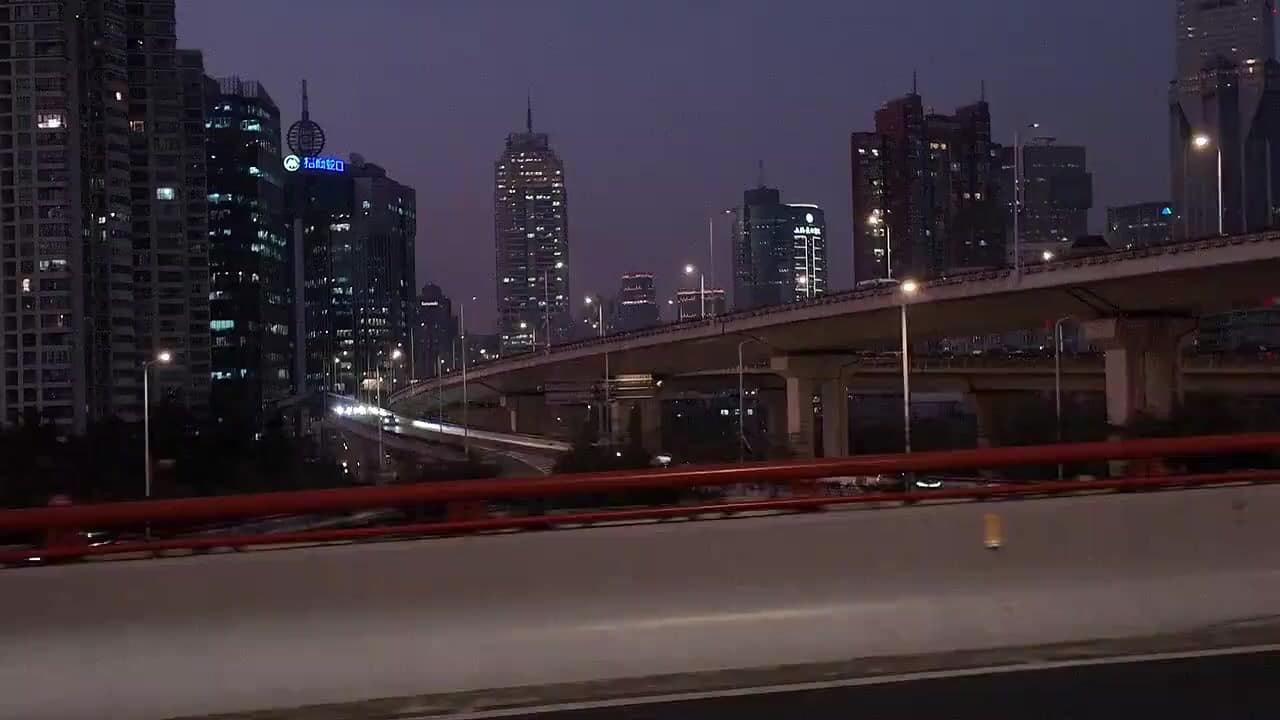
Golems like still cranes in the twilight
Golem’s have “this infinitely extendable biological nature. [They] gain souls, connecting with one another, self-replicating in various forms.” 33 says, describing the concept behind her first album, Golem; a reference to the 16th Century tale in which Rabbi Low of Prague persuaded Emperor Rudolph that his incantations blew the breath of life into a “Golem” made of clay. It’s a metaphor for today’s AI which sparked 33’s imagination after learning that AlphaZero, a generalised intelligence, defeated IBM’s dedicated chess engine, DeepMind, in 2017. A title previously claimed over (human) world champion Gary Kasparov in 1997.
Keeping up? With 33 sometimes it’s difficult. One must imagine sprawls of dusty manuscripts littered across the floor. Flip a page here, maybe there, but it’s best to submit to the intellectual hopscotch of her imagination. Entering her world we look for familiar signs. A turn of phrase. “It’s all one pass,” she says, “so I can dig deeper and deeper.”
Golem as an album could well provide the soundtrack to this Rabbi Low’s incantations. Each track teeters on the edge of darkness, containing within them some great existential power. Titles are imbued with the names of soul seeking fables like “Frankenstein” or “Ship of Theseus”; a paradox which plagues the inner mind of technocrats in their search for singularity. These legends are “a timely and relevant metaphor for cybernetics,” 33 explains, inspired greatly by Norbert Weiner’s book God and Golem, Inc. (1964) in which the MIT professor wrestles with the idea of super intelligent machines, referencing myths like the Pygmalion, Čapek’s the “Slave of the Lamp”, Goethe’s “Sorcerer’s Apprentice”, and A Thousand and One Nights’ “The Fisherman and the Djinn” (aka a genie in a bottle).
So 33’s first work is dedicated to the dubious power of humankind’s creations. With an undertone of destiny. How, after all, could these storytellers of the past see so clearly the pitfalls of our own time? Staring into the upper limits of the Promethean cliff wall, all slick and metal alloy… we turn to Shanghai for clues.
Because Shanghai, this “electric and lurid city more exciting than any other in the world” (Ballard) is also a city with a destiny writ large. From its extraterritorial past that included the British, French and Americans, a Japanese occupation, nationalist reforms… it is a place whose patchwork identity has been constructed in the crucible of violence, decadence, development and pizzazz. In order to decode its secrets it helps to read the calligraphy of a skyline.
There’s the neo-classical Customs House over the Huangpu river built by the British at the turn of the 20th Century. Or the Euro-style villas in the French Concession. The lilong (lanes) and hutongs (alleys) in what was formerly the “walled city” and Chinese district. Or the skyscrapers of the Bund which were built by the Americans in the early 20th Century. The Chinese term for skyscrapers (which comes from Shanghai) is motian dalou — literally the magical big buildings that reach the skies.
During its heyday as a treaty port Shanghai saw Western jazz thrive in lascivious late night dance halls. Chinese folk composers from the Shanghai Conservatory dabbled in the earliest forms of East meets West genre blending. For the premiere of The Hunchback of Notre Dame, the Cathay Theatre (at the time the largest in the world) hired 200 hunchbacks to peruse the streets in front of the entrance to the rakish awe of Shanghai’s movie-going elite (Ballard).
And while a nationalist movement and the Maoist regime tried to force Shanghai to shed its cosmopolitan way of life it considered decadent and bourgeois, it wouldn’t last forever. In the late 1970s the Deng Xiaoping reforms re-opened Shanghai as a financial hub, leveraging its past as symbolic capital for a China once again open to global trade. It was in this time that 33 grew up, in this awesome mix of past and future, foreign and forever, a land of simultaneity and self-replicating variety. A golem in its own right.
“Shanghai is a mega city, you know. Since the eighties it has become super open. We didn’t have to use VPNs, this kind of thing. So at my age people really got to know a lot of western culture, music, art, and movies. That’s why I think I’m really into making stuff that has different layers,” 33 explains. “Bejing has more of a rock idol feel where Shanghai has diversity.”
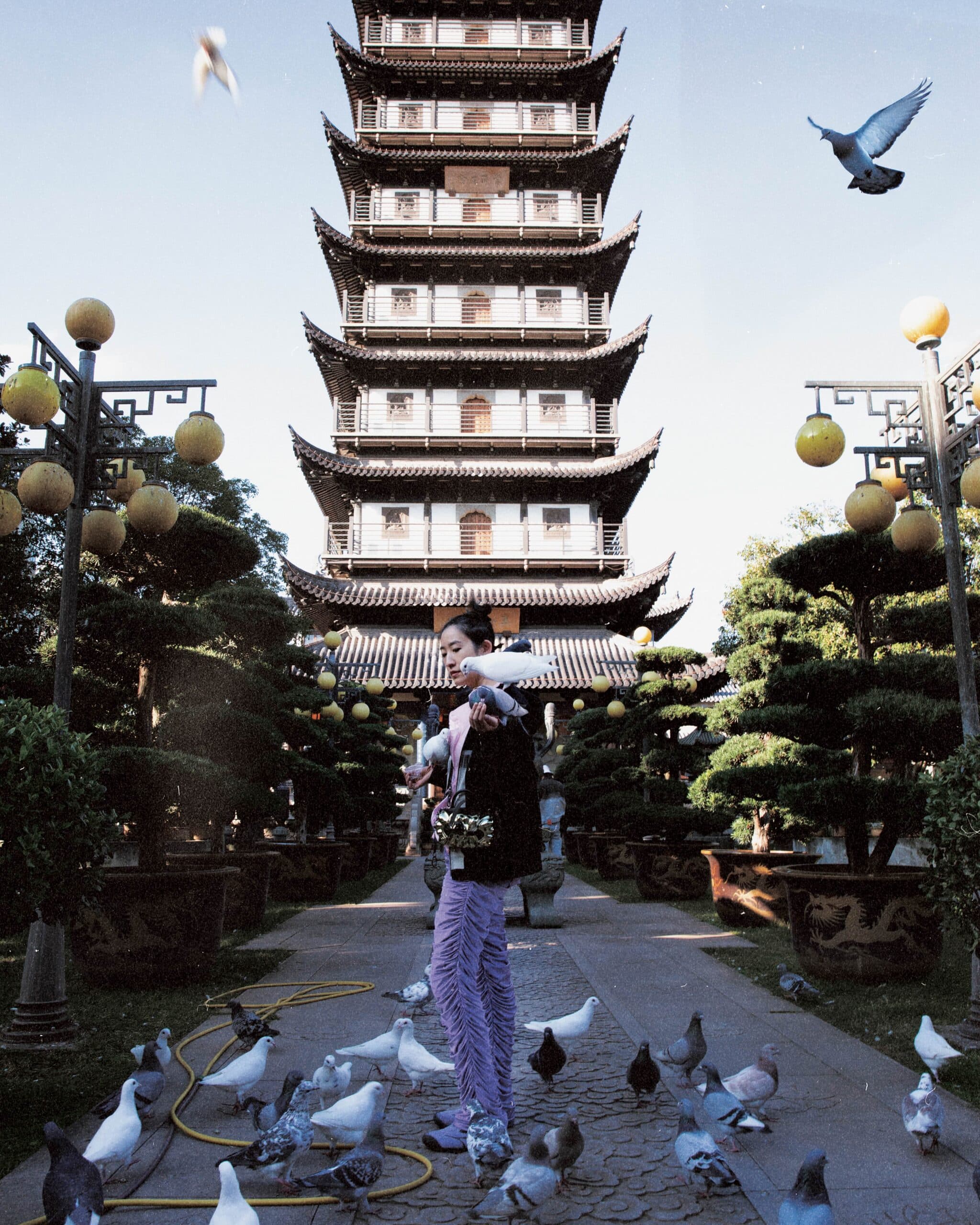
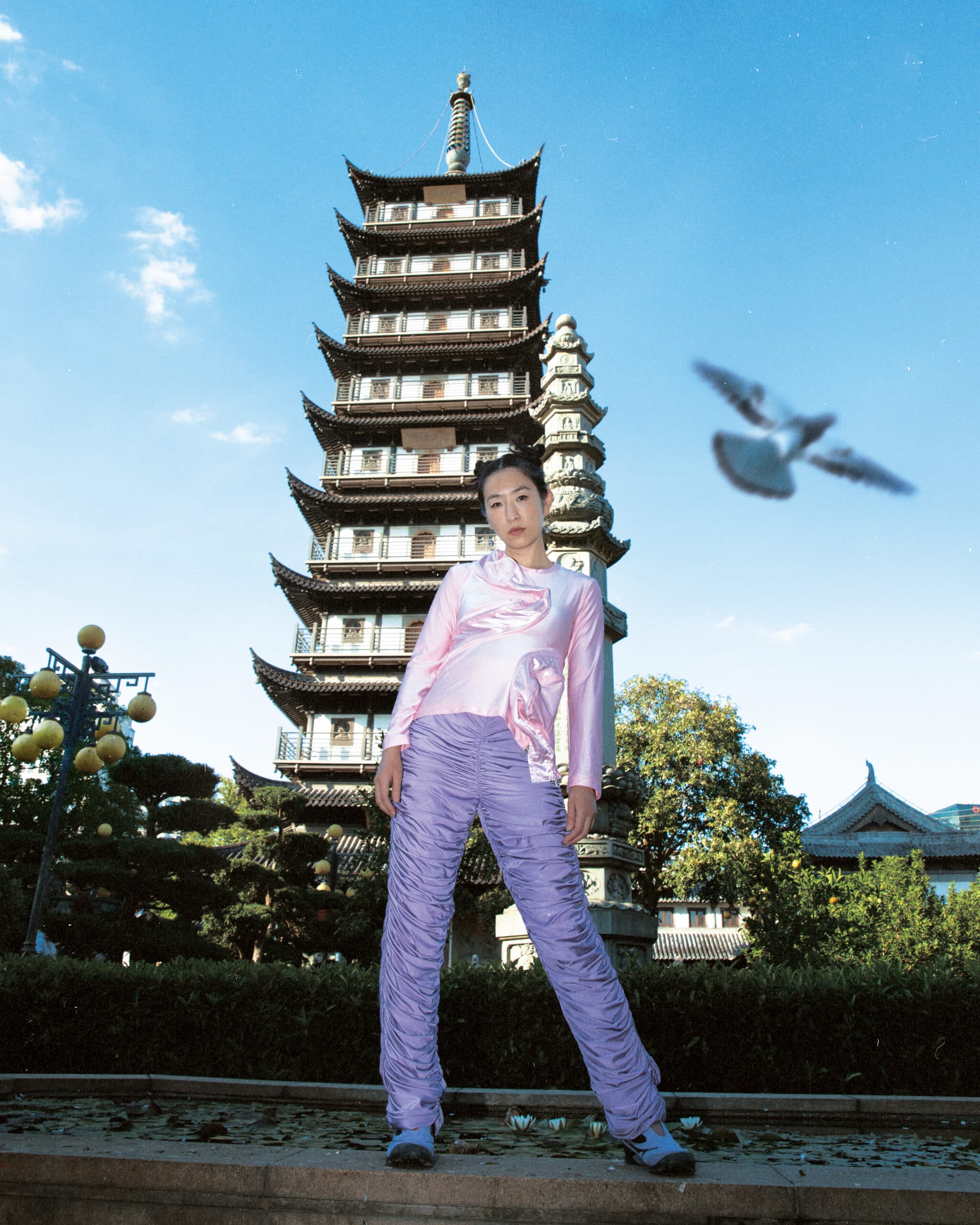
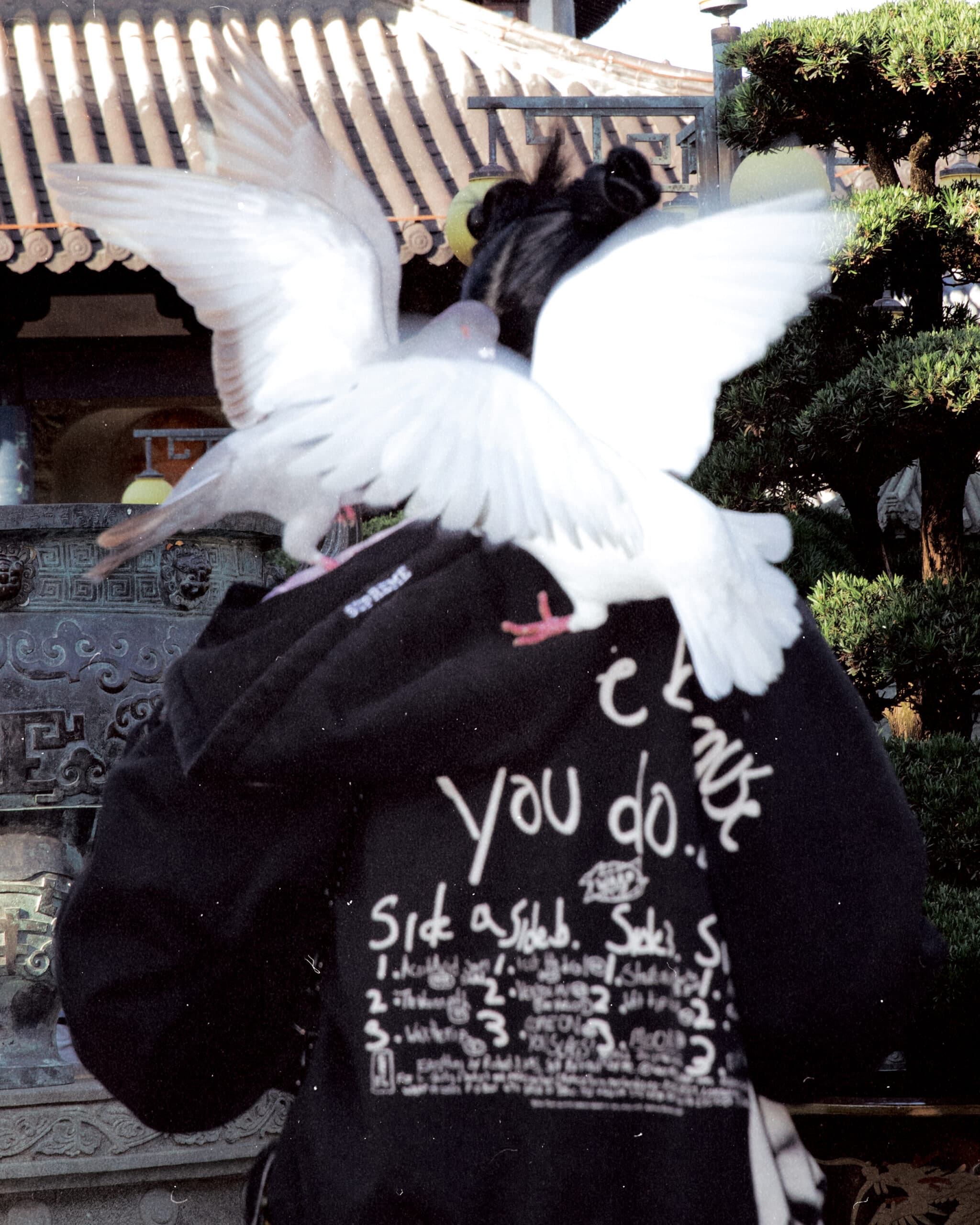
Shanghai was also home to The Shelter, SVBKVLT’s home base. Built in 2006 in a restored WWII bomb shelter, the nightclub became a symbol for Shanghai’s underground nightlife. “It confused a lot of people. It’s not nice at all. It’s just a sweaty dark box,” Gareth “Gaz” Williams, founder of SVBKVLT says of the club. “There’s no lights, there’s no dice or cognac—there’s nothing to do but dance.” And while it had to close its doors in 2017, it re-opened in another location as ALL Club. Then it closed again in 2025… new clubs take its place. “I thought the place was quite ye (‘wild’),” adds independent music producer and DJ, Lee. “It was very dark, you couldn’t see a thing. The mentality of the crowd seemed to be different back then. Whenever I went there, it felt like people were talking about music, about the content of things…”
But content comes and goes. Only form remains. Like cicada skins on hickory wood. Shanghai’s The Power Station, once an oil fired (you guessed it) power station in West Bund has transformed into China’s first state-run contemporary art museum. The City God Temple in Chenghuang Miao has become a shopping street with souvenir markets. Spaces, cities, and ideas… souls gained and replicated, preserved or replaced.
“It’s quite difficult to describe Shanghai as it changes so quickly and often, and as I haven’t lived there for the last 3 years I don’t think I would be able to describe its current form, but maybe this aspect of ‘constant change’ describes the city to some degree,” Gaz admits. “I lived there from 2007 until 2023 (and also lived there for one year in 2005) and aside from some of the major infrastructure of the city, the Shanghai I arrived in and the Shanghai I left, for better and for worse, are very different places.” As different as post-punk to “冬虫夏草”?
Shanghai, like 33’s music, teaches us that clues to our future lie written in the past. Temples predict commerce. Industries for-see entertainment. Skylines and architecture are hushed presentations. Catatonic predictions. Like the Djinn in his bottle, waiting at the bottom of the lake to be pulled up by a fisherman’s net. And though in 33’s imagination the Golem is artificial intelligence, those who turn its gears may be our long-gone rabbi, creeping over the skyline like still cranes in the twilight.
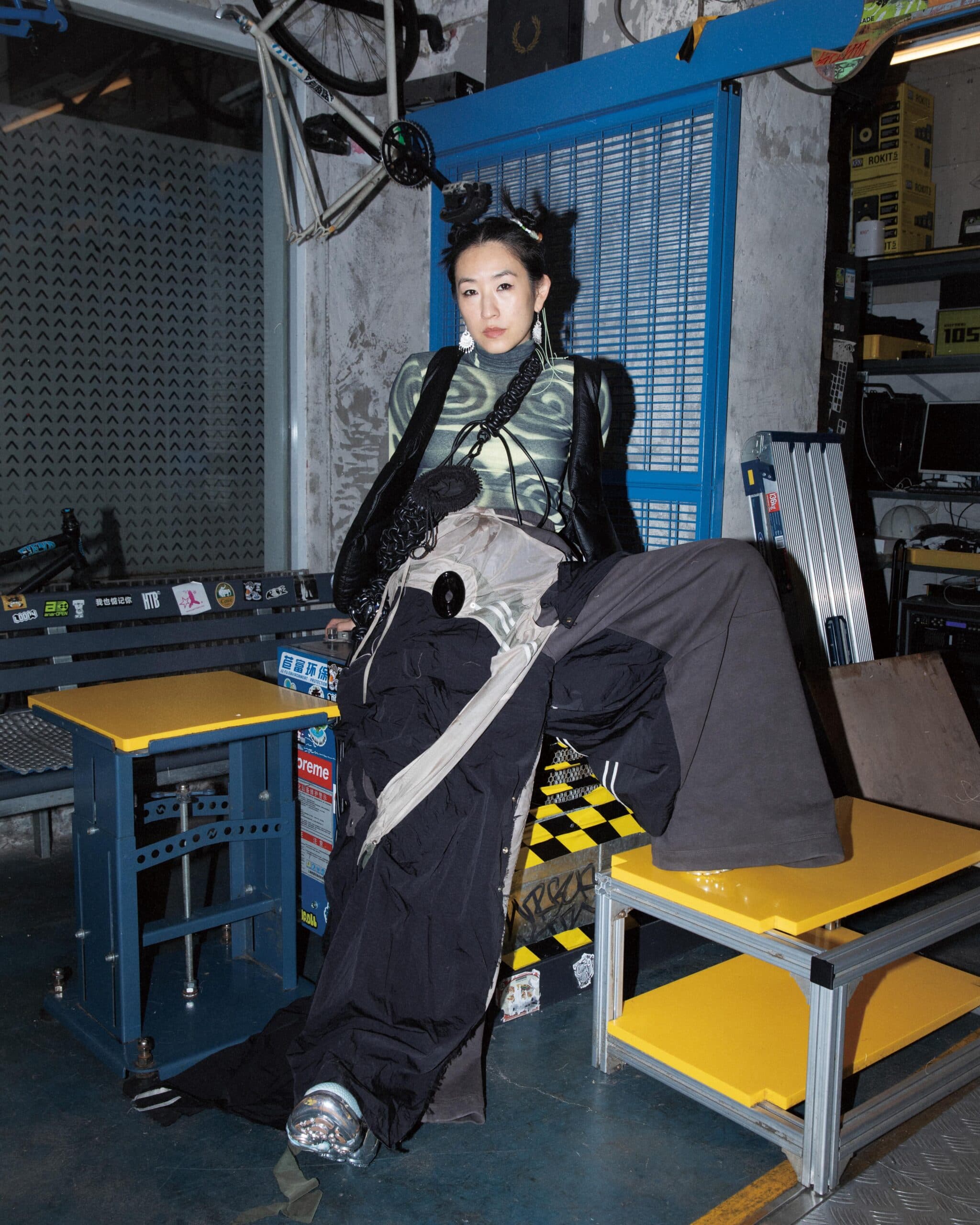
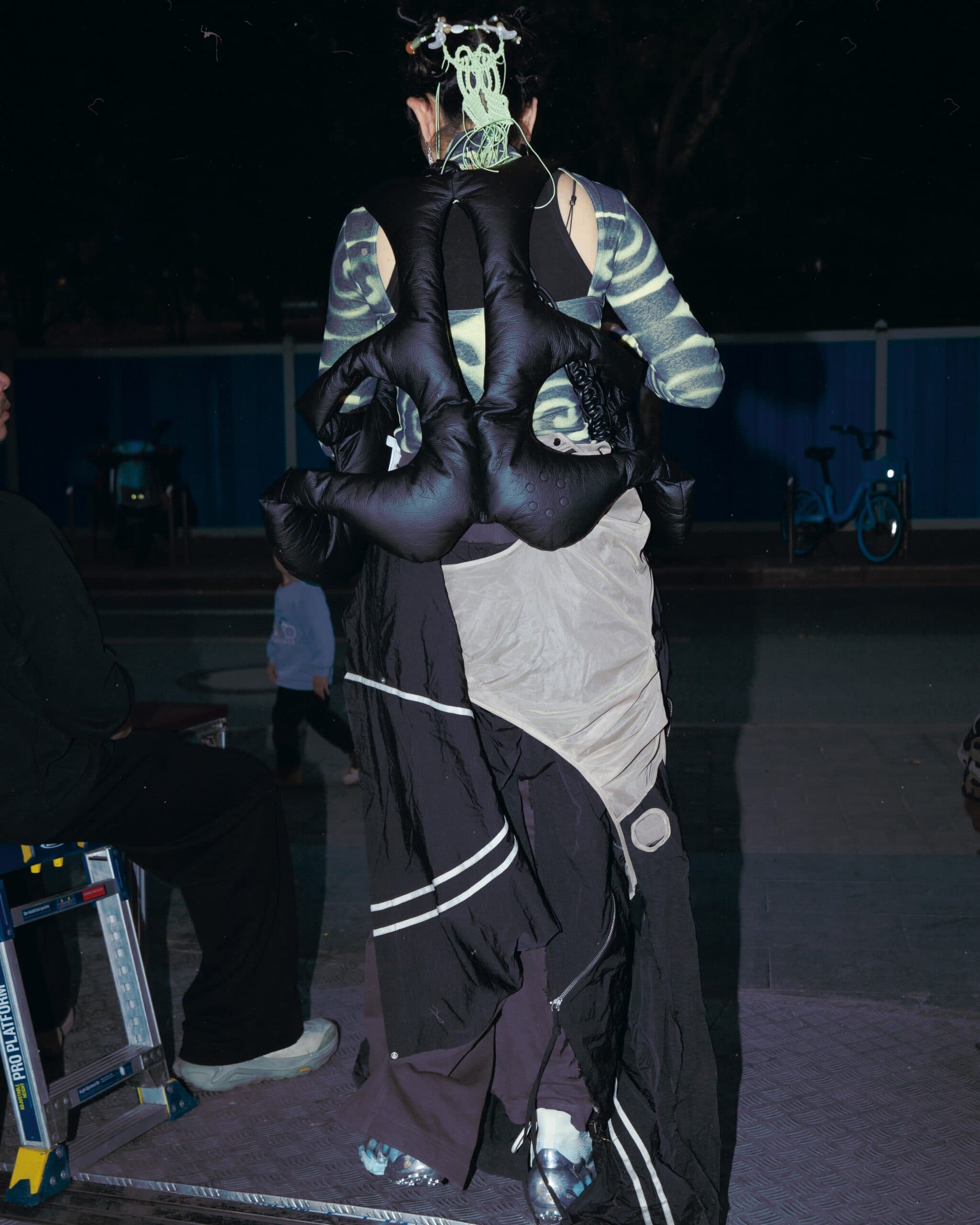
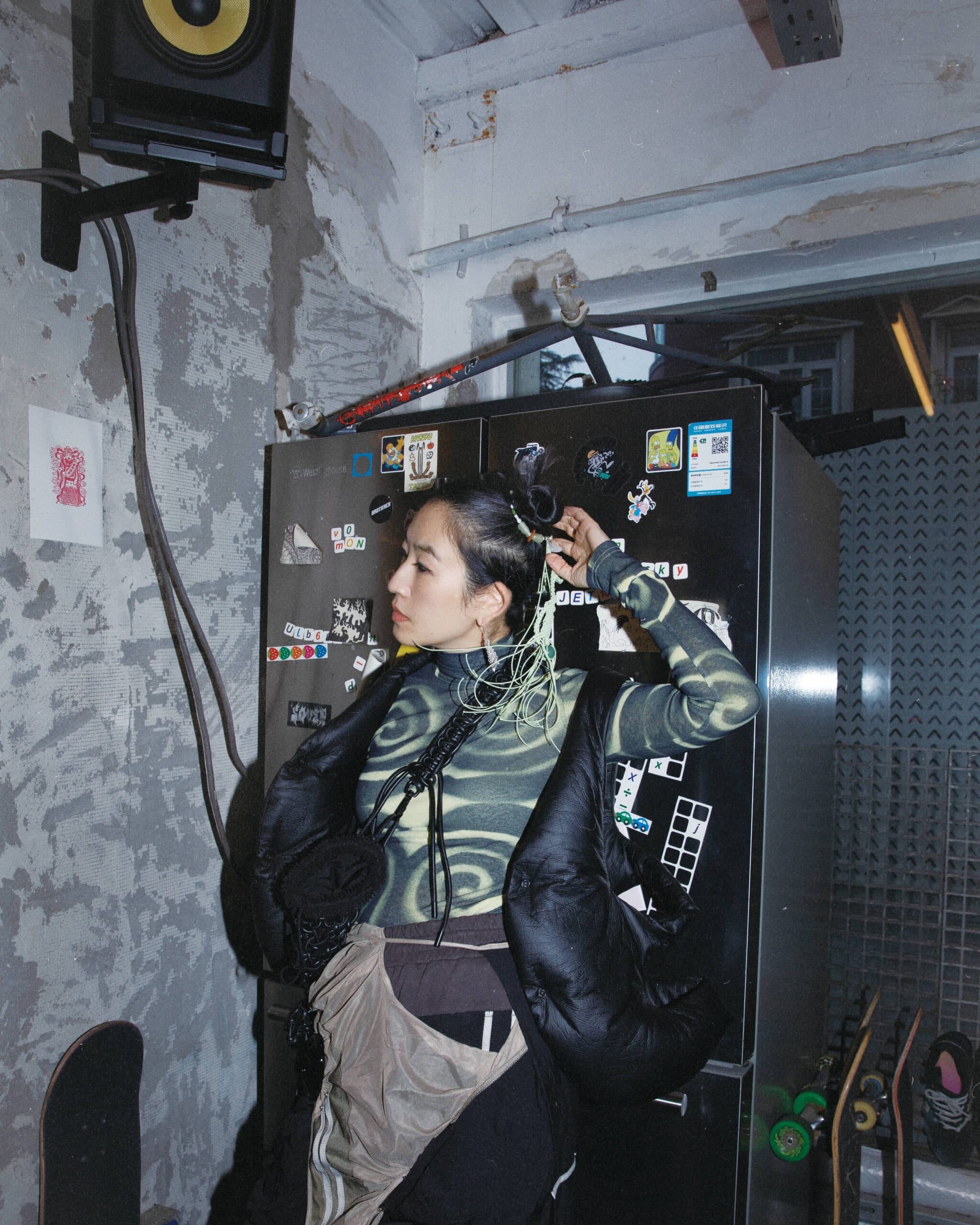
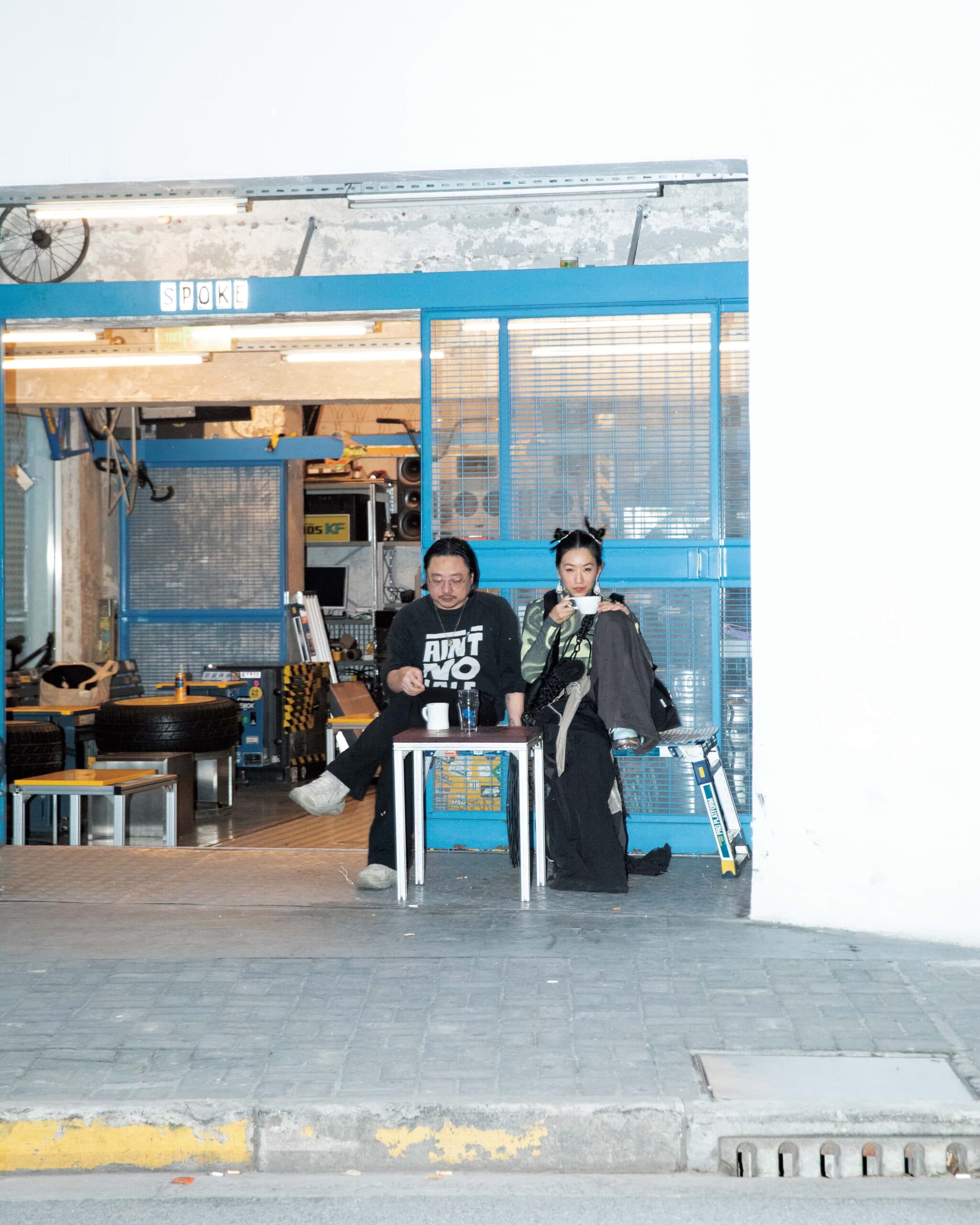
Special thanks to Spoke Beverage Room for allowing us to shoot in their venue.
The number of all numbers
“When I make a live set or a track it’s like architecture design. It’s to build a space. A huge temple. That’s why the name of the most important song is called ‘Anthropod Continent’,” 33 says of her sophomore album, Anthropods, which imagines a “matrix of life from a post-humanist perspective” where our bodies grow exoskeletons and our blood is replaced with haemolymph. On it, 33 is joined by fellow musical freaks of nature, including the extraterrestrial communicator from Uganda Don Zilla, Colombian frogophile Lechuga Zafiro, improvisational noise scientist Li Jianhong from China, and post-dubstep Londoner Ikonika. These artists, chosen to collaborate or remix, are common in their differences… united not by glib interpretations of genre or scene, but by some deep aspirational pull. Perhaps, for 33, signposts on a path to post-humanism.
“The genres that have influenced me the most are undoubtedly IDM and Footwork, with the biggest electronic music influence being RP Boo. Before I started making music, I was into metal, psychedelic rock, and noise, like C.C.C.C. and Les Rallizes Dénudés.” Washed out Japanese drone rock, terrifying distorted noise, and factory club from Chicago. Put them together, plus a little extra, and you get 33’s music.
“Since Golem, some reviews have mentioned that I’m using Chinese percussion,” 33 explains, “but in reality, I didn’t use any Chinese instruments in that album. The rhythms and beats in Golem mostly came from 808s in Ableton, which I still love using the most. Perhaps the idea of ‘using Chinese instruments’ stems from listeners’ assumptions based on my identity. I won’t cater to this perspective because it creates boundaries, and too many boundaries stifle cultural growth, leaving it dead. I’m breaking through those boundaries.”
And here is the Borgesian point of contact. The fine line between tyranny and tradition. Cultural imperialism and cosmopolitanism. Luminaries and outcasts. For 33 these questions resolve themselves in deep time, in a sci-fi future that is not populated by humans but some human-decapod hybrid. “Is it not first through the voice that one becomes animal?” Deleuze postulates on A Thousand Plateaus: Capitalism and Schizophrenia. “It has nothing to do with ideology. There is no ideology and never has been. All we talk about are multiplicities, lines, strata and segmentarities, lines of flight and intensities, machinic assemblages and their various types, bodies without organs and their construction and selection.”
Shanghai itself is no stranger to this complicated struggle. Its years as an “extraterritory” meant that its own cosmopolitanism was a constant negotiation between self representation and foreign powers, creating what Ackbar Abbas called in the journal Cosmopolitan De-Scriptions a “polycentric city controlled by many different hands”. While foreign presence may have created new kinds of public spaces, new impositions, these can’t be simply understood as new forms of cultural domination, but instead are elements of the foreign that are then re-appropriated by the local. Sometimes.
But 33’s music takes this whole process a step further. There’s an exo-cultural approach, with a convenient metaphor for insects and hive minds. The music is supra-human, augmented in strange ways, with time sequences not specially designed for bipedal hominids. “33’s [music] sounded like nothing else I’d heard before,” says label head Gaz, “completely her own thing… it was very exciting.” Completely her own thing, yet seeking “Symmetry”, “Seeds of the Future”, final destination, “Anthropod Continent”. Mao famously said, “one divides into two”, but Norbert Weiner wrote, “the number of all numbers is greater than any number”. A dull factoid of modernity? Here’s another one; the English word “modern”, which entered modern Chinese vocabulary as “modeng”, was coined in Shanghai.
“It’s very difficult to find anything in China ‘cause it’s too complicated,” 33 explains on why the appropriation seems to head mostly in one direction. “There are some musicians that use very specific Chinese instruments combined with electronic music or rock. Especially on TikTok, it really works on that kind of media.” No kidding. If the current path leads to a flattening of culture, to a “glocal” mentality decided on committee by high paid consultants, artists like 33 are at least providing a bulwark. So that maybe once we merge into a single, new, unrecognisable genus, there will be an echo of something deeply pure and original. Not because it comes from the West or from China, or Shanghai. Well, not just. But because it comes from that creative animating spirit that has something to do with Rabbi Low’s incantations, something to do with Holy Spirit, some secret within these enchanted, soft-skinned little primates.
Ghosts unfolding in the multiverse
Of 33’s album theses, Holes of Sinian, released in 2023, is the most singular. The 12 tracks contain the same mysterious power as her other work, but also display an uncanny restraint. “I approached the arrangement and timbres with greater freedom,” 33 admits. “Sinian” is a transliteration of China’s name in ancient Indian Buddhist texts, and as you might imagine by now, the “Holes” part of the title enters some heady territory.
“I wrote most of the songs during the lockdown,” 33 explains. “I was super stressed. I think everyone was super stressed at the time. And one day I read a report about the creatures from the Ediacaran period. Dating back 635–541 million years ago, the Ediacaran period marks the final phase of the Proterozoic Eon. The Ediacaran biota from this period survived by absorbing nutrients from microbial mats on the ocean floor, without the need for foraging, so there were no predators. I felt like it was a paradise. It was beautiful. But the ending was so dramatic…”
While the Edicarian biota lived in harmony for a very long time, at some point one of the organisms grew a primitive form of teeth, making it the only predator on a planet of defenceless creatures. “And the others are all gone like that,” 33 says. “A harsh reality,” I suggest, as an aside. “I don’t know,” 33 pauses. “It’s very hard to tell if it’s a good thing or a bad thing. If it’s a harsh reality or not. I think it’s complicated. Everything is flowing in different ways.”
Shanghai offers a particularly sharp illustration of this kind of a-moral evolutionary flow. The city has long functioned as an experimental zone, where new economic logics are tested at speed. In the post-pandemic era, its club culture began to resemble the city’s broader urban metabolism: smaller, slower ecologies displaced not via any one force per say, but a new toothy reality.
“While China was closed, there was this strong sense of solidarity; DJs toured between cities, and everyone supported each other,” Sokol a photographer who covered China’s nightlife since 2021, told DAZED, “with international lineups booked almost nightly, local DJs often play to smaller crowds, and that tight-knit support has faded. It’s entered a new phase, a kind of survival mode.” In recent years Shanghai has seen a wave of club closures. Elevator, System, All Club, Dada, 44KW… What initially gave hope, and a local focus to the scene, is now being undercut by high profile bookings and tighter restrictions. “I’d say it has fundamentally reshaped the whole scene – especially in Shanghai,” Sokol continues. “Why go to a regular club when there’s practically a brand event happening every day, complete with its own after-party?”
Independent clubs have given way to large-scale events embedded within malls, luxury retail, and lifestyle complexes where nightlife becomes foot traffic and culture becomes infrastructure, like the TX Huaihai mall and Bohui Plaza that have opened nightclubs alongside fashion and luxury stores to reel in shoppers. Like the first Ediacaran organism to develop teeth, these new forms’ “harshness” may be difficult to measure, especially in deep time. What’s true is they simply operate under a different evolutionary rule, one optimized for scale, visibility, and extraction. And perhaps this is why 33 wrote Holes of Sinian, to build an alternative, a way out, using “the ghosts of the Ediacaran biota as a medium to step beyond linear time, unfolding a multiverse…”
“After experiencing covid and the lockdown, I tried to understand the evolution of life and death from a nonhuman perspective.” 33 explains. “I created this concept called the Sinian Stone which symbolizes nonlinear time and an alternative evolutionary rule, riddled with irregular porousness, like the contingency of the universe and life. In this fictional concept, the Ediacaran biota find other modes of existence, passing through these holes to reach another timeline, continuing to exist in different forms.”
It wouldn’t be the first shift. Gaz recounts: “Around 2015 there was a bit of a shift in the club scene. Whereas before things were quite separate, the fashion and art scene started to cross over into the club scene. Tianzhuo Chen started AsianDopeBoys, Genome 6.66MBP formed, it was a really exciting time. Around this time a lot of musicians/members of bands started exploring solo electronic/club music as the scene shifted focus from live houses/bands to nightclubs, and many of these musicians started coming to The Shelter.” But today, The Shelter is closed and the SVBKVLT founder has left Shanghai and returned to his home in Manchester.
Mythic divisions within hipster logic
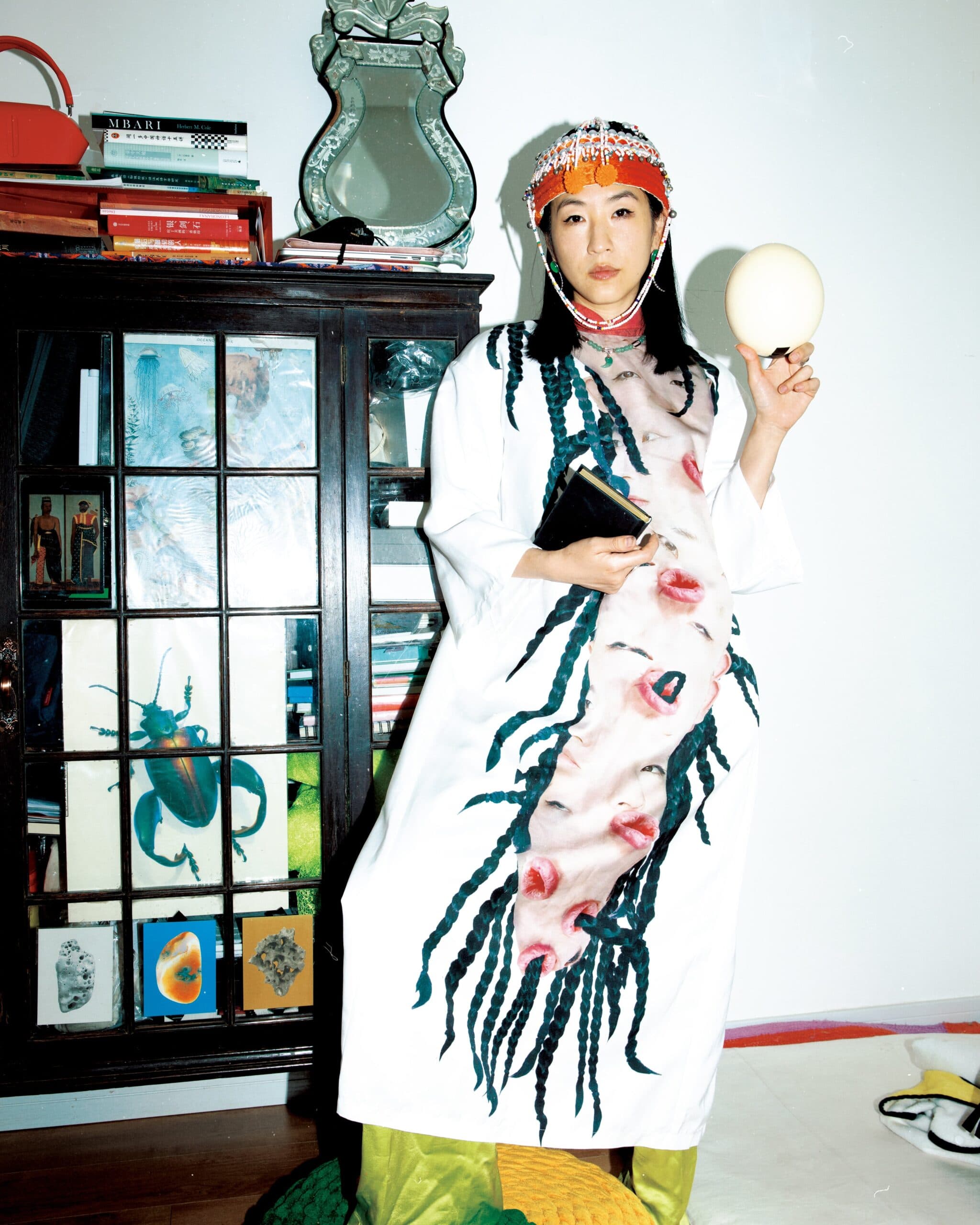
“In the past years I’ve done a lot of field research around China that made me have more interest in mythology in Chinese culture,” 33 continues. “I’ve traveled to Yunnan, Sichuan, Tibet, Inner Mongolia, and other places to learn about Chinese minority ethnic cultures and traditional music. My field recordings now include Tibetan, Miao, Dulong, Nu, Lisu, Yi, Bai, and Pumi peoples. Lately, I’ve been incorporating these samples—mostly vocals—into my music.”
These trips outside of Shanghai into the rural reveal new ways of being, a remedy, in some sense, to the pitfalls of cosmopolitan life in the machine of modernity; that great mythic division, not of culture distinguished from nature, but of nature estranged from itself by culture. “I’m really interested in the oldest stories in all the ethnic groups” 33 admits; that “universal point of flight” where human and animal become distinct.
“In 2015, 2 friends of mine were filming a documentary about a Dong woman returning home for the New Year,” 33 recounts about one of her field recording experiences. “They showed me some videos of the Dong Grand Song, and I was immediately captivated. This inspired me to start a project on Dong culture. Half a year later, I went with friends to Xiaohuang Village in Guizhou for two weeks to shoot and record.”
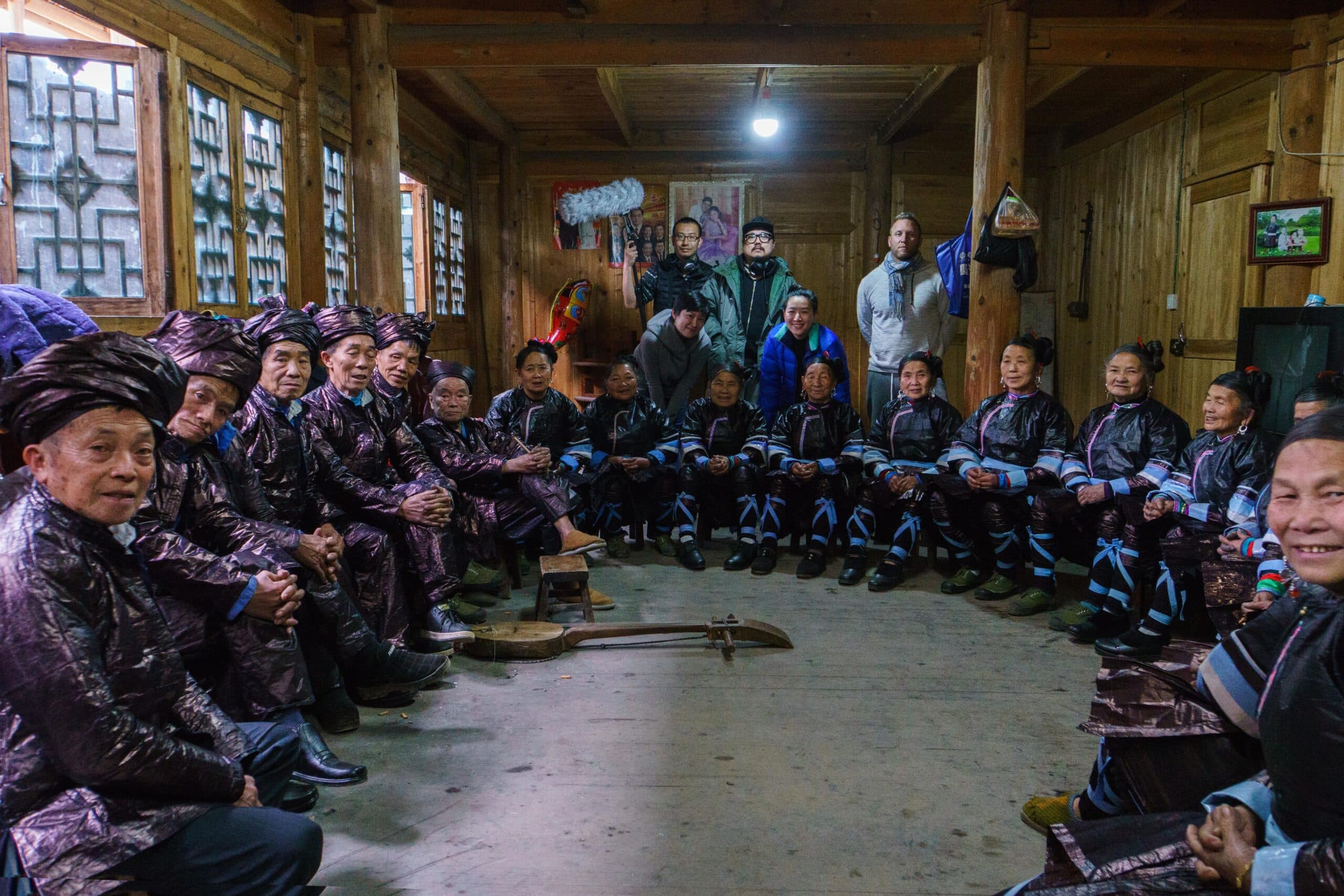
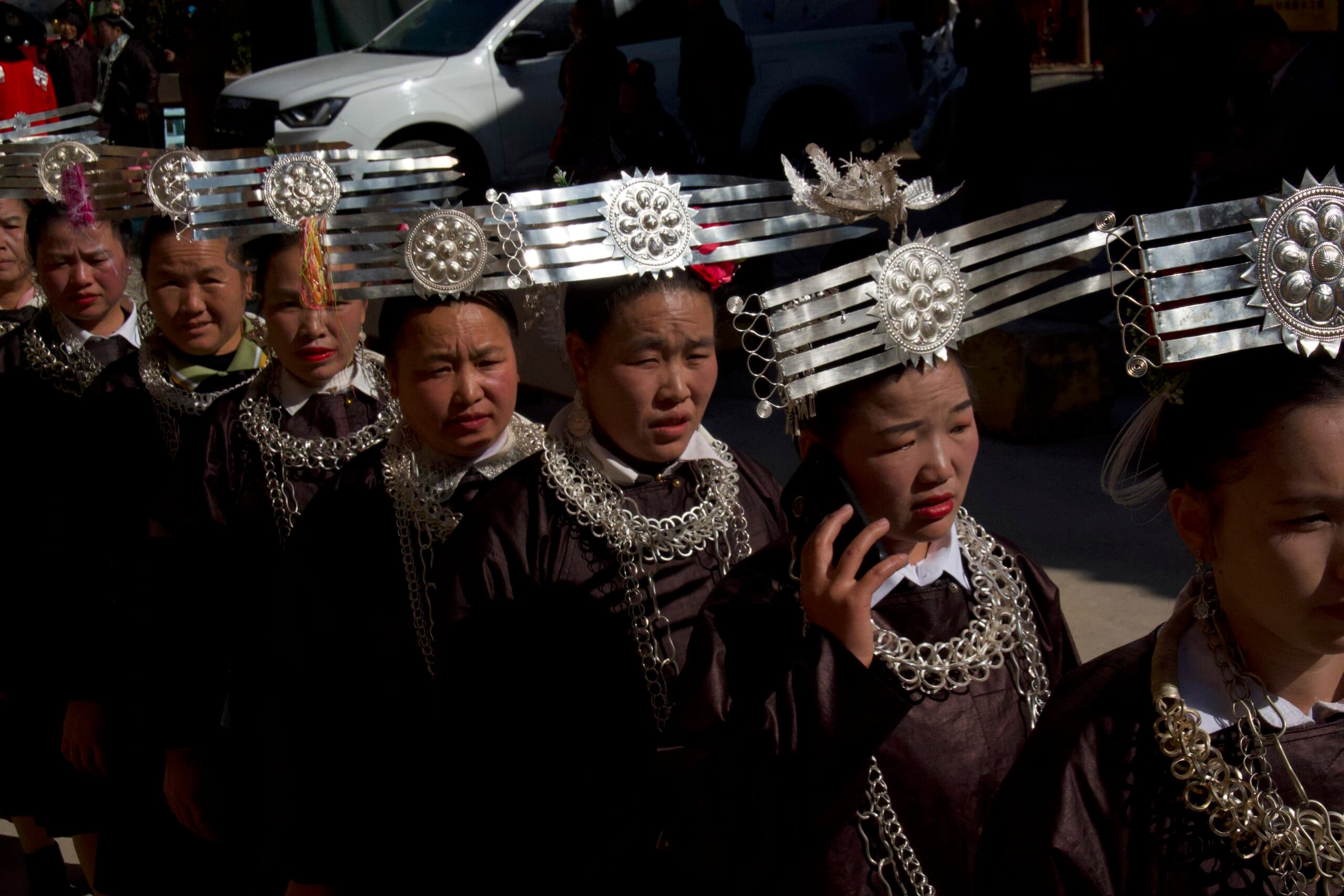
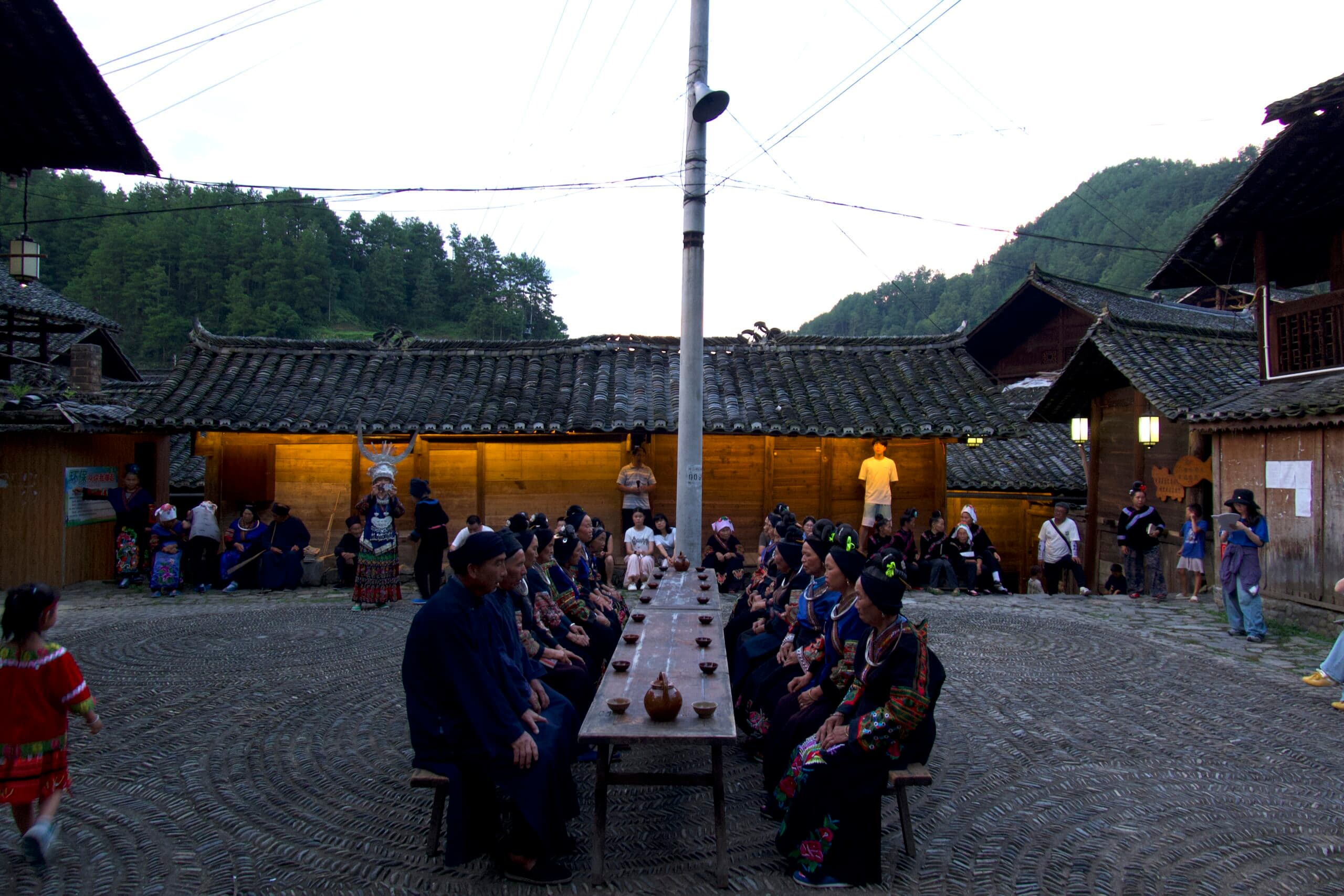
“China has 56 ethnic groups, and the Dong are one of the minority groups. They speak the Dong language, practice polytheistic beliefs, and live mainly in Guizhou, Hunan, and Hubei. “
“The Dong Grand Song (gal laox) are a form of multipart musics with a 2,500-year history. In formal performances, male and female song groups sing antiphonally in drum towers during specific cultural rituals.”
“Since the Dong have no written language, their traditions are passed down orally, with each village having song groups divided by age and gender, led by song masters well-versed in Dong history, culture, etiquette, and morals. The Dong Grand Song is not just a musical and artistic activity; it’s a vital part of the Dong’s marriage, social structure, cultural heritage, and process of socialization.”
The Dong Grand Song is an ancient technology embedded with much of the structural logic of 33’s mini-myths. Like 33’s music, it is non-physical. Passed down via oral tradition or, in her case, the polyphony of streaming providers and late night venues. There is no central voice, no dominant melody or predictable “drop”, the music maintains coherence without the need to exert control. There is an emphasis on function and meaning before sound, transformation instead of preservation.
In another project, 33 went into the rural mountains of Sichuan for 3 days to visit the Yi people. “They have a ritual to send dead people’s spirits to the ancestor place,” 33 explains. The Tisu are some of the poorest in the country and are often spoken about in Chinese discourse, according to 33. Much like us in the West, who look upon those rural peoples that have resisted the pull of the megapolis with one part pity, one part romance, and one part nostalgia for something lost. Being there and seeing the sacrifices of crows and chickens and goats that once made 33 flinch when she first saw it from behind a smartphone screen, now took on new meaning. The violence develops reason. Time itself dilates with the flow of the community. Spirits become banal as tea.
“It’s trendy in China or maybe in Shanghai for people to do eco friendly stuff,” 33 laments. “They talk about coming back to the ground, to the earth. They grow eco friendly food and have workshops with nature and it’s all very expensive. After I was in the ritual I realised that the only way that people connect to the earth is if you only eat food that you grow from earth and you have the next generation right on the earth you’re standing on. That is the only way you can connect. Me, who grew up in the city, I can’t find a connection. That’s all bullshit.”
“We moderns possess the concept but have lost sight of the plane of immanence,” so say Deleuze and Guattari. But this hasn’t stopped 33 from trying to find a portal, to use ancient technology to bypass hipster logic and break into something deeper, poetic maybe, but transcendent nonetheless.
“I was working on a project in Tibet using field recordings as material: I used the location of Jokhang Temple and Ramoche Temple as the diagonal points of a square, referencing the structure of a mandala to map out the points to do sound recording, then these materials are also evenly divided, combined and arranged.” Jung saw mandalas as “a concentric arrangement of the disordered multiplicity and of contradictory and irreconcilable elements… an attempt at self-healing on the part of Nature, which does not spring from conscious reflection but from an instinctive impulse.”
“When I do field recording I’m kind of serious. I will write down all the information, I will ask about the lyrics, about all the songs and the stories behind the song. I’ll record everything and so when I choose the samples it’s not only about how it sounds, not only about the melody, but also about the meaning of it,” 33 concludes.
How obscure, how bizarre...
“Cities, like dreams, are made of desires and fears,” Marco Polo continues to Kublai Khan, “even if the thread of their discourse is secret, their rules are absurd, their perspective deceitful, and everything conceals something else.” Whatever great threads that are woven around 33’s work here are deeply subjective and painstakingly speculative. Like watching someone murmur in their sleep and trying to decipher the shape and color of their dreams. Flattering as it may be to see our own imaginations projected upon the indistinct clamours and wolps of 33’s music, it’s the task of each listener to come to their own conclusions. “Learning about different cultures is like relearning life and death in a different way, and it has deepened my understanding of the importance of respecting diverse cultures,” 33 concludes. “And electronic music is everyone’s ritual of transcendence. These symbols are both signals and ceremonial objects, mechanisms of self-replication, fragments of dreams, tunnels of time, as well as echoes of machines and the ‘cunning’ of artificial intelligence. Electronic music is a field, through which I hope all of us can touch the untouchable.”
ABOUT THE AUTHOR
Christian Askin is an American music journalist born in Arizona and based in Paris. He is the editor and creative director of :pam as well as a writer focusing on left-field culture, emergent sounds, and hidden ecologies of meaning.
UP NEXT FROM CHRISTIAN...