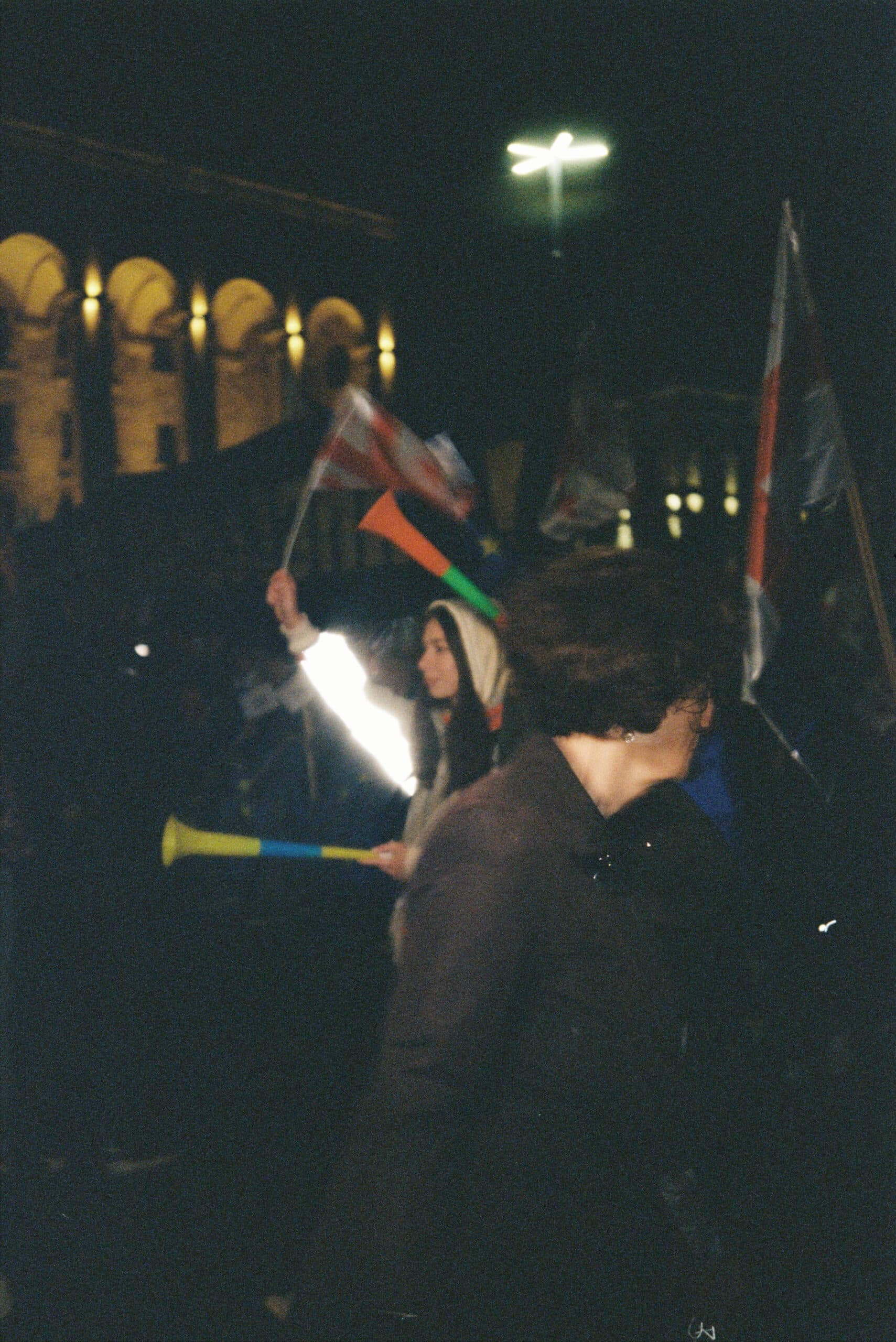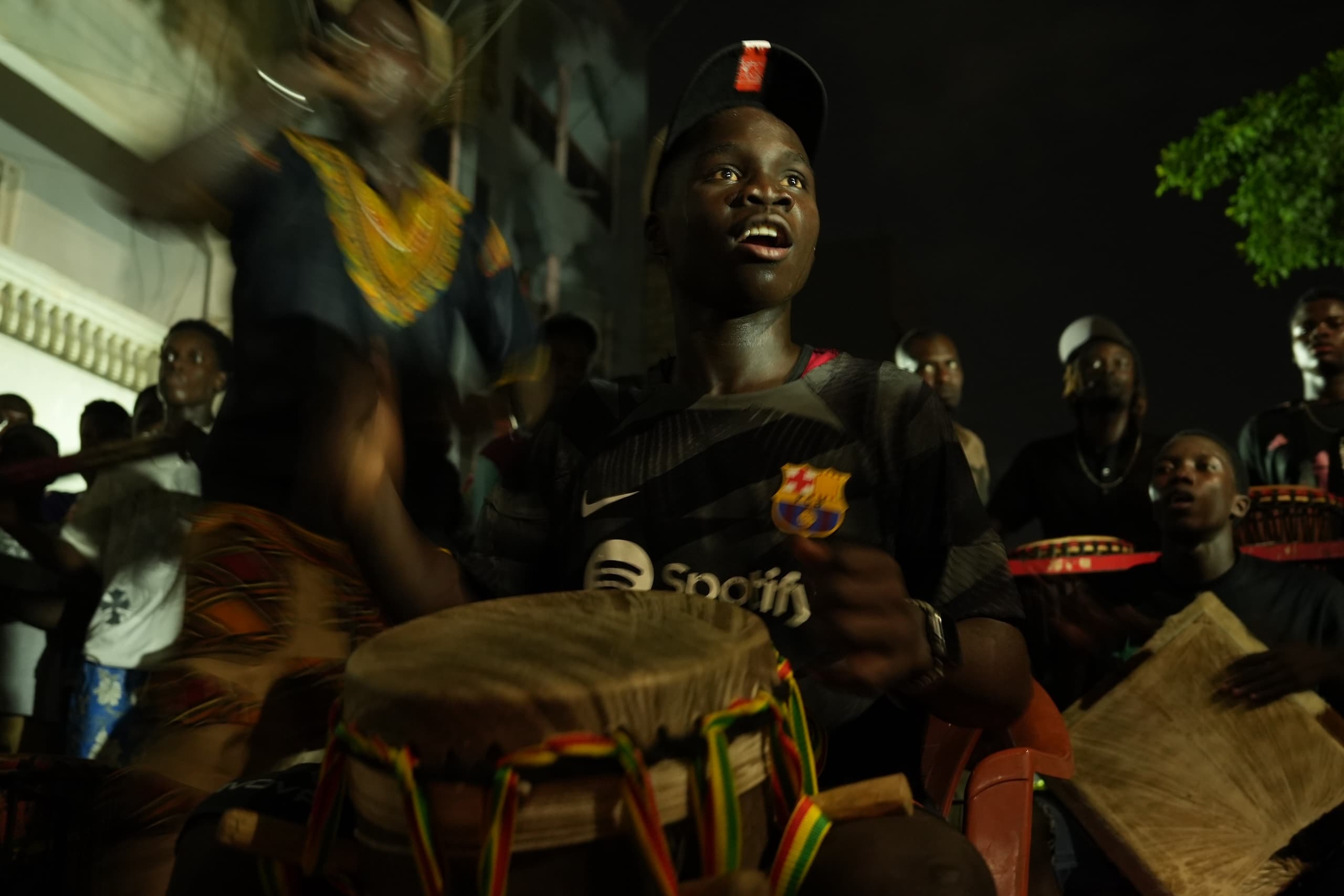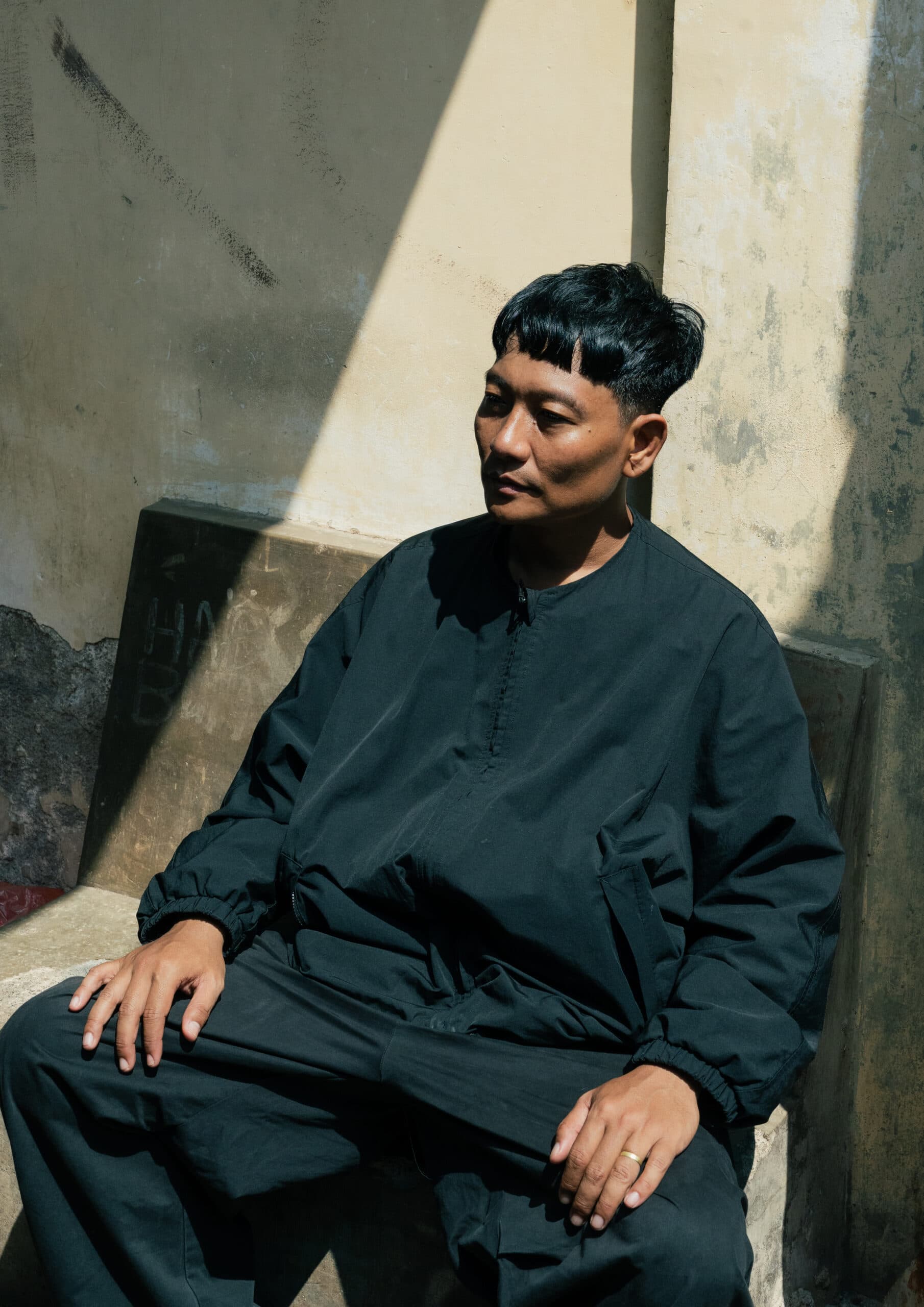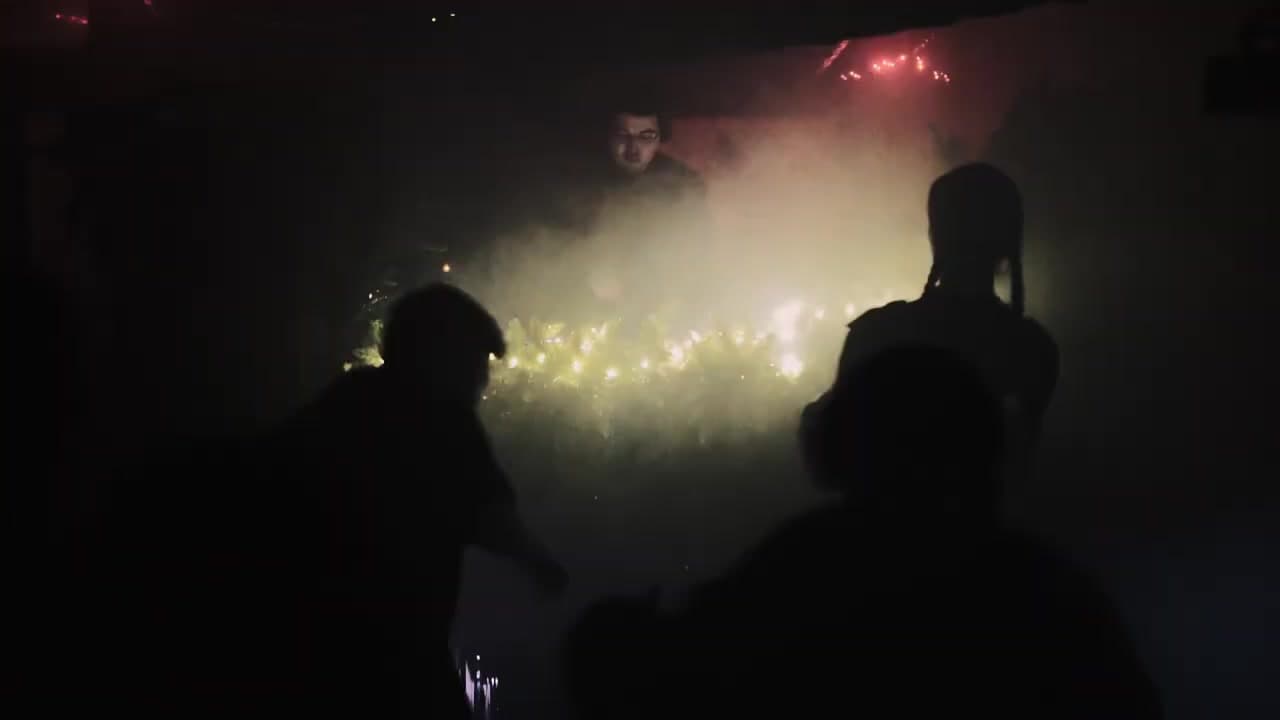
In Almaty, Kazakhstan’s cultural capital — and arguably that of Central Asia — a quiet revolution is unfolding. It’s happening in the damp heat of basements, in the dead of winter, where artists and DJs have begun to assert their own vision of the future. For decades, Russia — its language, its alphabet, its aesthetics — set the tone. Now, something post-colonial is taking shape on the dance floor. And if you’re European, this concerns you too.
PHOTOS & VIDEOS BY Aurélien Goubau
Winter carries sound differently. Scientists say dense, cold air bends soundwaves toward the ground, sharpening their clarity. Below zero, the rain that had soaked Almaty for days hardened into snow. The kind of cold that makes you drag your feet ; streets were empty. A rusted gate screeched somewhere in the dark. Halfway up the stairs to Kerege — the club we’d been told hosts the best parties in town — a metallic clang rings out. Crisp in the frozen air, like a glass tapped for a toast. It isn’t our footsteps. It’s coming from inside. One question: who on earth is playing SOPHIE? It’s one month shy of the fifth anniversary of the death of the Scottish producer who reshaped modern pop with industrial snares and chrome-plated textures. But that’s not what’s being commemorated tonight : it’s December 31. Cheers.
Five thousand kilometers from Glasgow, Almaty is ringing in the New Year to SOPHIE. In the center of Central Asia, long overshadowed by Moscow, that’s seismic. And that’s not even the strangest part: none of the tracks played tonight are Russian. The party is just beginning. The DJ, Edigee, zigzags across genres: bone-rattling bass music that shakes the club’s corrugated metal walls; wedding songs diced and remixed; 2-step from nowhere and everywhere; a baile funk edit that’s barely Brazilian anymore. Almost anything goes. Almost, because there are still no Russian artists to be heard. In most cities, a genre-fluid DJ set is just taste. In Almaty, it’s politics — whether anyone admits it or not. A few New Year’s Eves ago, people here would have toasted each other in Russian.
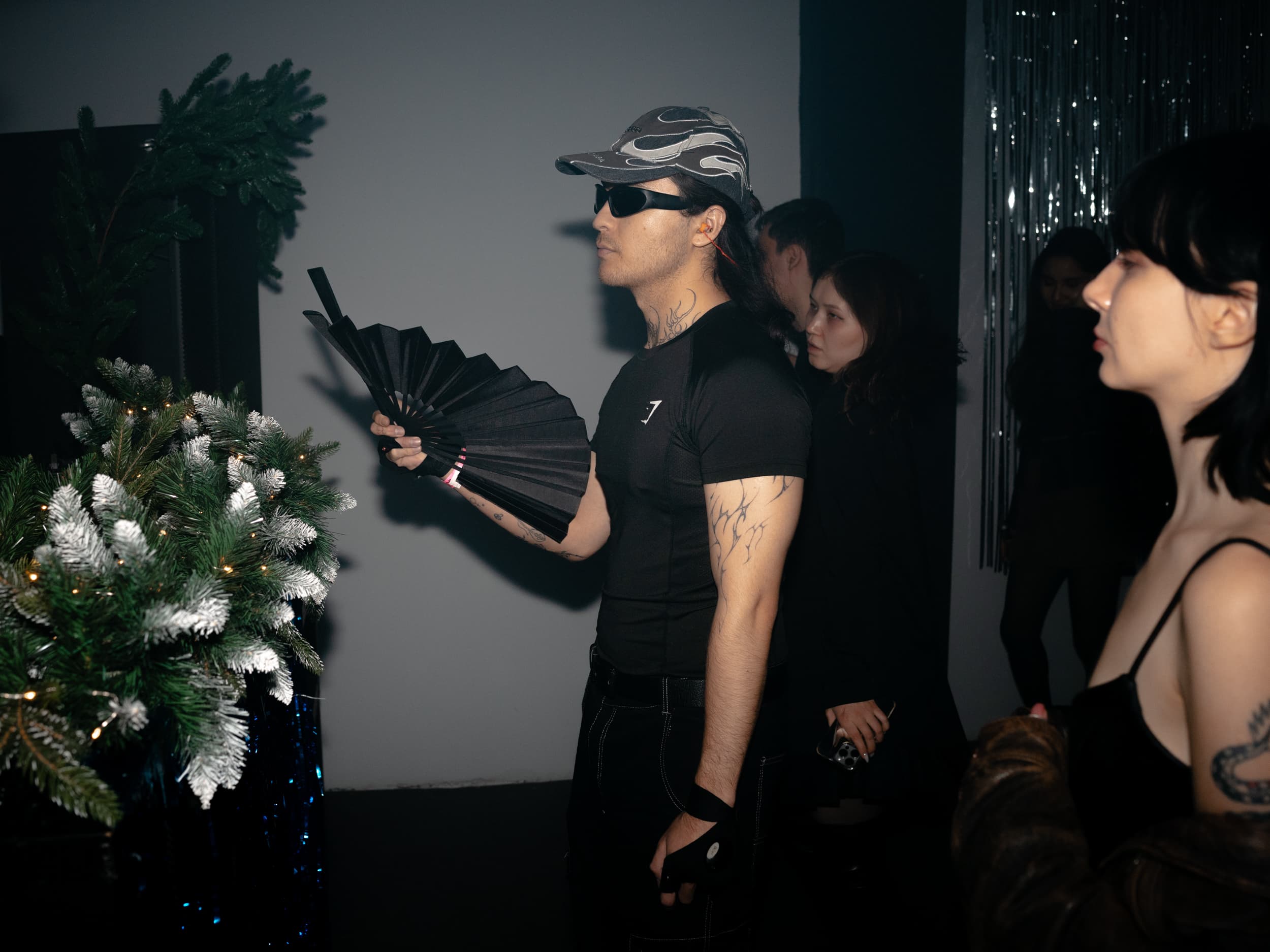
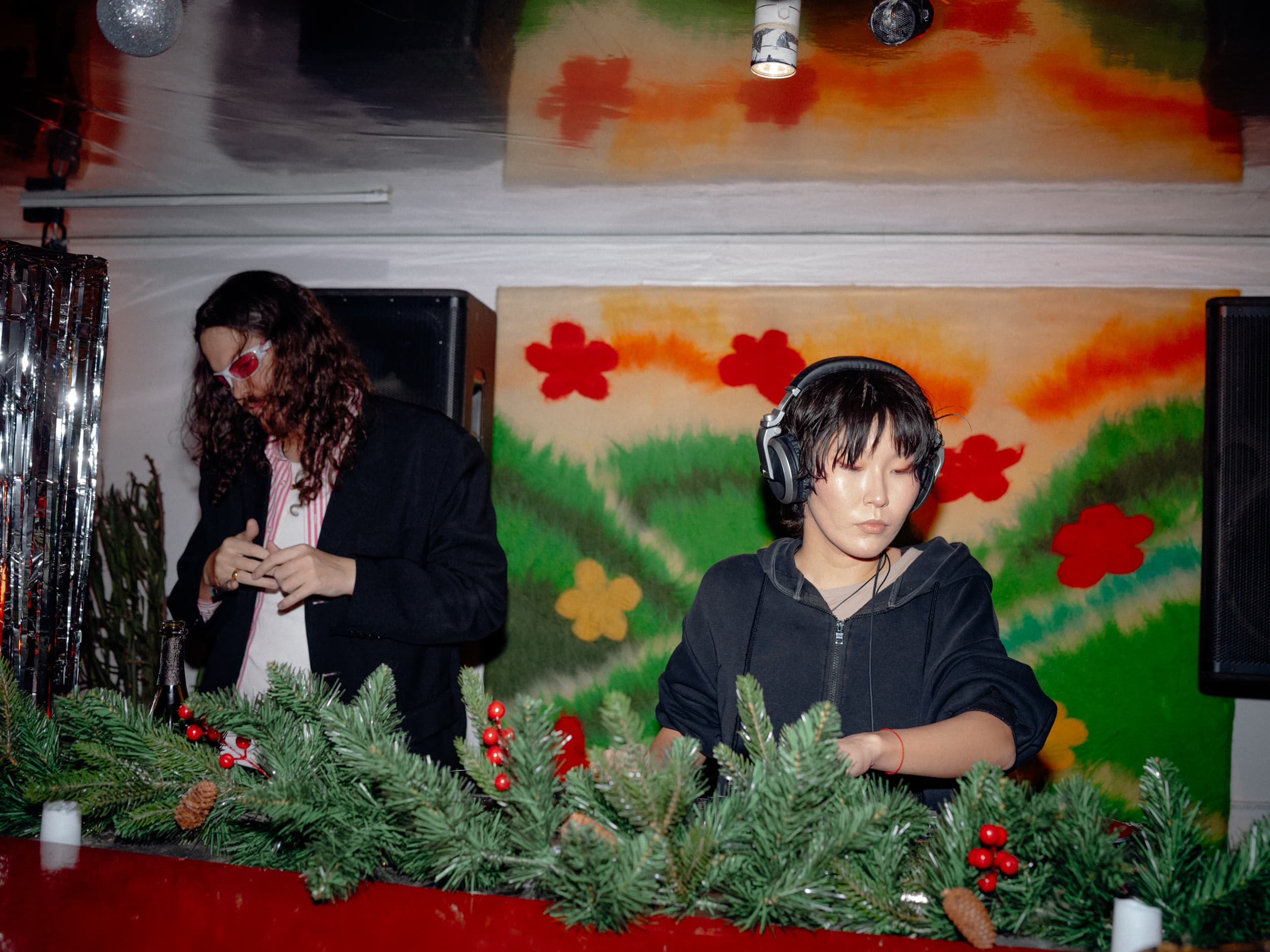
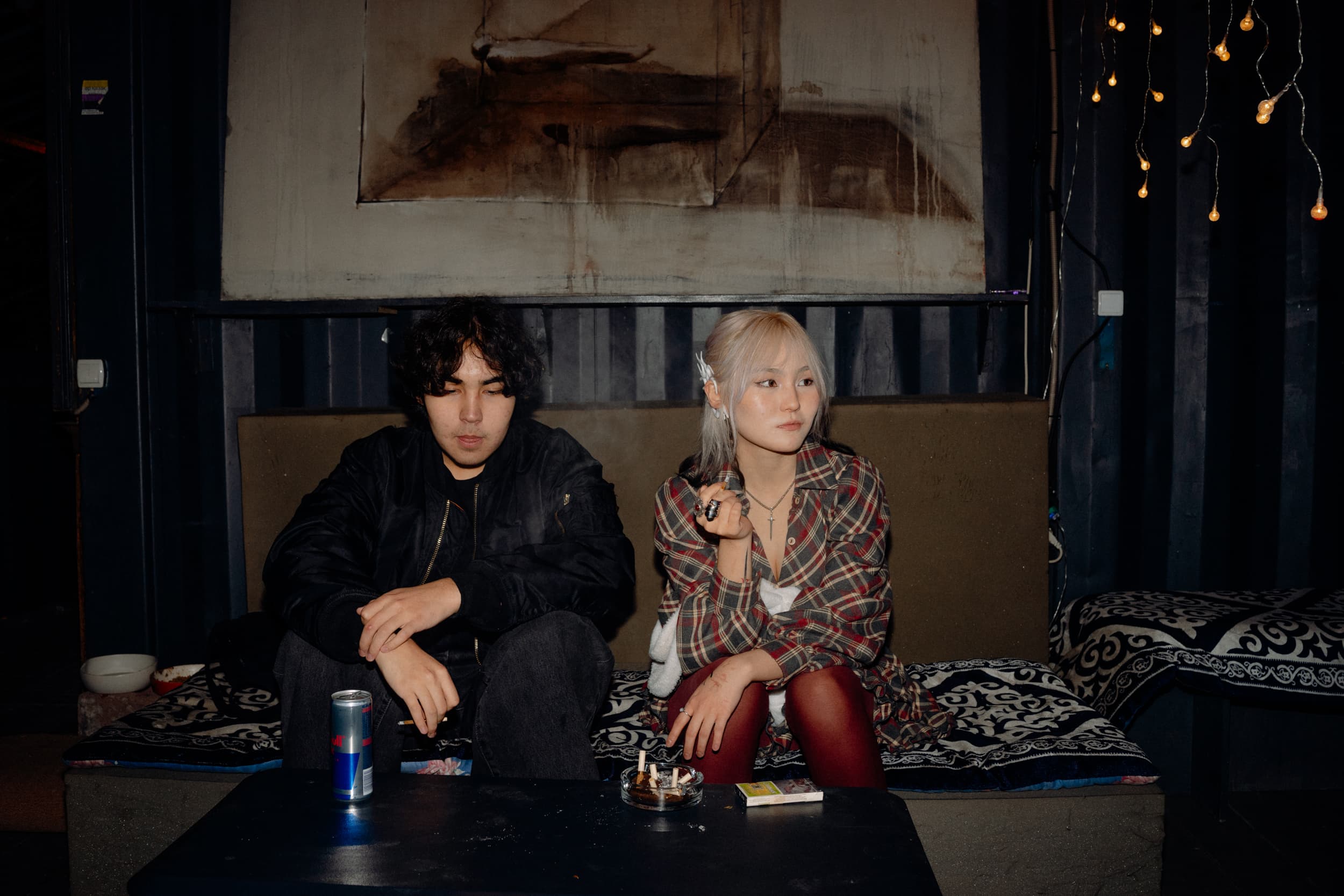
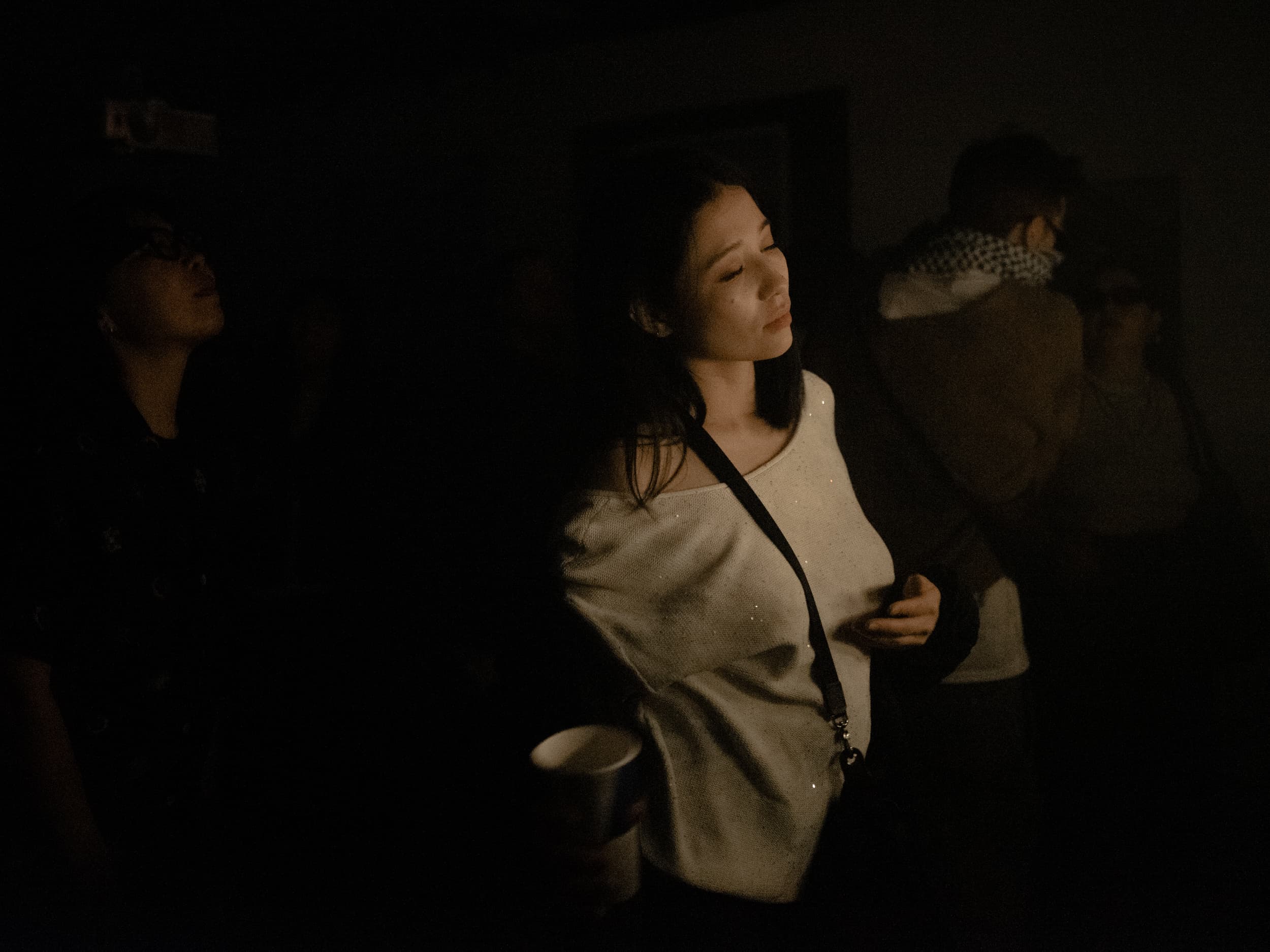
Outside, youngsters smoke cigarettes in balaclavas — a knit mask named after Crimea, annexed by Russia in 2014. Cat ears stitched into wool hats. Fake ivory jewelry. Midnight approaches. The crowd compresses. Glittered acrylic nails pop bottles of counterfeit champagne. Edigee cues up “Kiium” by the Kazakh pop singer Alem. Three. Two. One. If the song you choose at midnight says who you are, then tonight’s message is clear: we’re Kazakh, and proudly so. “Kiium” means “my inner state”. The lyrics speak of homeland and love. “Even if the steppe is cold, she warms me.” That’s the revolution of this night, distilled: Kazakh language. Kazakh land. Kazakh love. Midnight. Fur coats collide in embrace. Outside, the snow keeps falling. In the cold, sound travels farther. So does change.
Kazakh identity has been shaped by centuries of nomadic clans, tribal confederations, and empires. Linguistically Turkic, it was eventually subsumed beneath Russian rule, pressed into Cyrillic script and Soviet uniformity. In Almaty, Slavic culture arrived during the imperial era and solidified under the USSR. It dominated everything from classrooms to clubs. After independence in 1991, little changed musically. What played in Moscow played here. The generation born after the Soviet collapse didn’t understand why. So they began building something else. Now Almaty, as the center of a regional movement, is dictating its own rhythm.
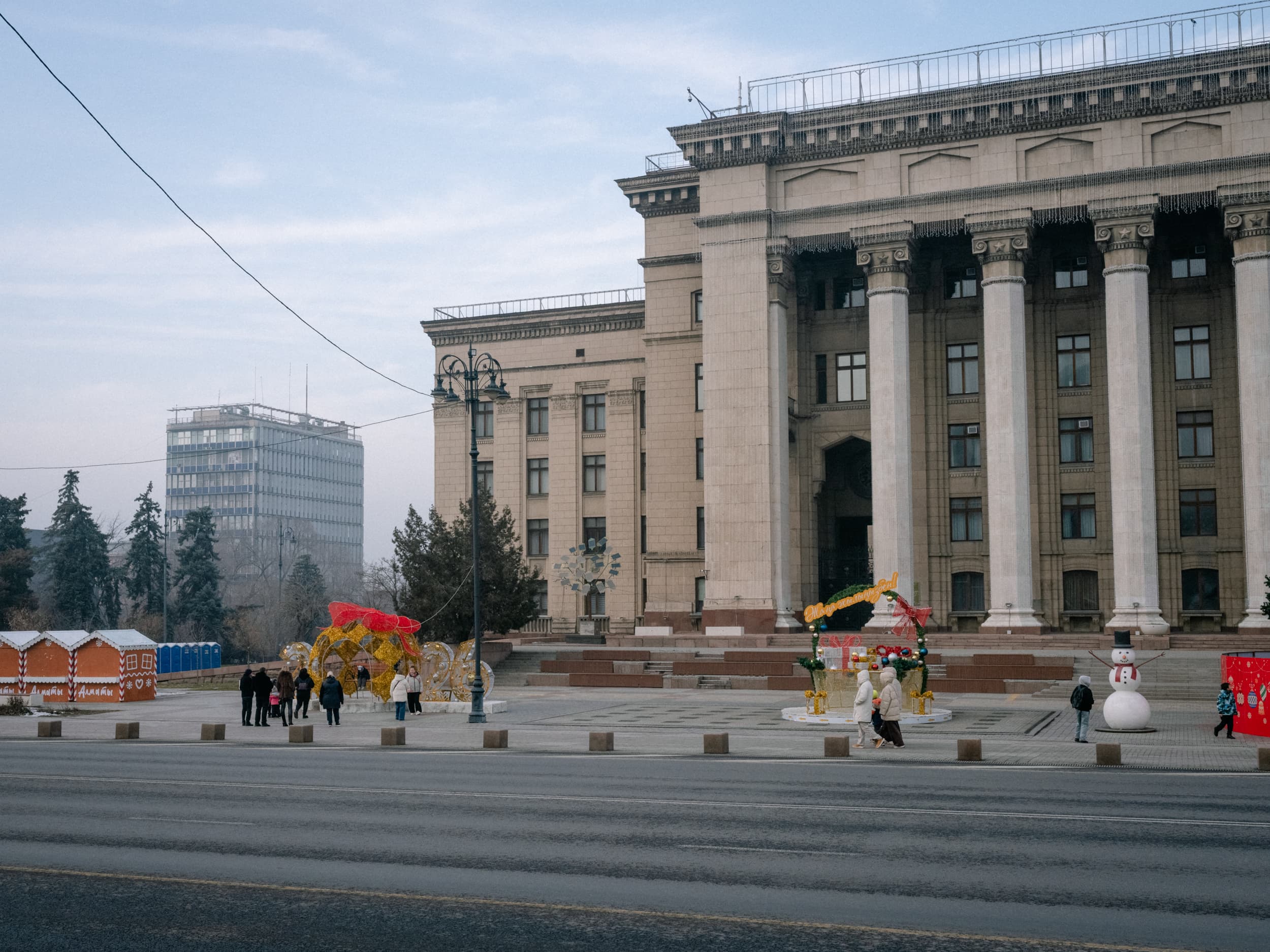
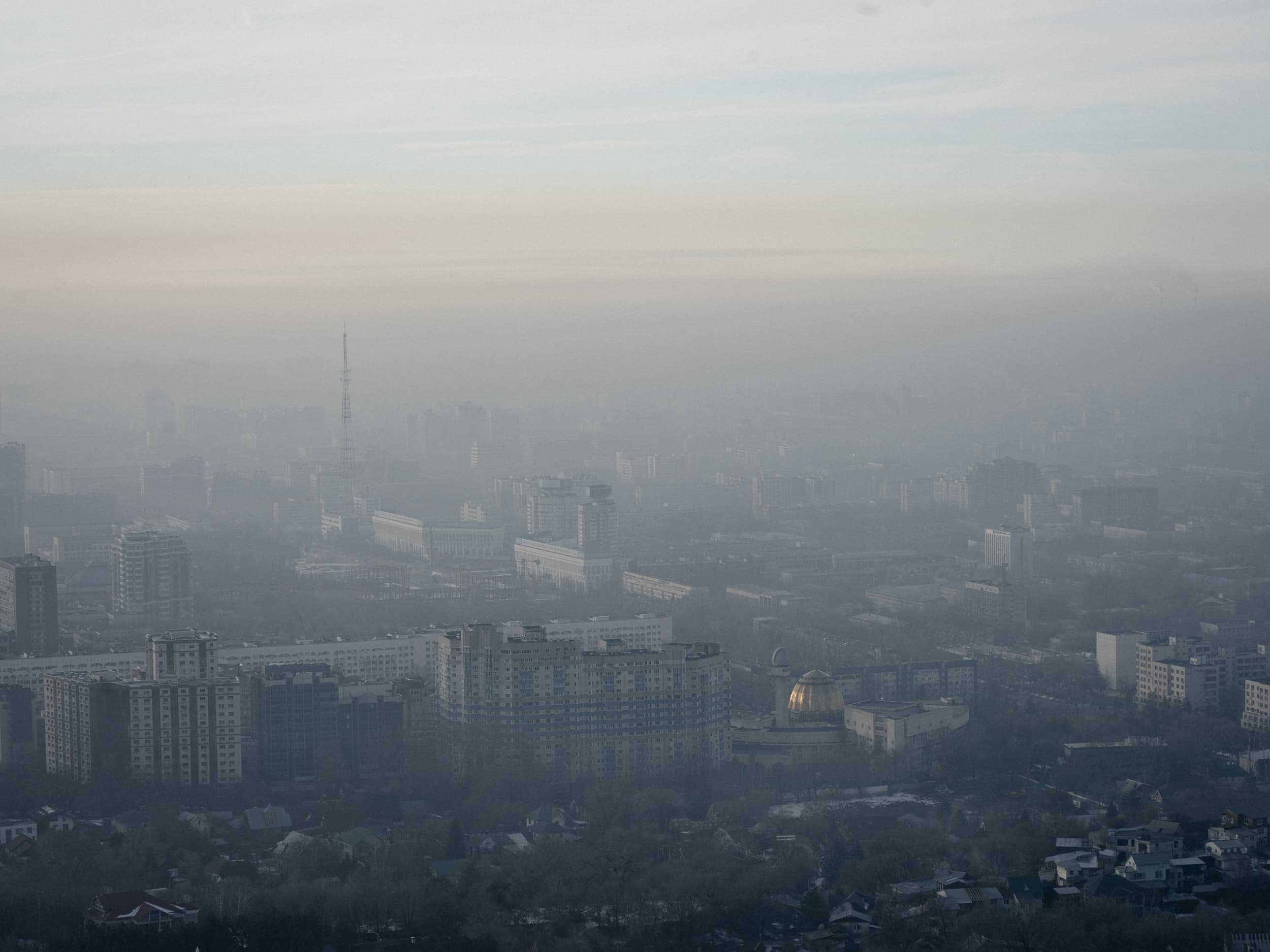
Nazira, a techno obsessive, is one of Almaty’s pioneers. She founded Zvuk, a collective responsible for some of the region’s most visible nights and for training a wave of young DJs. We meet her inspecting Colossus, a cavernous bunker newly converted into a club. “Kazakhstan has such an interesting scene because our artists are so different from each other,” she says. “We’re far from Europe. That distance gives us freedom to experiment.” Artists like KOKONJA, DJ tangbosh, and Medina Bazargali — also known as tulip-aux — who merges live coding with outspoken decolonial activism. Their sound refuses containment: bass music, drum & bass, post-club, hyperpop, techno remixes of Kazakh pop standards. The blue-and-gold national flag appears in outfits, on flyers, across album art. This isn’t just about nightlife, it’s nation-reclaiming.
Kerege, the club hosting tonight’s party, feels like a chosen family: queer, artistic, fiercely local. Without quite intending to, they’ve become faces of a cultural shift. For Sabina Fattakh, aka BB.FTTH, it began with boredom. She grew tired of relentless four-on-the-floor techno. Harmless enough — DJs burn out everywhere. But here, aesthetic decisions are rarely neutral. “At some point I realized we had lost part of our culture,” she says. “As nomads, ours was an oral tradition.” Then came February 24, 2022: Russia’s full-scale invasion of Ukraine. War forces choices. Kremlin imposed its choose-one-side-logic: Ukrainian Nazis versus Russian liberators; decadent Europe versus glorious Russian empire. Sabina and her circle installed a sign at their club entrance: By entering, you recognize Russia as a terrorist state. Social posts ended with “Slava Ukraini.”
But geopolitics complicated things quickly. When the Kremlin announced mobilizations in 2022, hundreds of thousands of Russian men fled. Kazakhstan — visa-free, geographically close — became a primary refuge alongside Georgia and Armenia. They arrived with stronger networks, deeper wallets, more established scenes. Nightlife would have to be shared. “You could feel the colonial mentality,” Sabina says. “They came here and tried to teach us how to mix. What language to speak.” One night, after her set, a Russian man offered unsolicited technical advice. Another compared Almaty’s scene to Mutabor, a Moscow club. “It’s like a small Mutabor,” he said. As if that were a compliment. Was it mansplaining? Cultural arrogance? Unconscious habit? Or the three ? Even some Russian arrivals felt uneasy about their compatriots’ behavior. At a nearby café, a waiter speaks fluent English. Asked about his accent, he lowers his voice: “From Russia.”
The story isn’t just black and white. Some visiting DJs came from Russia’s own marginalized republics — Yakutia, Tatarstan — yet still defaulted to Russian-language samples in their sets. “If you grow up in a colonial system,” Sabina says, “colonial ideas can live inside you without you realizing it.” And still, contradictions persist. She fondly remembers Vinni-Poukh, the Soviet animated adaptation of Winnie-the-Pooh — state-controlled, yes, but brilliantly inventive. Blending Kazakh tradition with club techniques also isn’t an easy thing. Folk music often tells linear stories. Dropping it into a DJ set risks flattening it. “When it works,” Sabina says, “you create a beginning, middle, and end. Both tracks tell a story together.”
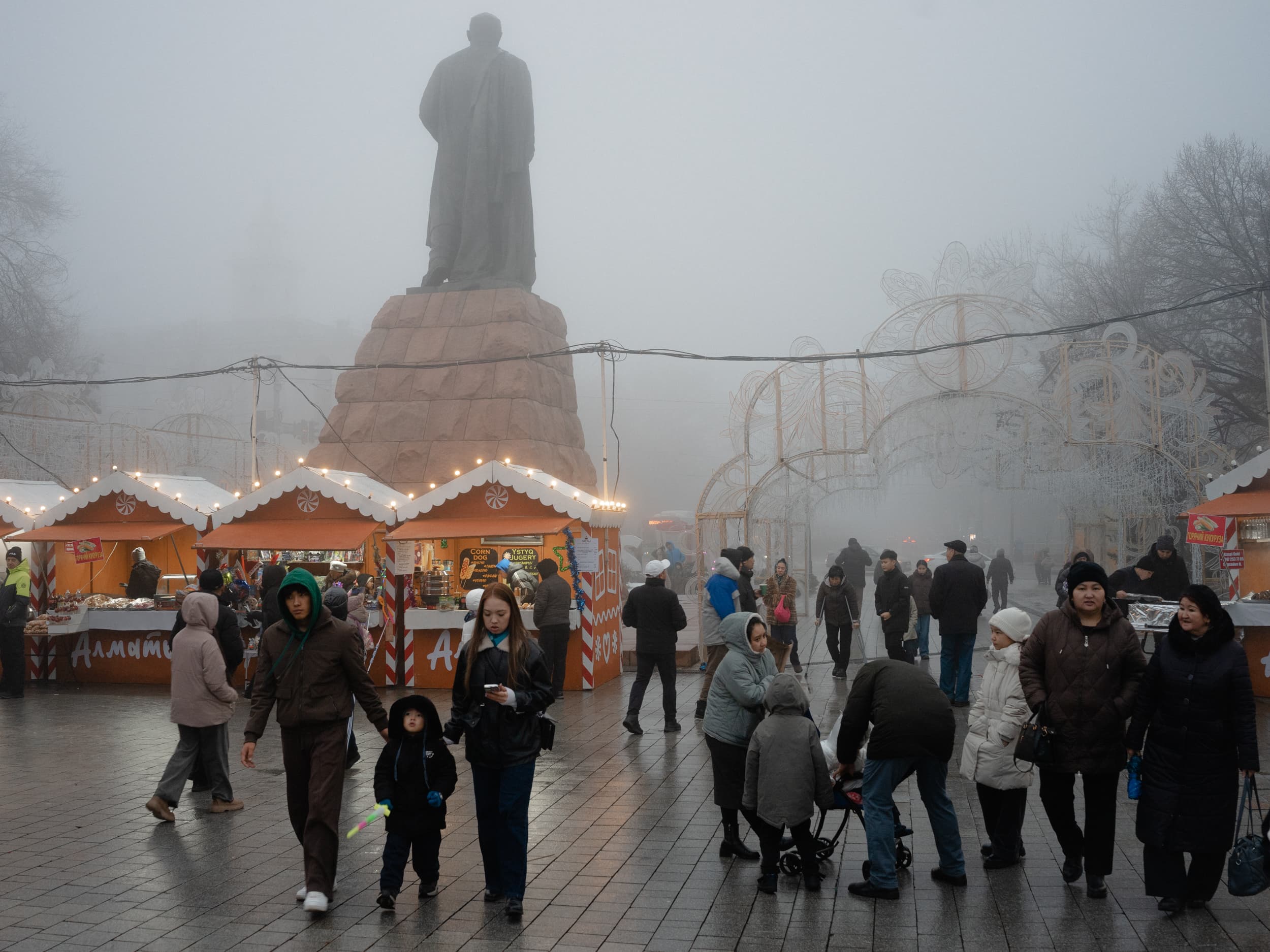
To see it, you have to zigzag through smog-filled streets, past manicured rows of trees and at least half a dozen Soviet statues still standing guard over intersections. Then climb the stairs of a posh café, the kind with spotless tiles and polite lighting. On the second floor, a door swings open onto a different climate entirely. Soap bubbles rain from the ceiling. The entire room is entangled in a giant conga line. At the center of it all is Arsén Rysdaulét. For more than fifteen years he has been active under the name Arsen Superfly and found a simpler and very efficient bridge. Recently, he had what now seems like an obvious idea: build club sets around toi — the wedding music of Central Asia, not just a party. It’s a communal rite directed by the tamada — a master of ceremonies who rules the flow, makes toasts, commands dances, calls on relatives. Arsén, behind the decks, has become a kind of electronic tamada, summoning the crowd shoulder to shoulder.
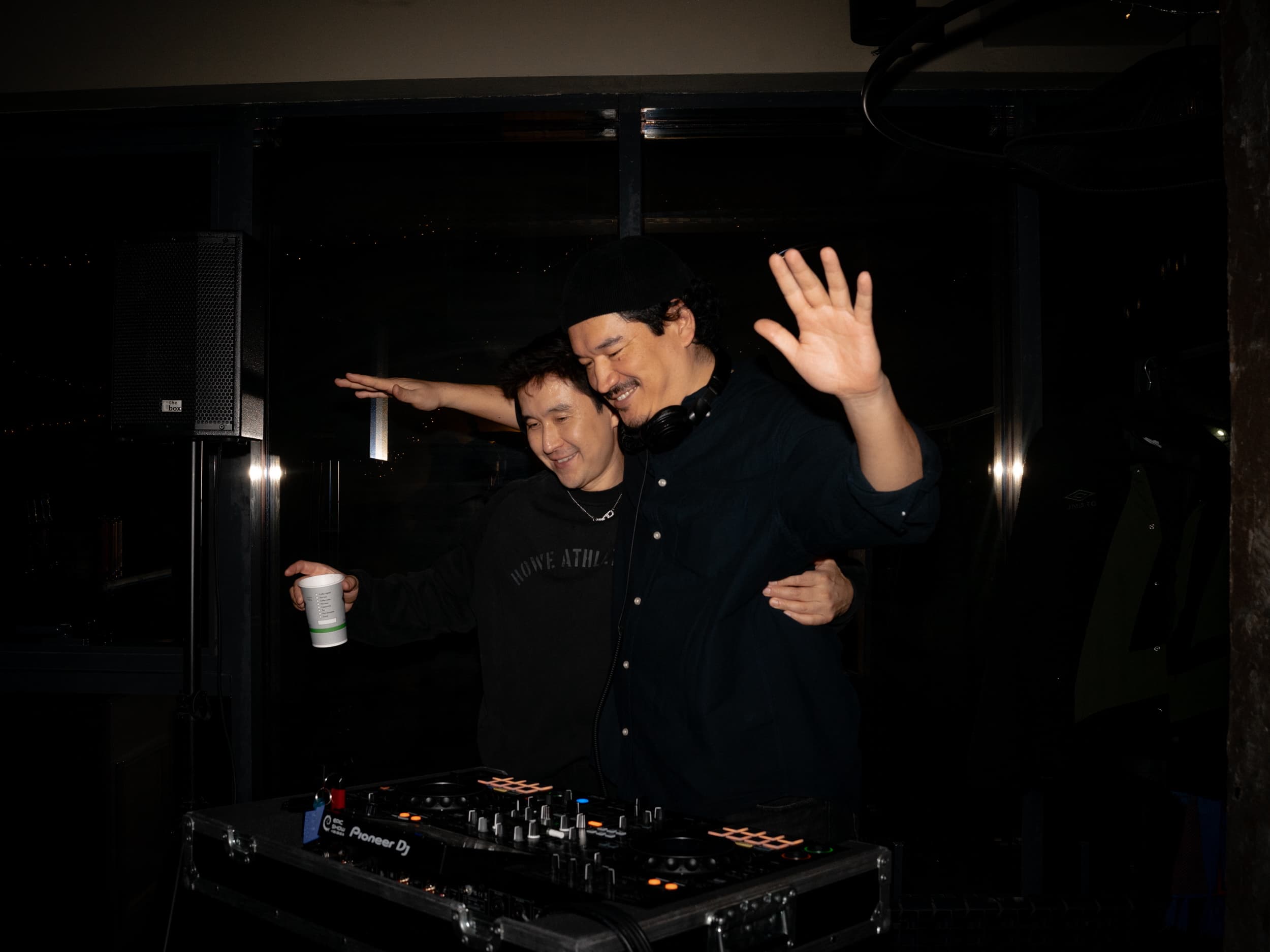
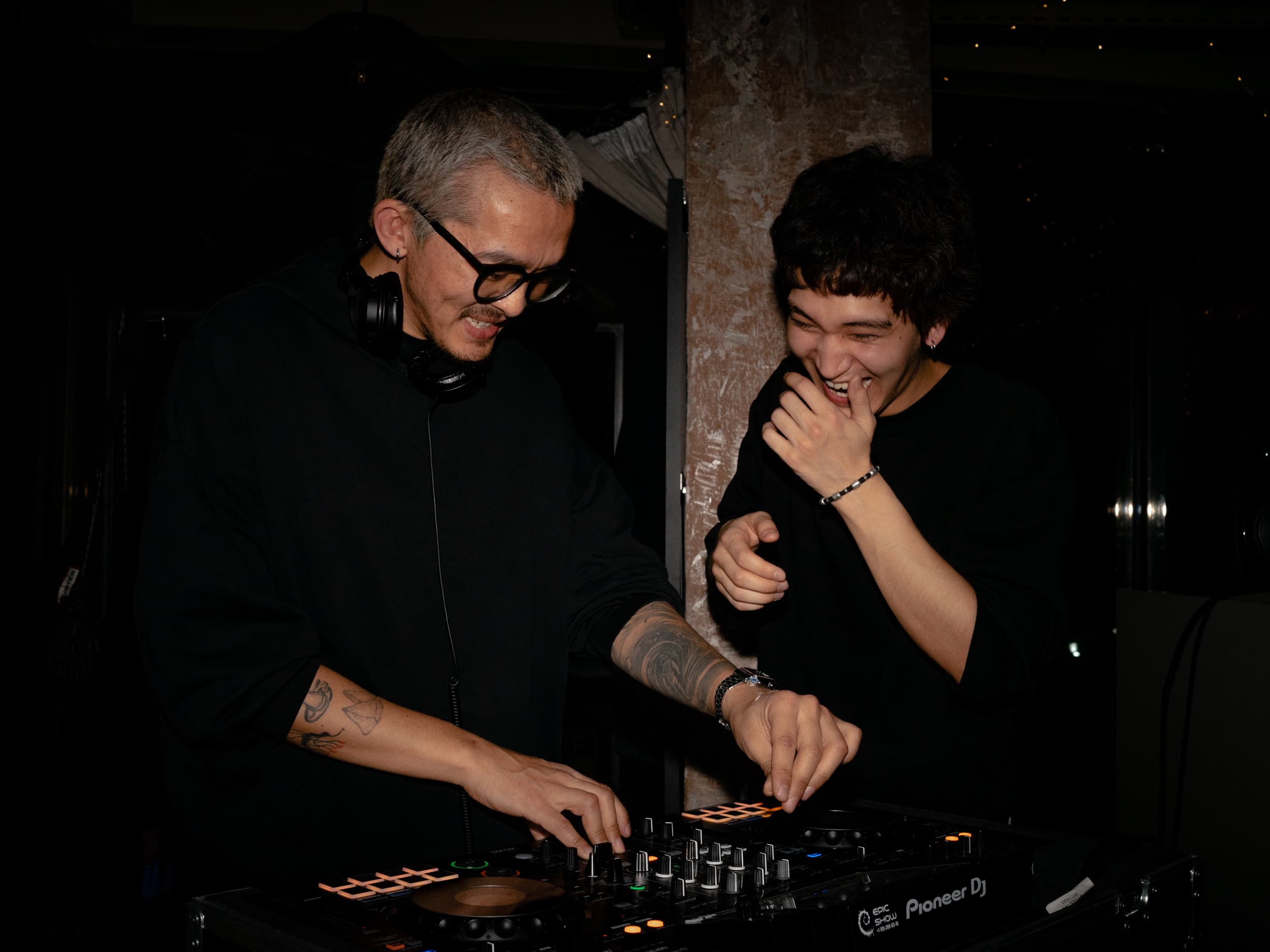
No one had thought to bring this repertoire into clubs before. It was considered too traditional, too domestic, too saturated with family memory. For years, anything that sounded overtly Kazakh carried a faint stigma — a provincial scent in a cultural order long oriented toward Moscow. “When I first started playing our variety singers in my sets,” Arsén says, “people didn’t get it. Some laughed.” It tooks years after years, and then 2022 shifted the ground. Russia’s invasion of Ukraine did not just redraw geopolitical lines; it moved cultural reckoning across the former Soviet sphere. In Kazakhstan, a slow undercurrent became visible. What had once felt embarrassing began to feel urgent. “Last year,” Arsén says, “I was booked more than ever for Kazakh music sets.” The success is total. The crowd screams every lyric. They know the verses by heart — or at least they think they do. When the conga line finally dissolves, faces are flushed, grinning. Soap bubbles burst against rows of teeth.
And yet, listen closely. Not everyone sings fluently. Some mouths shape syllables phonetically. In Central Asia, identity and language do not align neatly. One can be ethnically Kazakh, Uzbek, Korean — categories people here still use matter-of-factly — and yet speak Russian more comfortably than Kazakh. At independence in 1991, Russian-language schools were dominant. Today, that statistic has flipped; Kazakh-language education is in the majority. But generations do not transform overnight. Much of the artistic class remains Russian-speaking by habit, by upbringing, by urban reality.
For some, that gap produces a quiet dislocation. The question surfaces again and again: Who am I, if the language of my childhood was not my ancestors’? Samrat Irzhasov grew up in Kazakhstan’s industrial north, near the long border with Russia. Soviet culture was not foreign there; it was the air. Russian television, Russian textbooks, Russian jokes. When he moved south to Almaty, the distance between him and his own heritage became impossible to ignore. He chose a stage name: Samrattama, referencing his tribal lineage. He began learning Kazakh in earnest — not just conversational phrases, but the layered idioms of epic poetry and oral legend. He studied traditional instruments. He immersed himself in kui, the instrumental compositions historically performed on the dombra, the two-stringed lute that sits at the heart of Kazakh musical memory.
One of his tracks, “Savage Qyz,” grew out of a particular kui — an old composition without lyrics that tells of two swans shot down by a hunter, a story of interrupted love and irreversible loss. To transform it into something playable in clubs — a DJ tool circulating through regional sets — he felt it wasn’t enough to sample and manipulate. He visited the cemetery where the composer is buried. He attended ceremonies that blurred into shamanic ritual. Through prayer and intention, he says, he sought permission. Whether one interprets that as spirituality, symbolism, or artistic theater is secondary. What matters is the gesture. Sampling here is not extraction. It is negotiation — with ancestry, with history, with responsibility.
The question remains, especially for DJ’s: if you are going to dig, from where do you dig? For five years, Kamila Narycheva has been circling that problem. A multidisciplinary artist, she moves between research and dance floors with equal ease. She has worked on projects examining the legacy of Soviet nuclear testing at Semipalatinsk — a scar on Kazakhstan’s landscape — and she hosts a radio show on Berlin’s Refuge Worldwide dedicated to Central Asian artists. “I grew up, Internet was piraty,” she says. “We downloaded everything. You could access any genre, anywhere. When I realized someone could make a techno bootleg of Fergie, I thought — okay, then I can do the same with Kazakh rap.”
Checking out her recent sets, they seem unpredictable: an IDM-leaning techno remix from Órik, part of what is now called “q-pop” — the “q” deliberately replacing the Russian “k” in “Qazaq,” a linguistic reclamation; a Kazakh-language edit of a regional hit; hyperpop from Colombia so dense that even Rosalía’s voice struggle to find its space between the kicks; or this producer from Nanjing, China. If there is a common thread, it is directional. Eastward. Or at least away from the gravitational pull of Russia and Europe.
“When we say decolonize,” Kamila explains, “we have to understand it broadly. Yes, we were colonized by Russia. But we also have to step outside eurocentrism. In electronic music, the money and labels are mostly in Europe. Ninety percent of what shaped the canon comes from there. But incredible experimentation is happening elsewhere. That’s where I hear the most radical sounds.” Decolonization, in this sense, is a recalibration. Where the experimentation is.