The origins of funanÁ
Head to Cape Verde with journalist and researcher Kino Sousa for a journey across the archipelago to discover funaná, its intoxicating accordion riffs, and the evolution of a genre that has become the stuff of legend.
It’s a timeless tale: a peasant who clashes with high society, of isolated lands, of bodies pushed to slavery, of those who survive in secret from the tormented colonizer. Of communal rhythms that patiently establish themselves as the tradition of an entire archipelago. It is a form of folk music in struggle against the elites, whether they come from afar—from Europe or other islands—or from nearby—local dignitaries and politicians. An unwitting activist, the funaná refuses to be seen or heard in a favorable light. Rustic and raw, it cannot be captured: it must be lived.
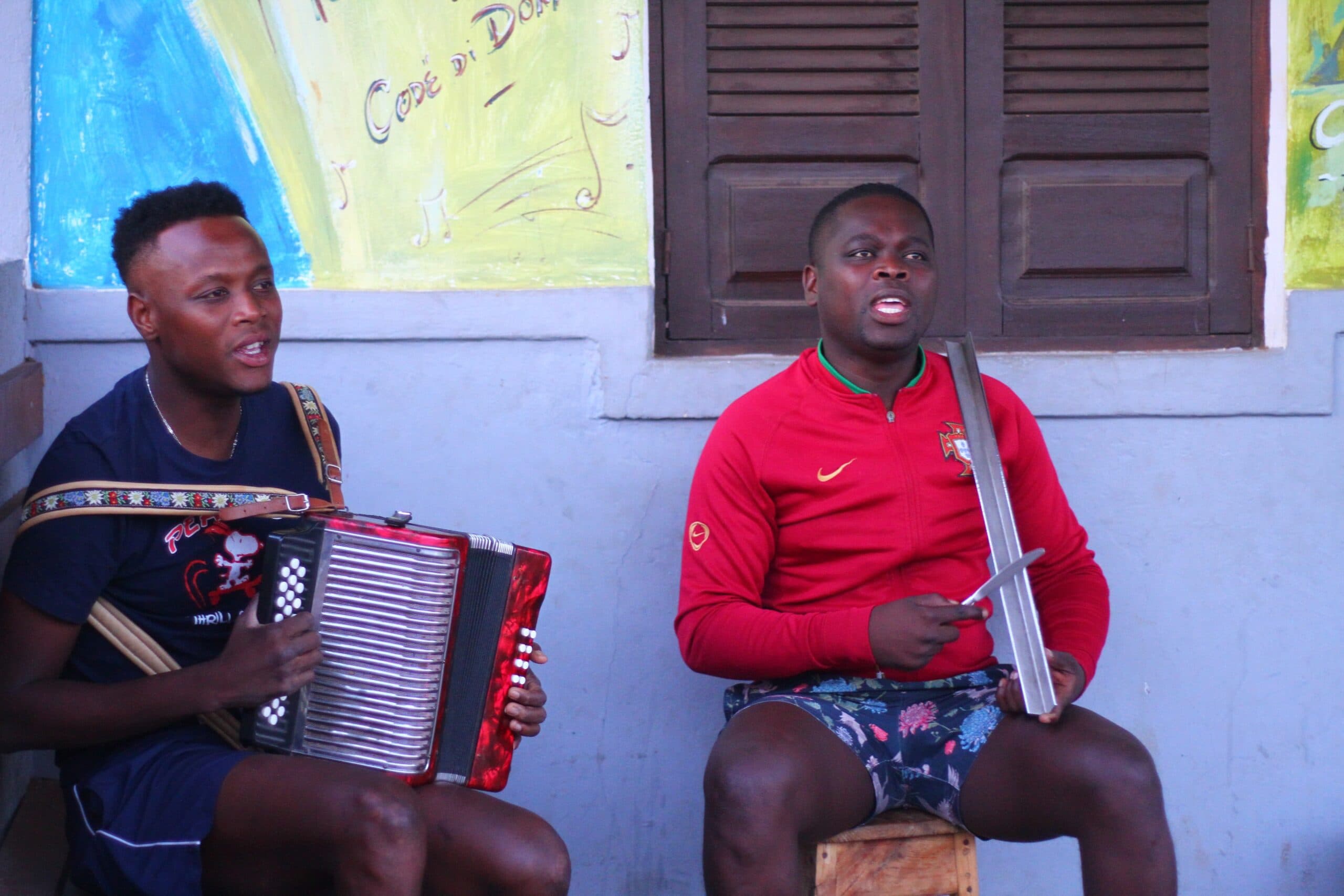
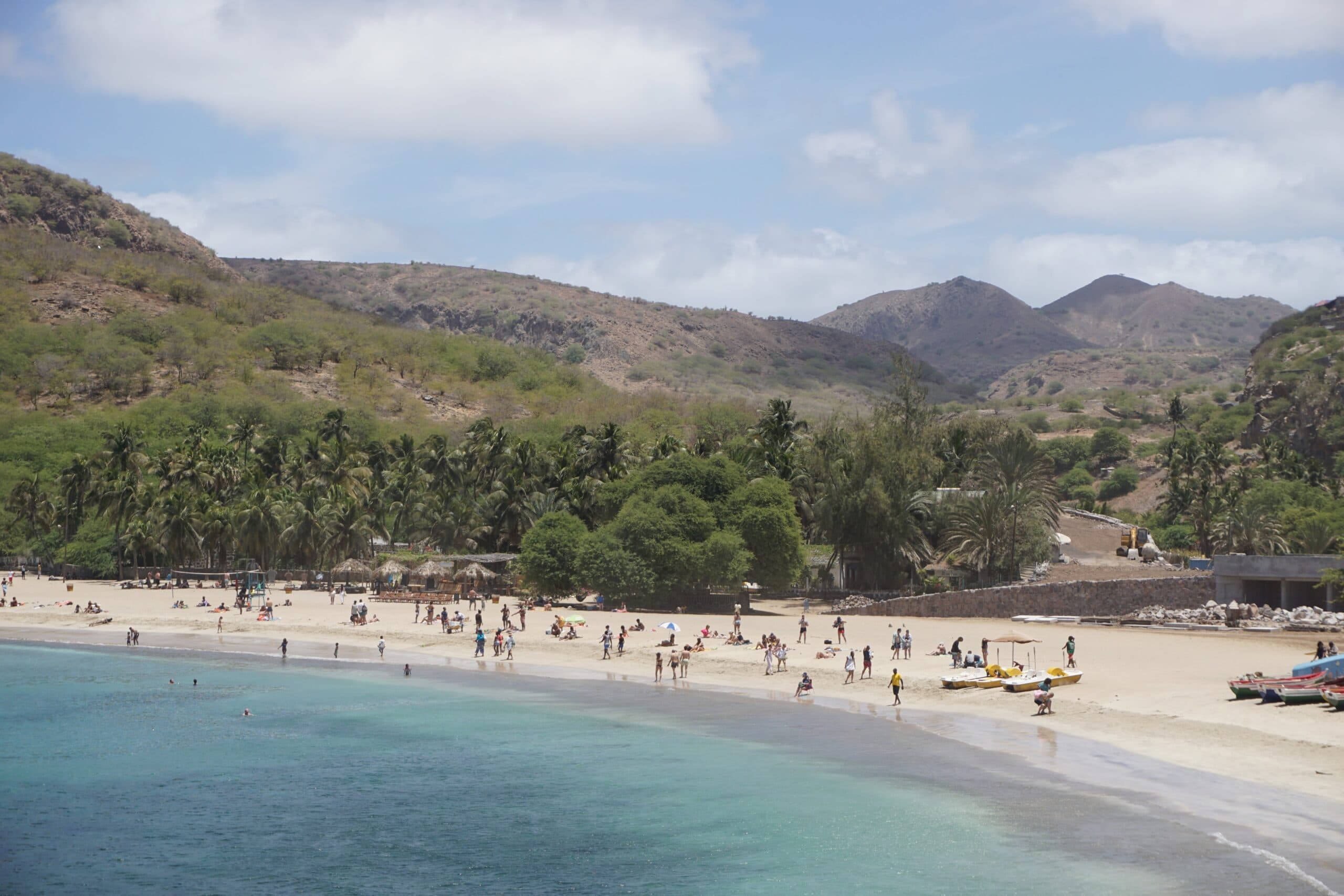
Tchi-ki-tchi-ki – tchi – tcha, tchi-ki-tchi-ki – tchi – tcha. A rapid, metallic scraping sound, over which an accordion melody and a loud, boisterous vocal track loop endlessly. The sound strikes the busy, bursting forth from speakers, taxis, house windows, cafés, and bars. In Santiago, the largest island in Cape Verde, funaná is everywhere, all the time. A music of celebration, uninhibited joy, and letting go, it floods radio playlists and sets the pace for taxi drivers’ long days. In cafés and bars, on the main streets of villages, or in grocery stores, the accordion’s heady refrain fills glasses of grogue—the local artisanal rum—and warms both minds and bodies.
Funaná is a form of music, but also a close-contact dance performed in pairs—a man and a woman, two women together, or, more rarely, two men together—an exception to the deeply entrenched LGBTIphobia among the Cape Verdean population. In funaná, the feet stomp and slide across the floor, and the hips and body sway in time with the rhythmic accents.
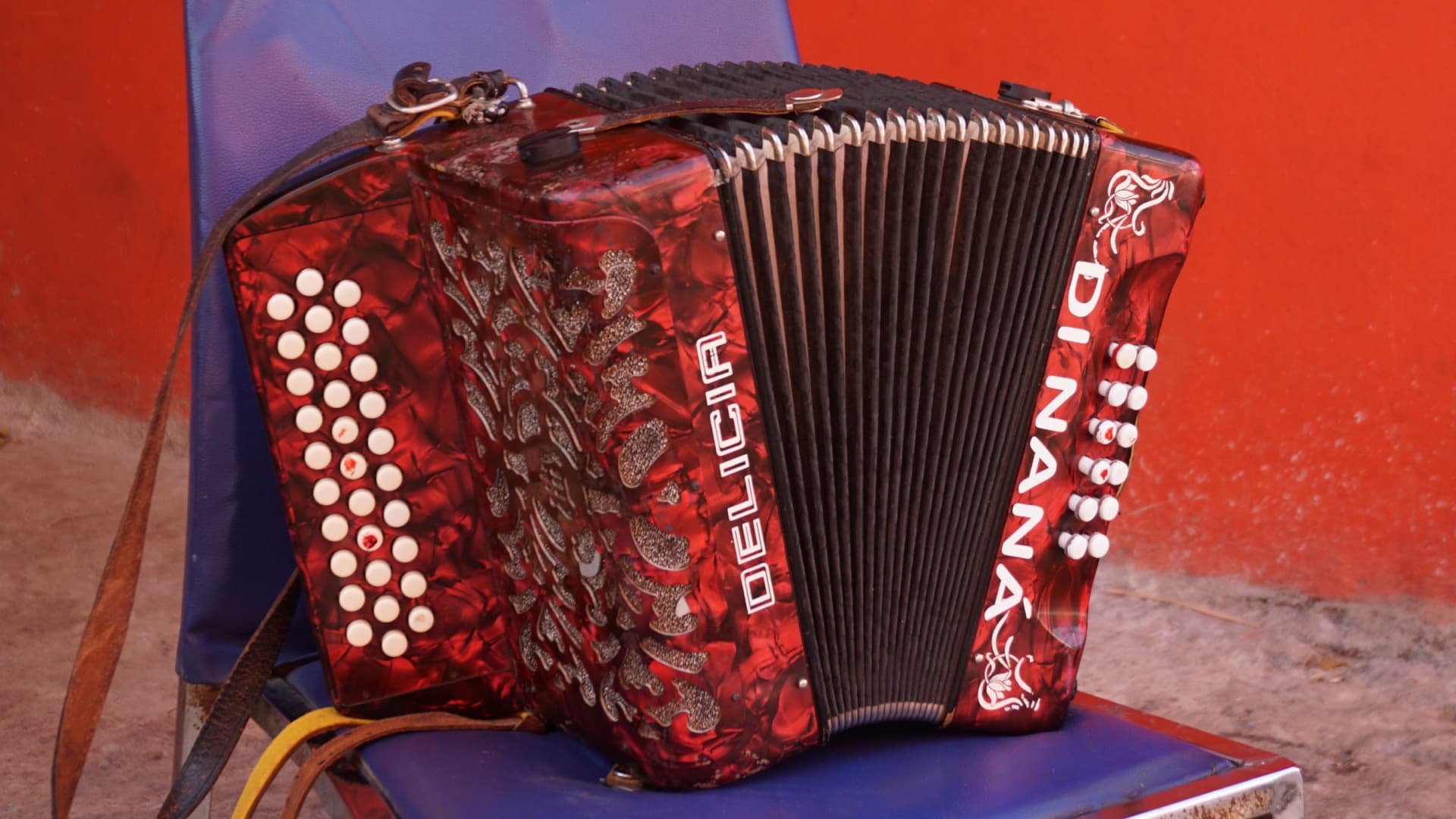
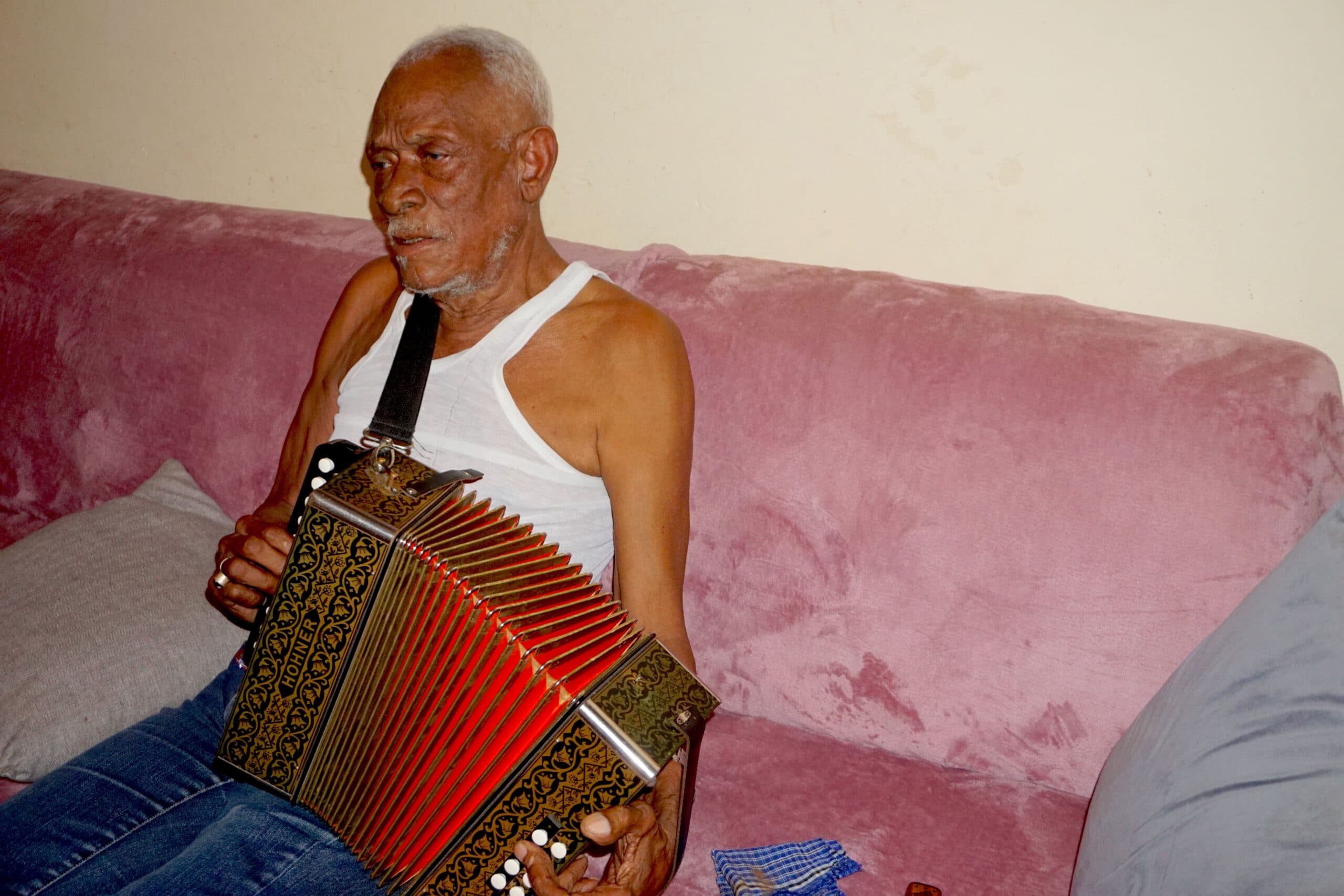
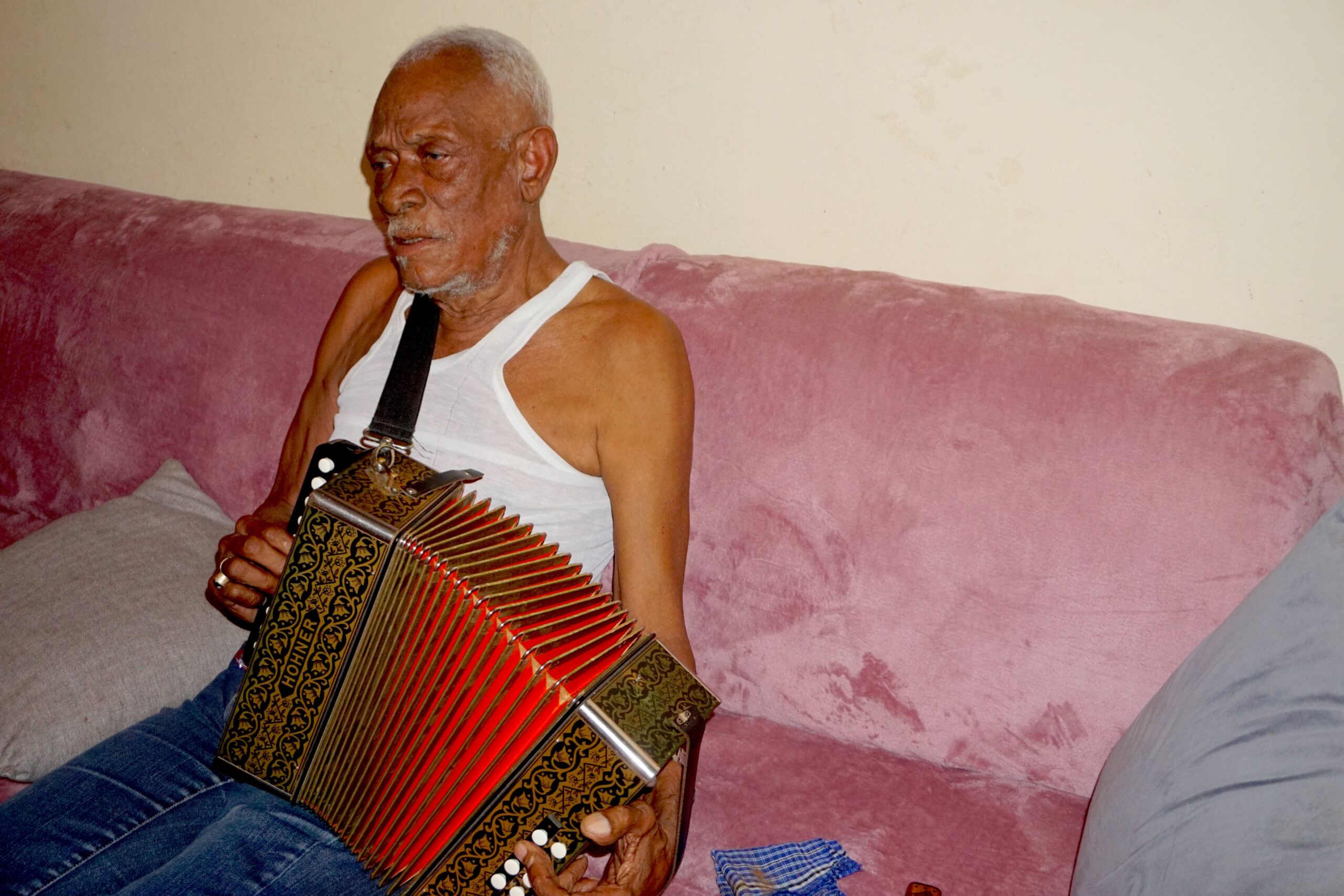
The scene is still alive today, but it all started at the dawn of the twentieth century: when farmworkers from the interior of Santiago Island, returning from years of semi-forced, paltry-waged hard labor on the coffee and cacao plantations of São Tomé and Príncipe, had saved up enough escudos to buy a small diatonic accordion, the famous gaita. They quickly became tocadores—amateur players—repurposing the instrument, which had been imported into the colonies as early as the 19th century by Portuguese priests and missionaries to provide music for Mass as a cheap alternative to European organs.
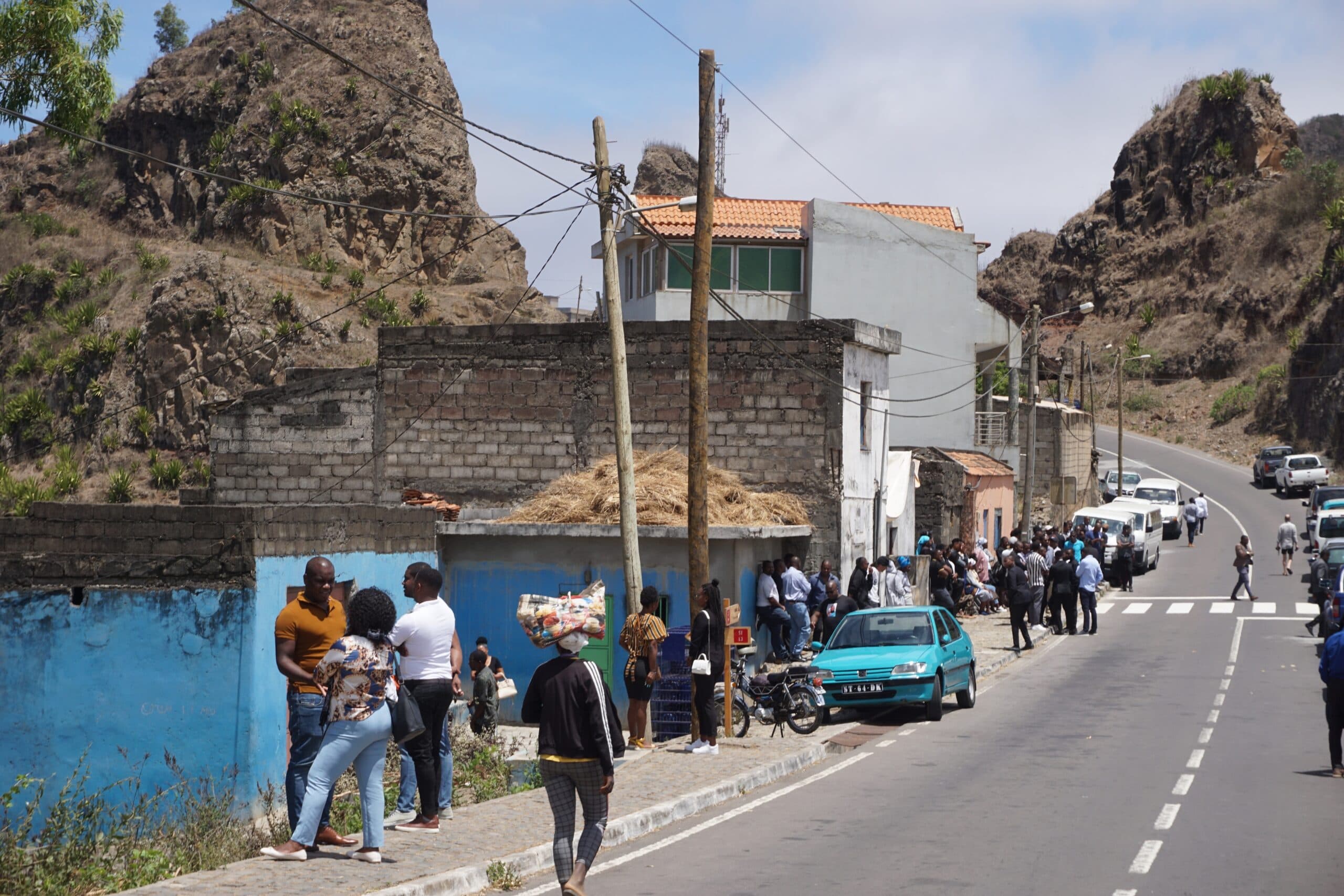
This early form of funaná would take on more rudimentary rhythms: the workers would create music using a simple knife, which they would strike and rub against a metal bar (the ferro or ferrinho). It wasn’t until the 1960s that the term “funaná” came into use, a time when Cape Verdeans still gathered at “accordion dances” (badju di gaita), right under the noses of the Portuguese colonizers. The political and religious authorities of the time took little pleasure in these hip-swaying movements, deemed indecent; these sounds, considered barbaric; and these subversive gatherings, which ran counter to the maintenance of social order in the colony. Gatherings centered around funaná were, in fact, banned, just as the use of drums was prohibited because it was considered too African.
Taking a closer look at the funaná phenomenon means delving into the complexity of a people and their colonized territory—a territory that was enslaved, then liberated through its own efforts, finally granted autonomy, but once again thrown into turmoil. Caught between Africa, South America, and Europe, funaná—much like its fans—is on a perpetual quest for identity. Caught between hybridization, a return to its roots, and globalization, the genre oscillates and cannot choose.
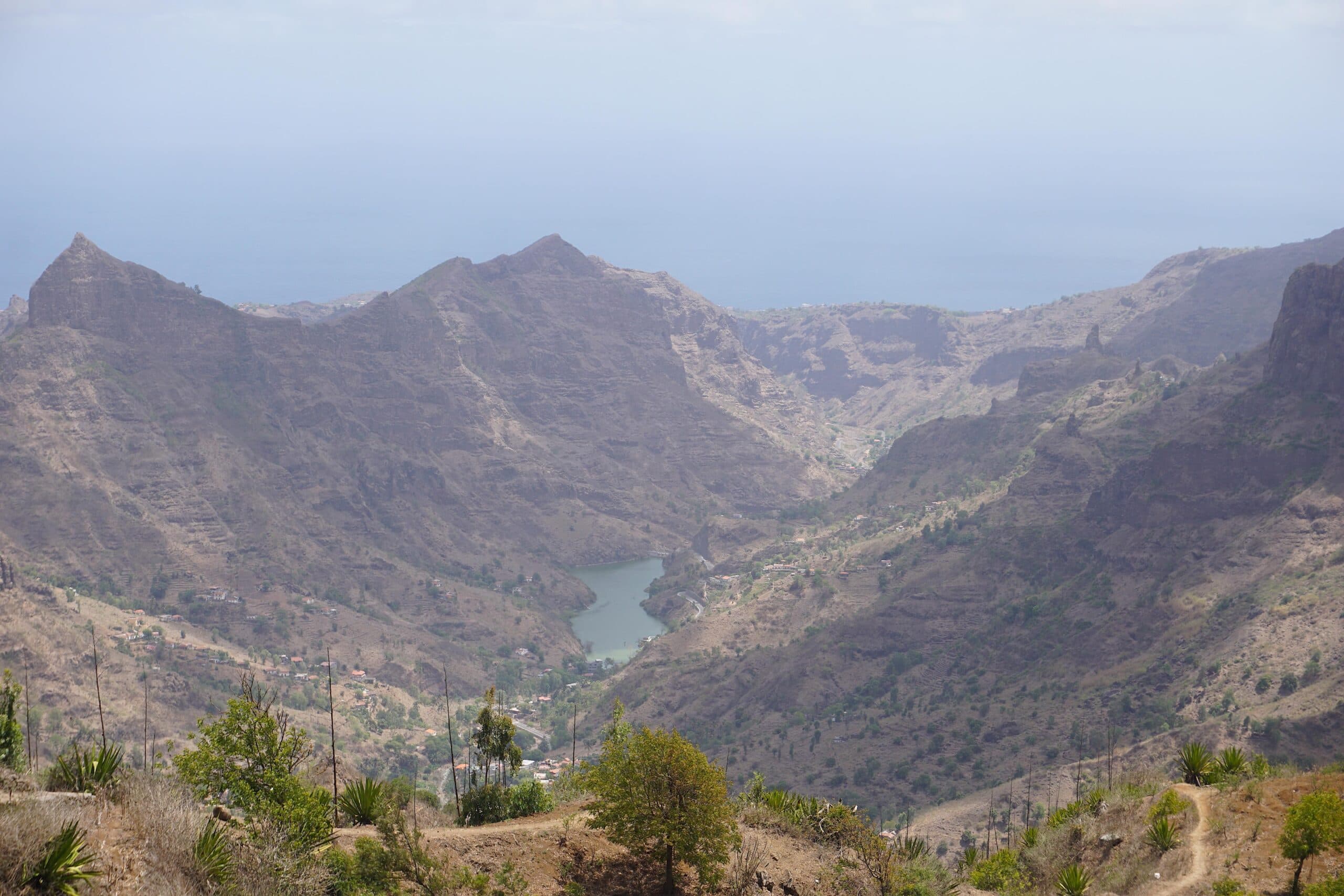
As for certainties, funaná has not yet earned its place in the mainstream: its image as rustic African music and dance still limits its influence beyond its birthplace, the island of Santiago. This dynamic constantly reenacts the conflict between Badiu culture—rooted in the Black identity of the descendants of West African (Guinea-Bissau) slaves—and the Sampadjudo culture of the north of the country, which is disparaged for having embraced intermingling with the colonizers and their descendants.
April 2023: our first steps on Cape Verdean soil, at the invitation of the AME – Atlantic Music Expo. The four-day festival gave :pam the opportunity to follow in the footsteps of funaná, which, alongside batuque and tabanka, forms the musical holy trinity of the island of Santiago. Alongside the author, we must acknowledge the key role played by our collaborator, João Barbosa. João is a fixer, photographer, videographer, DJ, and expert funaná digger, as well as an invaluable translator from Creole to Portuguese: the further inland we venture, the less the language of the former colonizer is understood.
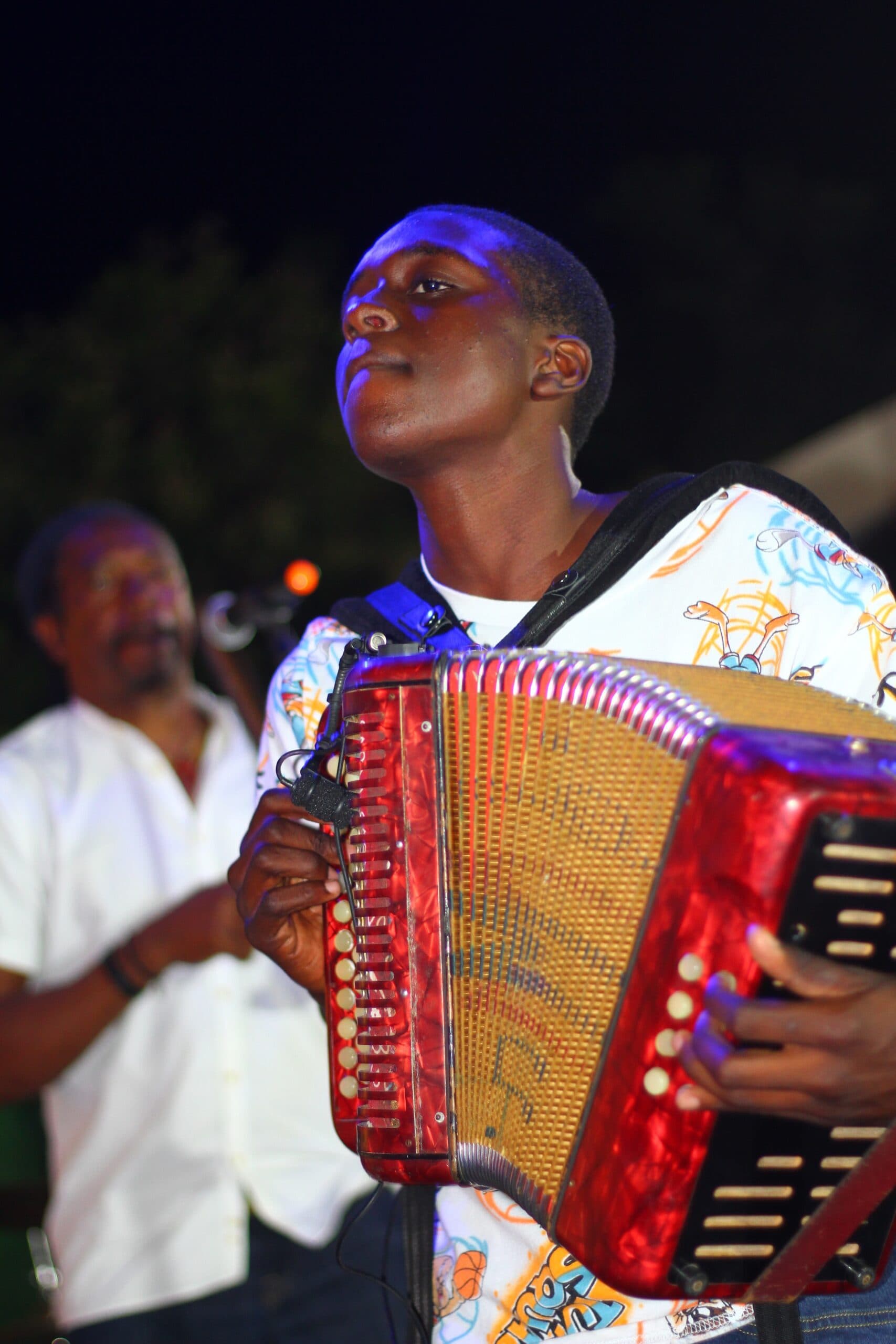
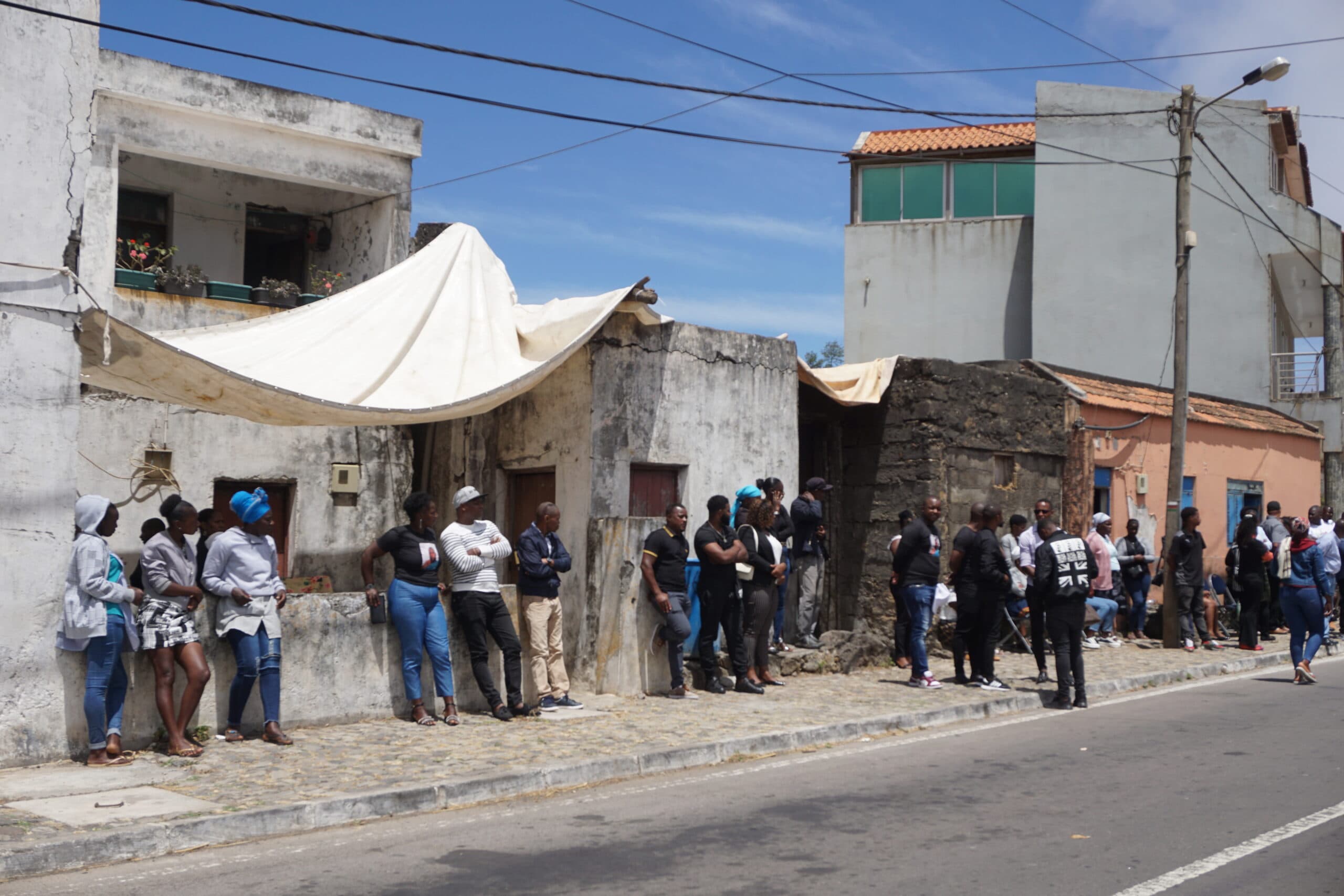
So let’s head to Cidade Velha (“the old city”), which was the first inhabited area of the archipelago, dating back to 1460, following Portuguese colonization. The fact that the city is now at the heart of Cape Verde’s heritage preservation efforts is a fitting twist of fate: from its founding, Cidade Velha served as a hub for the triangular trade, the slave trade, and forced labor. The local cultural center has served as a showcase for the island’s cultures for several years, while its fortress was very recently chosen as the venue for the official launch of the country’s new “tourism brand.”
We’re guided there by our host from the beginning of our stay, Carlos Alberto Pina, known as Kabé. A percussionist, DJ, vinyl collector, and record distributor in the United States, he is close to major figures in the funaná scene such as Bulimundo and Kako Alves, whom he has supported throughout their careers: “I lived in exile for a long time in Brockton, one of the U.S. cities that is home to a large portion of the Cape Verdean diaspora. Now I’m back in my homeland, ready to share my stories and the cultural heritage I’ve gathered here and there!” Generous and proud of Cape Verdean culture, he gives us a tour of his property, nestled above the riverbed that remains dry for most of the year. There, at Kabé’s place, it’s a mango paradise—a true treasure of the country. The fruit was recently celebrated in the style of Cape Verdean blues by the duo Acácia Maior. This excellent duo is also scheduled to perform this year at Le Guess Who Festival?.
In Cape Verde, sugarcane is also grown, which is used to make grogue—the famous agricultural rum without which funaná would probably not exist: “Our music celebrates the virtues of grogue, as in Peps Love’s ‘Pom Um Grogu,’ featured on the aptly named compilation Pour Me A Grog, but above all, we down a few shots to keep our energy levels up,” Kabé jokes. Indeed, when it comes to energy, funaná is every bit as intense as the high-octane punk of the UK and US scenes: a funaná song—or rather, a piece (peça)—has a fixed duration only on record, due to the technical limitations imposed by the format: “When played live, a peça can stretch well beyond five minutes,” explains Kabé. “As long as the voice holds out, the accordion keeps going!”