Cotxi-pó turbulence
Cape Verde, a veritable musical laboratory, generously blends sounds and peoples. In this astonishing melting pot of sounds, it can sometimes be difficult to find one’s way.
One of the artists who best captures this astonishing, lab-like musical fusion is undoubtedly Princezito. A songwriter for others, occasionally a guest vocalist on others’ tracks, and always a poet for an entire people, his song “Lua”—the most iconic of his career—has been covered by many, including the spellbinding Mayra Andrade. Born Carlos Alberto Sousa Mendes, Princezito is a native of Tarrafal. His older brother is the great Mário Lúcio, a prophet of Cape Verdean rhythms on international stages and even within the archipelago’s government, where he served as Minister of Culture from 2011 to 2016. The brothers, in fact, champion a redemptive motto: a generous heart and an intuitive mind. During our three-hour conversation—barely interrupted by a few shots of grogue, the unstoppable fuel for thought and action—Princezito revisits and builds a musical theory of Cape Verde, and in particular, of funaná. Viscerally subversive, the genre has been constantly stigmatized—originally by the Portuguese colonizers, then by the post-independence Creole elites, and today in its most recent incarnation, cotxi-pó.
“History often repeats itself and has its repercussions”: Princezito suggests continuing to focus on exchange and travel, because the archipelago’s good fortune is undoubtedly also the source of its greatest misfortune: the necessity to emigrate in search of better living conditions. “It was the immigrants who built this nation. They brought everything—from accordions to the modern language, including music.” One of the most recent developments in this tradition is cotxi-pó.
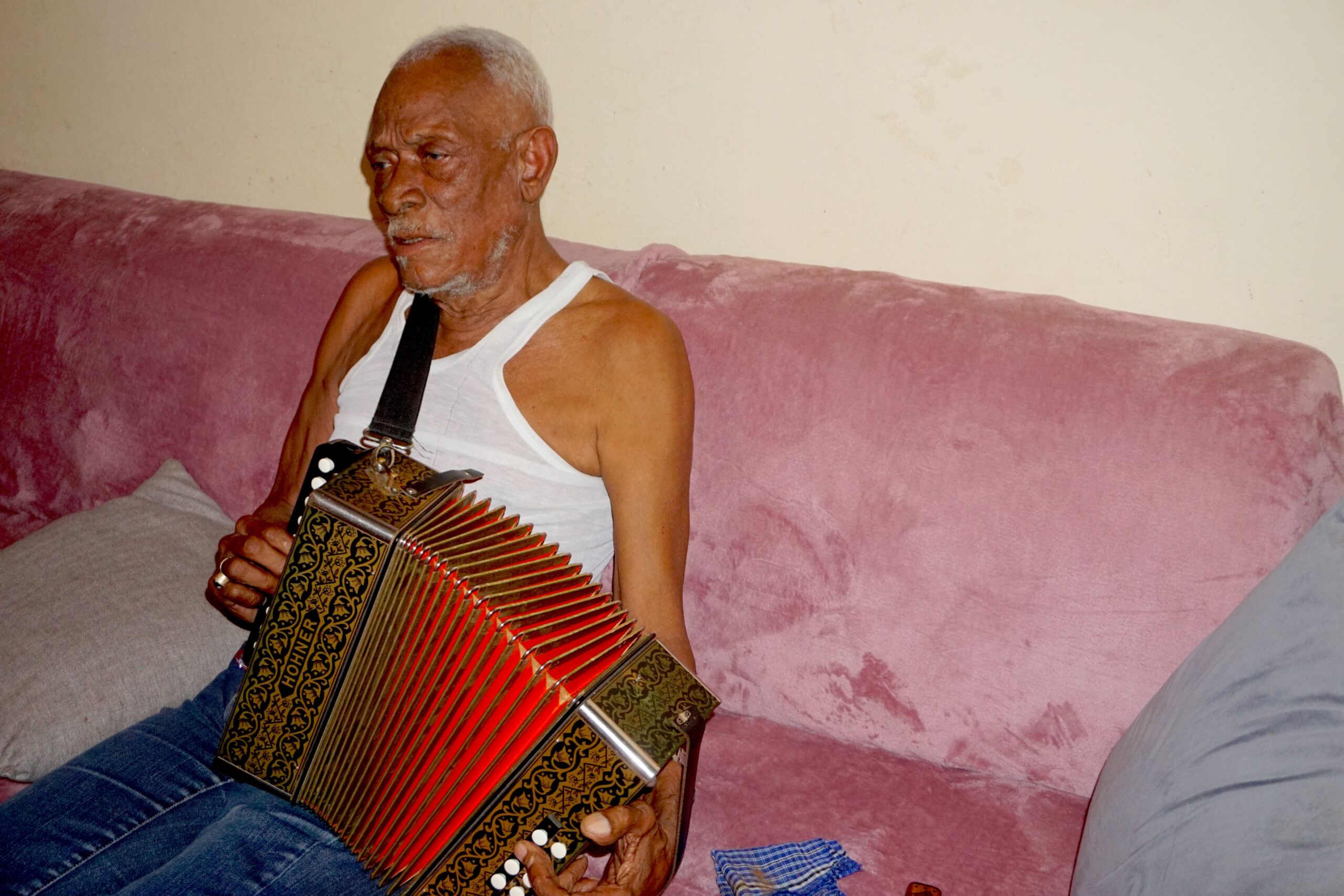
Just a stone’s throw from his home, in a small square in Tarrafal, this tall, lanky chatterbox—seated on a bench adorned with the ebony-and-ivory keys of a piano—now waxes on about the all-powerful cotxi-pó, the core version of funaná: “It was my friends who founded cotxi-pó. Mainly Belo Freire, a virtuoso funaná accordionist and renowned instrument maker, along with his bassist at the time, Nuno. Cotxi-pó is the aborted offspring of funaná. Its complexity and rhythmic richness force people to dance differently than they did in the last century, because cotxi-pó is fresh and young! Honestly, after the kuduro and Afrobeats waves that have swept through here, do you really think we’re going to keep dancing like we used to?”
Another pioneer, Dju di Mana, established this new style of music almost by accident, with an already classic track of the genre titled “Kotchi Ku Un Pó”—literally, “grinding with a stick/pestle.” The physical power and rhythmic cadence of the grueling agricultural labor, repeated for hours on end, perfectly illustrate this evolution of classic funaná, which has its origins in the precarious rural life of the island of Santiago.
“It was the immigrants who built this nation. They brought everything—from accordions to the modern language, including music.”
While Princezito praises cotxi-pó for its energy, he remains critical of its content, expressing concern about those he calls the “emotional mafiosi”: “Without necessarily realizing it, young artists hide poisoned gifts in their music—made up of ultra-sentimental clichés, infused with ‘baby,’ ‘amor,’ and ‘menina,’ delivered in melodic settings artificially crafted to hook the audience on the emptiness of emotions.” This emo bias, amplified by the overuse of social media, is, in his view, one of the main causes of depression among many young Cape Verdeans.
Cotxi-pó seeks to touch both the heart and the mind. And this ability to sing of the torments of the collective soul is passed down from generation to generation in Cape Verde. Even today, funaná remains a matter for the extended family, passed down informally—at home, on the street, or in bars and cafés. Certain family lineages are more renowned, and when an ancestor has left his mark on the history of the genre, the words “son” or “heir” are added to the patriarch’s name: Fidjus Codé di Dona, Herdeiros Codé di Dona, Fidjus di Belo Freire.
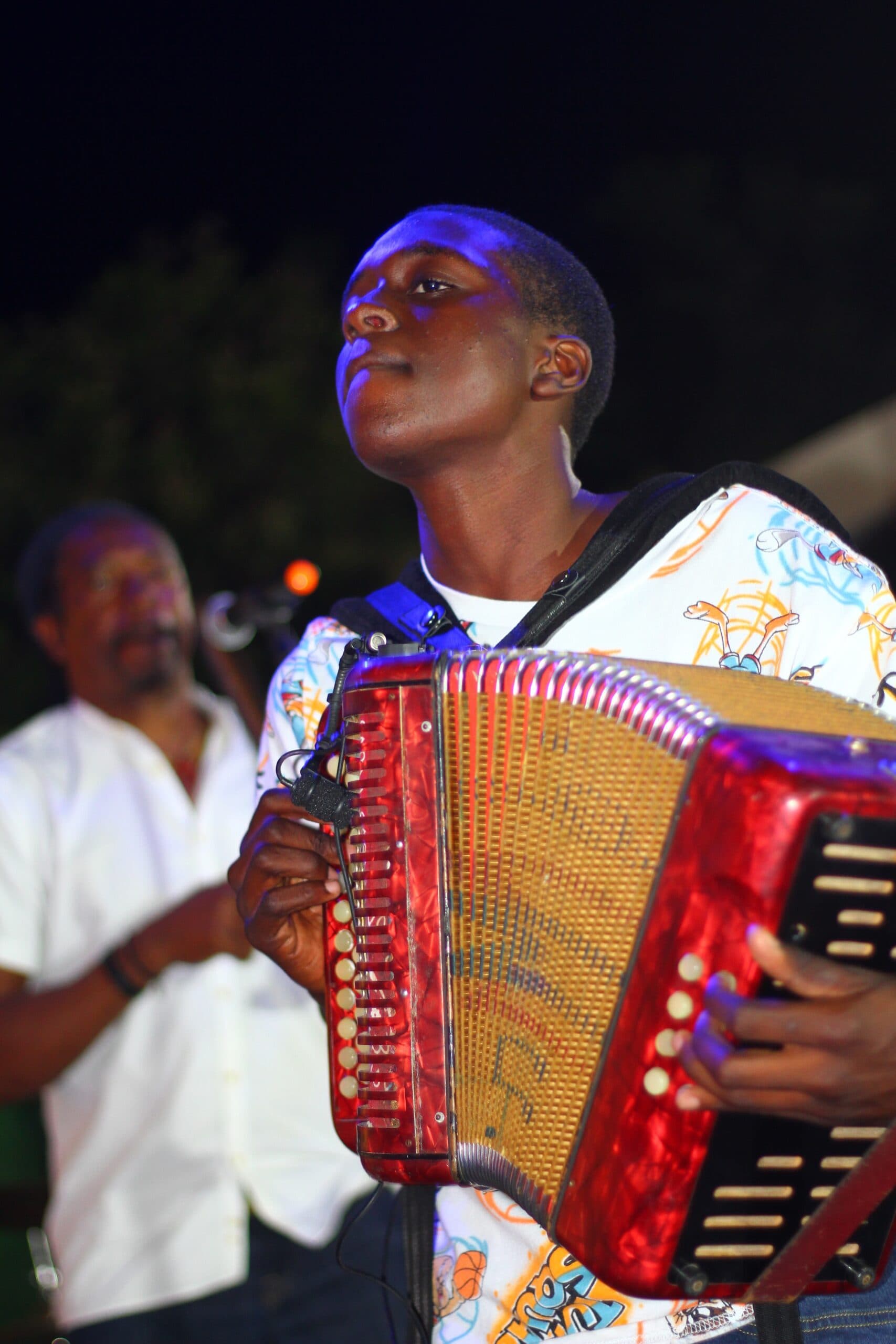
At the opening of the AME Festival, for example, the young son of the great Iduíno of Ferro Gaita—who are also scheduled to perform as part of the “Sounds of Cabo Verde” lineup at the 2026 Guess Who Festival—demonstrated his talents as an accordionist in the cotxi-pó style on stage. A performance that the patriarch did not look upon favorably at the time: “I don’t like that my son plays cotxi-pó. It’s not quality music—it goes too fast for the emotion to come through!” confided the man who, incidentally, was the first to experiment with using a drum machine on stage, as early as 1997. A somewhat conservative refrain that, surprisingly, is echoed by both generations that revolutionized funaná in the 1980s and 1990s.
This is indeed the view of Silva, the virtuoso bassist of Bulimundo: “When playing at 170 bpm, it’s technically impossible to play a rich melody; you’re bound to simplify the composition and play fewer notes.” While the old guard grumbles, the young guard does as it pleases: cotxi-pó is now being taken beyond the country’s borders by an entire generation of intrepid teenagers whose daily lives revolve around livening up local ceremonies, regional festivals, or concerts in the diaspora in Portugal, France, Luxembourg, the Netherlands, and the United States.
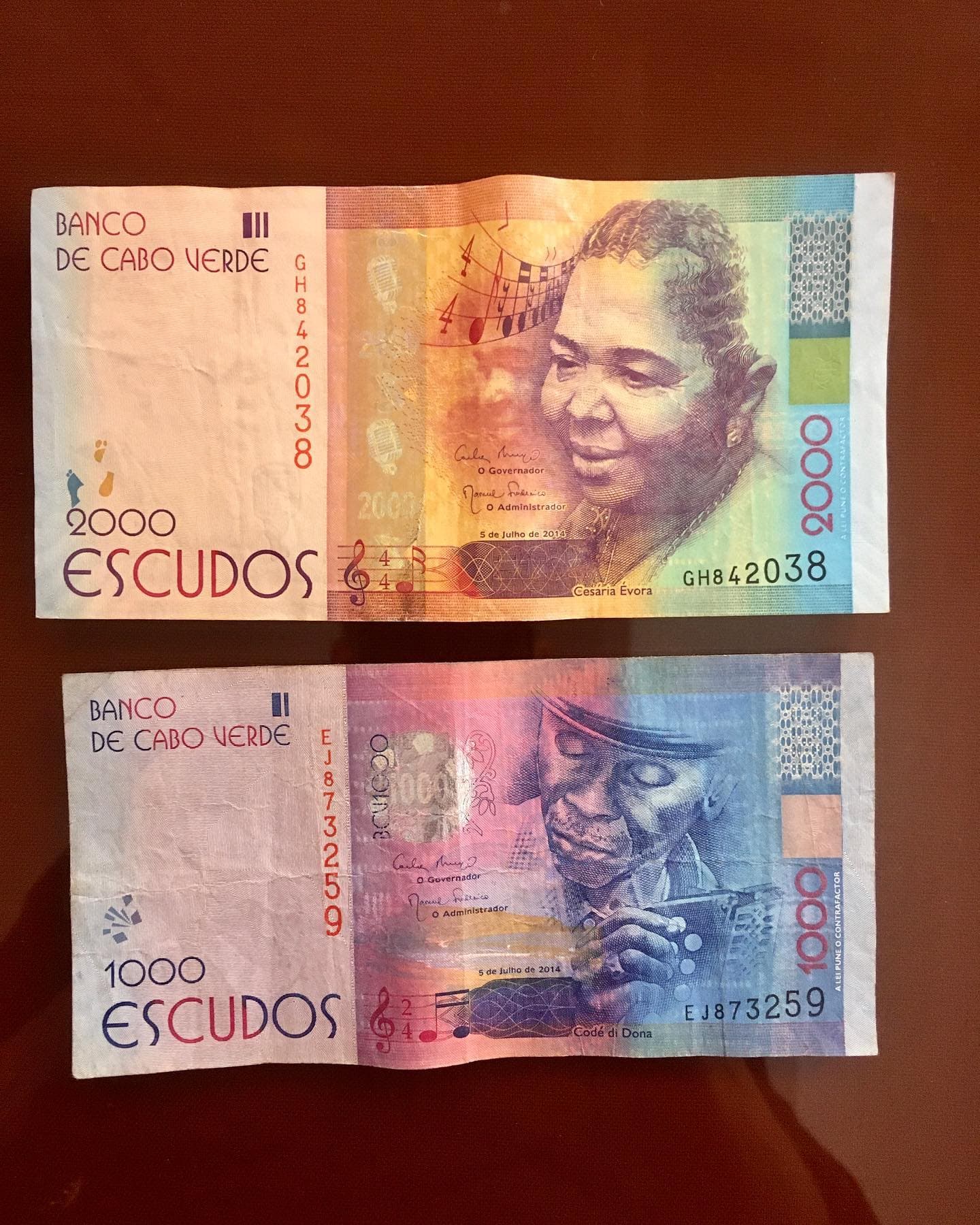
Among them are the Fidjus Codé di Dona, still teenagers and basking in international success. A success that isn’t reflected in the lifestyle of the grandsons of the man whose portrait adorns the country’s second-most-valuable banknote. A prime spot, right after that of Cesária Évora. The two prodigies still live in the home of their patriarch, who passed away in 2010, whose facade is adorned with a magnificent mural in memory of the poet behind the popular anthems “Pomba” and “Fomi 47”. A singer-songwriter and virtuoso of the ferrinho and the gaita, Codé di Dona passed on to his descendants his love for the speed and raw energy of this music—now played at a faster tempo—and the pair offers us a glimpse of it at the entrance to the house in São Francisco.
In fact, it was one of these kids who gave us the best definition of the genre: “Cotxi-pó is fast funaná played with an accordion, a ferrinho, a beat, and sometimes a bass for a bit more originality.”
Ask to see the drum machine, and you’re in for a big surprise: they’ll hand you a smartphone playing a simple MP3 audio loop shared in a WhatsApp chat.
It’s rudimentary, but it’s enough to keep a cotxi-pó going for ten minutes.
But keep in mind that a festival dedicated to this tradition lasts much, much longer: in Assomada, in the center of the island of Santiago, the Easter festivities stretch out over a long and intense week. In the tiny village of Junco, a remote patch of land in the hills of the Santa Catarina district, night has fallen, and the festivities haven’t even begun yet. And despite the cold typical of this mountainous region—the Picos—the main street is already buzzing: dozens of food stalls have been set up, selling grilled chicken wings, tuna fritters, and other local specialties. The grocery store-café becomes the gathering spot for anyone looking to get warm… or warm up with sips of homemade grogue.
In front of a large house converted into a nightclub for the occasion, people are listening to music on portable speakers and getting into the party spirit, bottles in hand, in front of two uniformed police officers who are monitoring the entrance to the party. On the other side of the metal sheet partition, a DJ has already started playing his playlist to an empty room: nonstop Afrobeats, enough to keep everyone awake until the arrival of the act most people have come to hear—local cotxi-pó stars, the Fidjos di Belo Freire. There’s even talk that Zé Espanhol, the genre’s national icon for nearly fifteen years, will make an appearance on stage.
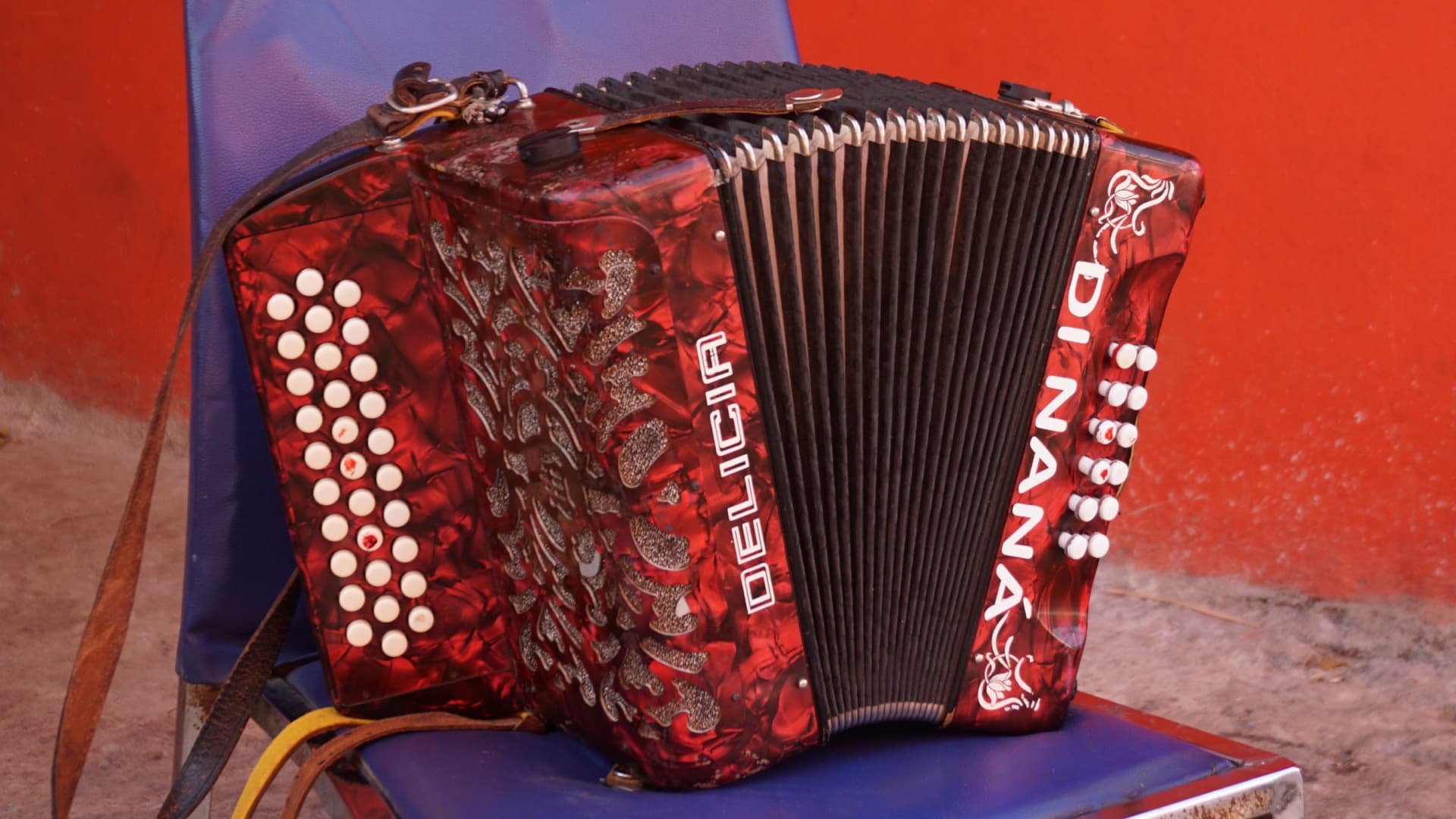
Beneath the large table where the DJ is spinning, an accordion lies on the floor—shiny, sparkling, reflecting the promise of the fervor to come—as the cotxi-pó trio takes the stage for a long session of collective trance. Here they are, in fact: a few seconds of silence, no introduction of any kind, a beat kicks in—composed of a four-on-the-floor kick drum and a looping ferrinho scrape—and here are the two brothers and their cousin striking up the first notes. The individual dances in front of the large side mirror—a hallmark of the selfie generation—now give way to an expressive and inventive group dance, everyone facing the stage, sometimes in pairs, arms and legs as supple as rubber, in a feverish battle fueled by incessant cheers.
The next two hours will be a festival of creativity, in a joyful and passionate collective atmosphere. And then, suddenly, the trio stops playing and leaves the premises, just as quickly as they had arrived. Out on the street, those who’ve had one too many grogs and are barred by the police from entering the party will continue their festivities, to the muffled sound filtering through the high sheet-metal partition.
It’s almost 5 a.m. when the Fidjos Codé di Dona take the stage, this time accompanied by Zé Espanhol, the true messiah of cotxi-pó. As we head back to sleep at a small guesthouse where goats bleat to welcome us, we’ll learn the next day that the party lasted until 10 a.m. As the highly influential DJ Tubarão, a programmer at Radio Cidade, prophesied, “A good party is bound to end with a cotxi-pó.”
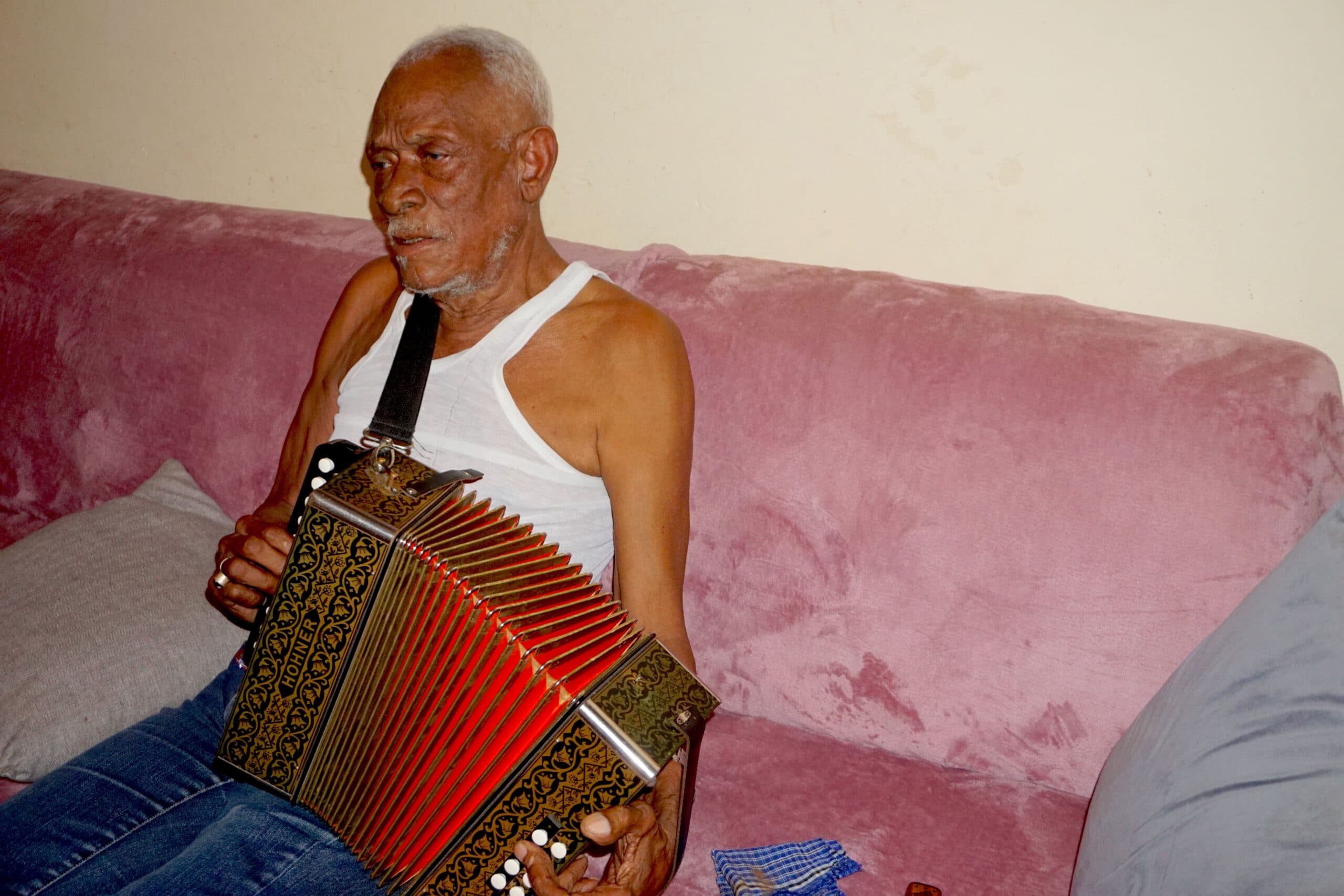
And in those early morning hours, the debate between cotxi-pó and funaná is of very little importance, given the sheer energy in the air. That is the lesson Margarida Fernandes—known as “Manazinha”—will teach us the next day. Now 71 years old, she has spent the last four decades shaking up the role of women in the genre, who have been almost exclusively relegated, at best, to playing the ferrinho or singing—if not to dancing. A lover of the accordion’s raw sound, a feminist in spite of herself, and independent no matter what, she embodies the energy of cotxi-pó while rejecting the term, insisting that it is simply “ferro e gaita”—period. In her lush green village of Achada Grande de Rincão, already an adult, she decided to carry on her father’s legacy, without asking anyone’s permission to pick up an accordion, she played by ear the melodies she’d heard since childhood, formed a women’s group (Mudjeres di Rincón), and pursued a career—either solo or accompanied by her son—at festivals and national celebrations as well as within the diaspora.
It is indeed the playing of these two metal instruments that unites an entire people and enables both political and sexual emancipation. A true lesson for anyone who believes that culture should be relegated to the background of a nation’s concerns.